| Piú votate - The Moon After Apollo 17 |

ZZ-ZZ-ZZ-ZZ-ZZ-ZZ-ZZ-ZZ-The Moon.jpgMare Imbrium, from Galileo100 visiteCaption NASA originale:"Checking out the Galileo spacecraft's cameras during its December 1992 fly-by of Earth's Moon, controllers took this dramatically illuminated picture through a violet filter. The view looks down on the Moon's North Polar Region with the Sun shining from the left at a low angle and the direction toward the Moon's North Pole toward the lower right.
Across the image upper left stretches the smooth volcanic plain of the Mare Imbrium. Pythagoras crater, 65 miles wide, is near the center of the image -- mostly in shadow, its central peak just catches the sunlight (...)".
(5 voti)
|
|

The Moon - North Pole - Galileo.JPGThe North-Pole of the Moon, from Galileo85 visitenessun commento
(5 voti)
|
|
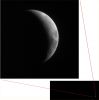
The Moon-05.jpgThe Moon, full frame, from Mars Reconnaissance Orbiter (5)90 visitenessun commento
(5 voti)
|
|

The Moon-02.jpgThe Moon, in infrared, from Mars Reconnaissance Orbiter (3)84 visitenessun commento
(5 voti)
|
|

The Moon-00.jpgThe Moon, in natural colors, from Mars Reconnaissance Orbiter (1)87 visitenessun commento
(5 voti)
|
|
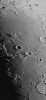
Moon Panorama - 2.jpgMoon Panorama (3)86 visitenessun commento
(5 voti)
|
|

Kane Crater - Light Ray (2).jpgLight rays inside Kane Crater (2)121 visiteUn commento si impone: il lavoro dell'Amico Robert Spellman è davvero notevole e, a dispetto di seeings talvolta scadenti, la qualità delle sue immagini è sempre elevata.
Anche la mappatura delle Regioni Lunari fotografate è buona.
In questo caso specifico, tuttavia, ci sembra giusto sottolineare che il rilievo chiaro che lui ha evidenziato e qualificato come "raggio di luce", a nostro parere potrebbe non essere affatto un raggio di luce in senso tecnico (e cioè un certo quantitativo di luce solare - radente, dal punto di vista della Regione Lunare coinvolta - che filtra attraverso uno o più cracks che si aprono sul bordo (rim) di un cratere e ne illuminano il fondo).
(5 voti)
|
|

Kane Crater - Light Ray (1).jpgLight rays inside Kane Crater (1)85 visitenessun commento
(5 voti)
|
|

PlatoCrater-06.jpgPlato Crater (2)78 visitenessun commento
(5 voti)
|
|

Hyginus-Ariadaeus-Manilius.jpgHyginus and Ariadaeus rilles and Manilius Crater92 visitenessun commento
(5 voti)
|
|

E-PlatoCrater.jpgPlato Crater116 visitenessun commento
(5 voti)
|
|

FadingMoon-04.gifFading Sun-Lights... (4)90 visitenessun commento
(5 voti)
|
|
| 165 immagini su 14 pagina(e) |
 |
|
|
|
|
9 | |
|
|
|
|








