|
|

00-Libration-250px-Lunar_libration_with_phase2.gifThe "Lunation": such as a full "Lunar Cycle"82 visitenessun commentoMareKromium
|
|

00-Lunation.gifA full Lunar Cycle (Lunation)277 visiteDa "Astronomy: Picture of the Day", del 13 Novembre 2005:"Our Moon's appearance changes nightly. This time-lapse sequence shows what our Moon looks like during a lunation, such as a complete Lunar Cycle.
As the Moon orbits the Earth, the half illuminated by the Sun first becomes increasingly visible, then decreasingly visible. The Moon always keeps the same face toward the Earth and its apparent size changes slightly, though, and a slight wobble called "libration" is discernable as it progresses along its elliptical orbit.
During the cycle, sunlight reflects from the Moon at different angles and so illuminates different features differently. A full lunation takes about 29,5 days, such as just under a month (moon-th)".
|
|

Albategnius-1.jpgAlbategnius Crater (1)160 visiteAlabategnius: un grande cratere del diametro di circa 120 km e con pareti (o murate) che arrivano sino a 4000 mt. Le sue coordinate sono: Lat. 12° Sud e Long. 4° Est. La sua posizione è nella Regione Centrale della Luna, una Regione caratterizzata (in buona misura) da grandi bacini d'impatto.
Albateignus non è difficile da localizzare - leggermente ad Est del Cratere Ptolemaeus.
|
|

Albategnius-2.jpgAlbategnius Crater (2)149 visiteAlbategnius (Al-Battani, Muhammad ibn Jabir) (approx. 850-929)
--------------------------------------------------------------------------------
An Iraqi prince, born in Batan, Mesopotamia (Iraq), who was the leading Astronomer and Mathematician of his time. He drew up improved tables of the Sun and Moon, measured the eccentricity of Earth’s orbit and the inclination of Earth’s Equator to its orbital plane. He was capable of making an extremely accurate measurement of the length of the Earth year - which was also used in the Gregorian reform of the Julian Calendar. His observations at Rakku, made over (probably) a 40-year period, were summarized in his work "Movements of the Stars" (first published in Europe in 1537).
Thanks to his contribution, Johannes Hevelius (1611-1687) was able to theorize and discover the secular variation in the Moon’s motion.
|
|

Apollo 11 Landing Site-00.jpgThe Apollo 11 Landing Site (1)174 visitenessun commento
|
|

Apollo 11 Landing Site-03 lab..jpgThe Apollo 11 Landing Site (2)176 visitenessun commento
|
|
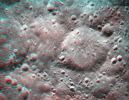
B-Pirquet_3D.jpgPirquet Crater (3D)106 visitenessun commento
|
|

B-Tsiolkovsky_3D~0.jpgThe Peak of Tsiolkovsky Crater (3D)114 visitenessun commento
|
|

B-ZhiritskiyCrater.jpgZhiritskiy Crater (3D)108 visitenessun commento
|
|
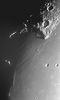
C-La Condamine Crater 00.jpgRays of light through "La Condamine Crater" (1)139 visiteNel novero dei cosiddetti TLP (ovvero Transient Lunar Phoenomena) ci sono anche - secondo alcune Scuole di Pensiero - i cosiddetti "Raggi di Luce" i quali, in situazioni di Sole radente (ovviamente con riferimento ai luoghi Lunari coinvolti ed a prescindersi dalla posizione dell'Osservatore Terrestre), si "intrufolano" - se ci passate questa espressione - attraverso i cracks delle murate (rims) di alcuni crateri e, nel farlo, disegnano inusuali - e temporanee, appunto - strisce di luce sul fondo dei crateri stessi.
Quello che Vi proponiamo in questa sequenza è (sembra essere) proprio uno di questi casi.
Per onestà intellettuale, però, pur proponendoVi questa sequenza e pur rispettando profondamente il lavoro dell'Astronomo Robert Spellman, noi riteniamo che questo tipo di fenomenologia, sebbene curiosamente interessante e suggestiva nelle visioni telescopiche della Luna, NON HA nulla a che spartire con la Famiglia Classica dei TLP.
|
|

C-La Condamine Crater 01.jpgRays of light through "La Condamine Crater" (2)149 visitePer Vostra opportuna informazione, infatti, noi riteniamo la Famiglia dei TLP come (essenzialmente, almeno) formata da quattro macro-classi:
1) flash (che possono avere vario colore e diverse provenienze);
2) star-like shining (che possono avere vario colore e varie durate);
3) annebbiamenti (in tali casi i rilievi lunari coinvolti restano comunque visibili);
4) oscuramenti (ed in tal caso i rilievi lunari coinvolti "spariscono", dal punto di vista dell'Osservatore, per qualche momento).
|
|

C-La Condamine Crater 02.jpgRays of light through "La Condamine Crater" (3)129 visitenessun commento
|
|
| 165 immagini su 14 pagina(e) |
1 |
 |
|
|
|
|
|
|
|
|
|








