| |

|
|
|
|
|
|
|
|
|
|
|
|
|
|
|
|
| 23 album su 2 pagina(e) |
1 |
|
| Immagini a caso - MOON |

Kaguya-033-Haruyama2009Fig1_context.jpgWindow onto an abyss: Cave Skylight on the Moon! (CTX Frame)84 visiteSu segnalazione della nostra sempre attentissima Amica e Partner, Elisabetta Bonora (alias "2di7"), la recente possibile scoperta di un Collapse Pit situato sulla nostra Luna, nella Regione dell'Oceano delle Tempeste (Oceanus Procellarum) ed in prossimità del complesso collinare noto come "Marius Hills".
Eccovi l'interessante articolo scritto al riguardo da Emily Lakdawalla (Planetary Society):"This just in: researchers on JAXA's Kaguya Lunar Orbiter have discovered an open pit on the Moon that is likely a window onto a sublunar world -- a skylight into a subsurface cavern.
Junichi Haruyama, Kazuyuki Hioki, Motomaro Shirao, Tomokatsu Morota, Harald Hiesinger, Carolyn van der Bogert, Hideaki Miyamoto, Akira Iwasaki, Yasuhiro Yokots, Makiko Ohtake, Tsuneo Matsunaga, Seiichi Hara, Shunsuke Nakanotani, and Carlé Pieters describe the feature in a paper now in press in Geophysical Research Letters: "Possible lunar lava tube skylight observed by SELENE cameras.
"First, some context. The Moon will be a difficult, but not impossible, place to set up a permanent human outpost. Lacking a protective atmosphere, its surface is bathed in punishing solar radiation, not to mention a continuous rain of micrometeorites; and over the course of a lunar day (that is, about a month) its temperature ranges over more than 200 degrees Celsius (more than 450 degrees Fahrenheit). Many workers imagining future human habitation of the Moon have advanced the idea of setting up the colony inside a shelter that would provide some protection from the hazards of space radiation and the challenge of insulating against such extremes of temperature.
Digging such a shelter would be a major engineering project; we could get a head start on things if we could find a natural cave. The Moon doesn't have Earth-type limestone rocks bathed in acidic subsurface water, but there is another type of environment that might produce underground caverns: hollow lava tubes. The Moon once had active volcanic geology that has left its surface carved by numerous "sinuous rilles", some of which may once have been underground lava tubes like the ones that form on the flanks of Kilauea today. But while there are lots of rilles to be seen on the Moon, no one has ever confirmed the presence of an enclosed tube, with an intact roof, that could be used as a shelter. One study did find several possible locations where there were likely intact tubes present next to collapsed tube sections (link takes you to a 1.4 MB PDF of a paper by Cassandra Coombs and Ray Hawke), but could not confirm the presence of intact tubes. There are probably lots of intact tubes, but how to find where they're hidden?
The answer is to look for skylights, black holes in the lunar surface that are openings onto sublunar caverns. Skylights are common on Earth, and they've even been seen on the flanks of Martian volcanoes. But despite decades of searching, no one has ever discovered a lunar skylight.
Until now. Haruyama and his coauthors examined Kaguya Terrain Camera photos of an area on the Moon that is populated by numerous rilles, the volcanic complex of the Marius Hills on the lunar nearside. And their search was rewarded with the discovery of exactly one black hole too deep to be an impact crater. The hole is located at 303.3°E and 14.2°N and is, suggetively, in the middle of a small rille. It is nearly circular, 65 meters in diameter, and is equidistant from the rille walls, 250 meters on either side. Previous missions did not image it at high enough resolution to allow scientists to distinguish it from a small impact crater.
Kaguya imaged it nine times, five with the Terrain Camera and four with the lower-resolution Multi-band Imager, at a wide variety of solar incidence angles and camera look angles. A little trigonometry allowed Haruyama et al. to determine that the hole is 80 to 88 meters deep, with very steep walls. The fact that it's deeper than it is wide means it's definitely not an impact crater. But is it a cave skylight? Its location in the dead center of a rille is suggestive, but volcanic environments have a couple of other ways to make pits, such as volcanic vents. But Haruyama et al. determined that a skylight into an underground lava tube is the most likely explanation for this feature; moreover, they figured out that the cavern should be at least 370 meters wide. That's quite a lot of space to work with!
The team searched for more skylights in the region, but only found this one, and as far as they know, it's the only one anybody has ever spotted on the Moon. They concluded: "This is a potentially important discovery for both studies of lunar volcanology and future human outposts....the Marius Hills region has long been considered an important and accessible exploration target, both scientifically and technically. Indeed, the discovery of the Marius Hills Hole further supports the importance of the Marius Hills region as a future exploration target."
This hole is probably not the place we'd establish a permanent base. I imagine that a place that requires a vertical descent and ascent wouldn't be optimal. You'd probably really want one that you could drive into -- an intact tube next to a collapsed part, like the possible ones identified by Coombs and Hawke, and probably ideally with a North or South-facing opening so it wouldn't get blasted by Sunlight at either end of the Lunar Day. I'm smiling now, because I'm thinking about how far humans have come as a species: we're beginning to expand into space, but we're still doing what our forebears did hundreds of thousands (or more) years ago, looking for a nice cave to establish our hearth in.
I want to thank Carolyn van der Bogert for providing the Kaguya images from this paper. Carolyn is also on the Lunar Reconnaissance Orbiter Camera (LROC) team, and told me that LROC has this site on its list of things yet to photograph on the Moon. She said they'll try to photograph it, as Kaguya did, at a variety of solar incidence angles, to get good looks at both the walls of the pit and the floor it opens onto.
LROC should improve on the resolution of the Kaguya imaging by a factor of more than ten, so I'm looking forward to those photos!MareKromium
|
|

APOLLO_15_AS_15-M-R71-2611-3.JPGAS 15-M-R71-2611 - The "Bridge" is NOT a bridge! (extra-detail mgnf - credits: Carlo Contu & Lunexit)72 visiteNe avevamo accennato durante le nostre conversazioni on-line in sede di commento ai frames pubblicati ma, dopo questo extra-detail mgnf propostoci dall'Amico Carlo Contu, i nostri dubbi si sono ridotti praticamente a zero.
Il "ponte" sul cratere ovoidale (diciamo "irregolare", che sarebbe più corretto...), in realtà, è solo una porzione di superficie relativamente piatta (usiamo l'espressione "relativamente" poichè la risoluzione del frame NASA originale è insufficiente a darci "certezze"...) che divide due Crateri Secondari (ossìa due crateri creati dall'impatto - a bassa velocità - di porzioni di suolo appartenenti al corpo impattato le quali sono state - rectius: vennero - "scagliate via" dalla loro sede originale a seguito dell'impatto).
Ma il "Mistero", anche se l'aiuto ricevuto dal Sig. Contu ci ha aiutato a dissiparlo almeno un pò, non è ancora del tutto svanito...Guardate bene il frame e poi cercate di rispondere a questo semplice quesito: che cos'è lo "sbuffo chiaro" che - simile ad un "ponte"... - sembra scavalcare il fossato (o meglio: il - probabile - "lava channel") che passa sulla Sx (ergo la Dx dell'Osservatore) della coppia di Crateri Secondari che tanto ha attratto la nostra attenzione e stimolato il nostro immaginario?...
I Misteri, in fondo, non finiscono mai...
Ed un caro saluto all'Amico Carlo Contu per l'aiuto datoci nella definizione di questa specifica indagine! MareKromium
|
|

APOLLO_15_AS_15-M-R70-2457.jpgAS 15-M-R70-2457 - Timocharis Crater53 visiteCoord.: 25,5° North Lat. and 15,5° West Long.
Lens Focal Length: 3"
Camera Tilt: VERT
Camera Altitude: 113 Km
Sun Elevation (on local horizon): 44°
Nota: l'area molto luminosa che si vede nella porzione superiore del frame potrebbe essere la conseguenza di una sovraesposizione e non essere - necessariamente - una zona ad albedo superiore alla media regionale.
|
|

APOLLO 11 AS11-40-5883 HR.jpgAS 11-40-5883 - A strange shadow - HR200 visitePerchè il Sole è ancora estremamente basso e le ombre che derivano da una sorgente luminosa "radente" tendono ad essere lunghissime.
La vera curiosità del frame AS 40-5875 sta, secondo noi, nel fatto che si può vedere abbastanza bene il volto di Armstrong, attraverso il visore del casco, mentre guarda verso Aldrin che sta scattando.
Per quanto attiene il frame AS 40-5883 invece (adesso in versione HR) ribadiamo quanto già detto in precedenza: c'è un'ombra, secondo noi, inspiegabile a lato dell'ombra del LM.
Sapreste identificarla?
|
|

APOLLO_11_AS_11-45-6702_HR.jpgAS 11-45-6702 - Glass Breccia and small cracks on the surface84 visiteOsservate il reticolo di crepe superficiali (una più ampia e profonda - molto probabilmente la frattura principale - ed altre più piccole - le fratture reticolari derivate) che si vede sulla Dx del frame: l'assenza di polveri da riempimento e le linee di frattura, ancora molto nette e definite, ci dicono che questi "small cracks" sono molto recenti (e, dato che questi frames sono rappresentativi di superfici "disturbate", abbiamo validi motivi per supporre che la causa delle crepe sia da rinvenirsi in azioni meccaniche poste in essere dagli Astronauti - per esempio camminando - o dal LM in sede di Landing).MareKromium
|
|

Luna17-Horz27.jpgLunokhod-1 rolls inside a small crater (1)115 visiteLe tracce lasciate dal Rover Sovietico Lunokhod-1 sono chiare: il piccolo robot è riuscito non solo a giungere sul bordo del piccolo cratere senza nome che abbiamo visto nel frame precedente, ma ci è anche entrato dentro, senza particolari problemi.
Il Lunokhod-1 è entrato ed è uscito dal cratere e, probabilmente, è anche riuscito a prelevare campioni ed a fare esperimenti: non c'è male per una tecnologia bistrattata come quella della fu-Unione Sovietica.
Una tecnologia, per giunta, vecchia di 36 anni...
|
|

APOLLO 16 AS 16 108-17698 HR.jpgAS 16-108-17698 - "Boulders Complex" at Station 8164 visitenessun commento
|
|

APOLLO 11 AS 11-36-5355.jpgAS 11-36-5355 - Us (from Lunar orbit)107 visitenessun commento
|
|
| Ultimi arrivi - MOON |
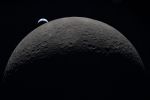
0012-The_Dark_Side-Artemis_2.jpegThe Moon (Dark Side with crescent Earth)108 visiteMareKromiumApr 07, 2026
|
|
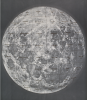
0000-The_Moon.pngThe Moon (Earth-facing Side)101 visiteMareKromiumApr 07, 2026
|
|

New_Lunar_Crater.jpgManmade new Lunar Impact Crater: Luna 25174 visitenessun commentoMareKromiumOtt 15, 2023
|
|

LRO-3000-Ryder_Crater.jpgRyder Crater140 visitenessun commentoMareKromiumDic 07, 2022
|
|

LRO-3001-Wallach_Crater.pngWallach Crater112 visitenessun commentoMareKromiumDic 07, 2022
|
|

LRO-3002-Shackleton_Crater.jpgShackleton Crater and its neverending Darkness117 visitenessun commentoMareKromiumDic 07, 2022
|
|

LRO-3003-Gruithuisen_Domes.pngGruithuisen Domes81 visitenessun commentoMareKromiumDic 07, 2022
|
|

0011-nasa-artemis-orion-flyby-2_gif.gifOrion's Second Lunar Fly-By (GIF-Movie)134 visitenessun commentoMareKromiumDic 07, 2022
|
|
|
|