| Piú votate - The Moon After Apollo 17 |

ZZ-Near Moon, Far Moon (1).jpgNear Moon, far Moon (1)155 visiteImmagine tratta dal "NASA - Astronomy Picture of the Day" del giorno 21 Ottobre 2004. Si tratta di alcune spettacolari ripresa della Luna effettuate a distanza di 15 giorni esatti l'una dall'altra, all'interno della medesima "lunazione" (o "ciclo lunare"). La differenza è che il primo quarto che vediamo nelle immagini (1) e (2), ritrae la Luna al suo apogeo e cioè nel punto della sua orbita più lontano dalla Terra. Nelle fotografie (3), (4) e (5), invece, la Luna si sta avvicinando al suo perigeo e cioè il punto della sua orbita più vicino alla Terra. Di regola ad occhio nudo - ed a meno che chi guarda non sia un osservatore del cielo davvero eccezionale - la differenza di dimensioni della Luna - che pure è notevole in queste due fasi orbitali! - può sfuggire; ma è sufficiente un modesto telescopio ed una fotocamera (anche di tipo non professionale) per poter far emergere la profonda diversità di diametro apparente del nostro Satellite.
(13 voti)
|
|

Tycho Crater - Clem (color).jpgTycho Crater (true color)197 visitenessun commento
(13 voti)
|
|
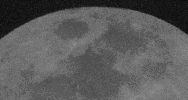
ZZ-ZZ-ZZ-FM-TLP-Lunar_Impact.gifLunar Impact?308 visiteUno splendido TLP ripreso "in diretta" e poi montato su questo interessantissimo GIF-Movie: un "flash", un lampo improvviso si accende sulla Superficie Lunare nelle immediate prossimità del Cratere "Gauss".
Gli Scienziati sono unanimi: è l'evidenza oggettiva di un Meteor Strike. Un impatto, insomma, tra un bolide di dimensioni irrisorie (quanto un pallone da calcio, più o meno) e la Superficie della Luna.
Certo, viaggiando a quasi 50000 Km orari, anche un "pallone da calcio", all'atto di urtare contro una superficie solida e massiccia, arriva a possedere un quantum di energia cinetica tale da consentire l'espressione di un lampo luminoso ma...Siamo davvero CERTI (al 100% intendiamo) che i "lampi lunari" sìano SOLO e SEMPRE le evidenze di impatti?
Pensiamoci sopra...MareKromium
(12 voti)
|
|

M-N-O-Lobachevsky.jpgThe Lobachevsky Anomaly, from Clementine (3) - 3D detail mgnf277 visiteUn piccolo (diremmo l'ennesimo) gioiello a 3D che il Dr Feltri ci propone per vedere e riflettere meglio sulla reale natura e configurazione di questa Singolarità la quale, a nostro parere, è ancora quasi del tutto incompresa e, comunque, risulta di difficile collocazione nel già complesso panorama dei rilievi lunari anomali.
(12 voti)
|
|

ZZ-ZZ-ZZ-ZZ-ZZ-ZZ-CTX_Moon_6Oct2004.jpgThe Moon from Mars Reconnaissance Orbiter145 visiteThis image of Earth's moon was acquired by the Mars Reconnaissance Orbiter (MRO) Context Imager (CTX) camera during calibration and testing between 2:00 and 3:00 a.m. Pacific Daylight Time (PDT) on 6 October 2004. The image was taken by CTX before it was delivered and mounted on the MRO spacecraft. It was obtained from the parking lot at the Malin Space Science Systems facility in San Diego, California. In this image, east is toward the top and south is toward the bottom. The image demonstrates the field of view of the MRO CTX camera, which is 5064 pixels across (clicking on the image above will permit download of the full 5064 pixels-wide image). When in its circular mapping orbit about Mars, the 5064 pixels will cover a swath that is about 30 kilometers (~18.6 miles) across. CTX will obtain its 30 km-wide images at a resolution of about 6 meters (~19.7 feet) per pixel. CTX images will be used to provide context for the very high resolution images (better than 1 meter per pixel) to be obtained by the MRO HiRISE camera. CTX data will also provide context for MRO's CRISM infrared imaging spectrometer as well as provide detailed observations of martian landforms and potential, future Mars landing sites.
(12 voti)
|
|
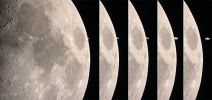
ZV-Moon and Saturn.jpgMoon and Saturn198 visiteCaption NASA originale:"In this sharp sequence of telescopic digital images from the Powell Observatory near Louisburg, Kansas, USA, Saturn is seen reappearing from behind the bright lunar limb over a period of about 2 minutes. The ringed planet emerges above the dark, smooth Lunar Mare Crisium".
(12 voti)
|
|

ZZ-ZZ-ZZ-FM-TLP.gifTLP or illuminated "peaks" (again)?144 visiteObserver Joshua Try located in Whangarei, New Zealand reported that on 25-09-2001 at 8:30 U.T. he observed two possible L.T.Ps. on the edge of the terminator near the crater Archimedes. They appeared to be 2 bright points of light about the size of Mount Piton. They seem to form a triangle with Mount Piton. He observed them for 2 hours and they were still visible when he ended his observing session.
I had the opportunity to conduct some video tapping of the Moon on 22 January 2002 at 00 hr 18 min U.T. and was able to capture the Moon under similar lighting conditions. The image was taken with SCT C8 using 25mm eyepiece in projections. This image was taken when the Moon was 8.4 days old and the colongitude was 8.92. It may be that since the locations are very close that what Joshua saw was the tops of the mountain peaks just catching the sunlight. My image which is one lunar day later shows the mountains fully illuminated. I have had several reports in the past years that have reported these features as possible L.T.P. It can be very impressive and striking when one first sees these feature just catching the sunlight. It is my opinion that what the observer witness was peaks of these two mountains deep past the sunrise terminator.
(11 voti)
|
|

ZZ-Near Moon, Far Moon (3).jpgNear Moon, far Moon (3)120 visitenessun commento
(11 voti)
|
|

ZZ-Near Moon, Far Moon (2).jpgNear Moon, far Moon (2)133 visitePer meglio apprezzare la sensibile differenza di diametro apparente che caratterizza la Luna in queste due fasi del suo ciclo, Vi precisiamo che le 5 istantanee che la ritraggono sono state tutte quante riprese impiegando lo stesso telescopio, il medesimo ingrandimento e la stessa fotocamera.
(11 voti)
|
|

ZZ-ZZ-ZZ-ZZ-ZZ-Gamma-Ray Moon.jpgGamma Ray Moon135 visiteDa "NASA - Picture of the Day" del 27 Maggio 2006:"If you could see Gamma Rays - photons with a million or more times the energy of visible light - the Moon would appear brighter than the Sun! The startling notion is demonstrated by this image of the Moon from the Energetic Gamma Ray Experiment Telescope (EGRET) in orbit on NASA's Compton Gamma Ray Observatory from April 1991 to June 2000. Then, the most sensitive instrument of its kind, even EGRET could not see the quiet Sun which is extremely faint at gamma-ray energies. So why is the Moon bright? High energy charged particles, known as cosmic rays, constantly bombard the unprotected lunar surface generating gamma-ray photons. EGRET's Gamma-Ray vision was not sharp enough to resolve a lunar disk or any surface features, but its sensitivity reveals the induced gamma-ray moonglow. So far unique, the image was generated from eight exposures made during 1991-1994 and covers a roughly 40° wide field of view with gamma-ray intensity represented in false colors".
(10 voti)
|
|

Albategnius-2.jpgAlbategnius Crater (2)151 visiteAlbategnius (Al-Battani, Muhammad ibn Jabir) (approx. 850-929)
--------------------------------------------------------------------------------
An Iraqi prince, born in Batan, Mesopotamia (Iraq), who was the leading Astronomer and Mathematician of his time. He drew up improved tables of the Sun and Moon, measured the eccentricity of Earth’s orbit and the inclination of Earth’s Equator to its orbital plane. He was capable of making an extremely accurate measurement of the length of the Earth year - which was also used in the Gregorian reform of the Julian Calendar. His observations at Rakku, made over (probably) a 40-year period, were summarized in his work "Movements of the Stars" (first published in Europe in 1537).
Thanks to his contribution, Johannes Hevelius (1611-1687) was able to theorize and discover the secular variation in the Moon’s motion.
(10 voti)
|
|
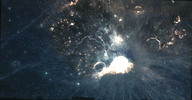
ZZ-ZZ-ZZ-FP-Clem-BrightAristarchus.gifAristarchus: the TLPs "Hottest Spot" (1)160 visiteA mosaic of more than 250 images showing the complex and diverse Aristarchus Region of the Moon in approximately "natural" colors (blue = 415 nanometers, green = 750 nanometers, red = 950 nanometers). The plateau is an uplifted block of complex, highland terrain, partly flooded by later mare basalt lavas. Dark, pyroclastic glasses partly cover the uplifted terrain. The crater Aristarchus (47 Km in diameter) has formed in the South-Western corner of the Plateau, excavating both highlands and mare rocks."
(10 voti)
|
|
| 165 immagini su 14 pagina(e) |
2 |  |
|
|
|
|
|
|
|
|
|








