| Piú votate - The Moon through LRO |
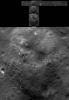
LRO-M114308099LE-EDM-GravityWasting-MF-LXTT.jpgEvidence of Gravity Wasting (an High-Def Image Mosaic by Dr M. Faccin - Lunexit Team)107 visiteUn piccolo-grande Capolavoro regalatoci non solo dalle ottiche di cui è dotato il Lunar Reconnaissance Orbiter, ma anche dalla Pazienza del nostro Marco Faccin.
Il risultato? Portate il frame a pieno schermo e definizione completa e quindi...cercate anche Voi le evidenze di Gravity Wasting che caratterizzano i piedi della collina: ce ne sono tante!
Noi ne abbiamo evidenziate alcune, in una zona omogena. Ma c'è ancora TANTISSIMO da vedere...MareKromium
(5 voti)
|
|
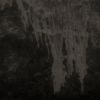
LRO-2500-Marius_Crater~0.jpgLandslides or unusual Surface-decoloration in Marius Crater? (Natural Colors; credits: Dr Paolo C. Fienga - Lunexit Team)80 visiteGrazie alla nostra Grande Amica e Partner Elisabetta Bonora, da oggi "Lunar Explorer Italia" è presente ed accessibile anche su Twitter.
Il nostro (e Vostro!) link - comunque già indicato nei "Links Suggeriti" nella Front Page di TruePlanets (sulla Dx) - è questo: http://twitter.com/lunexit .
Perchè questa "presenza" ulteriore?
Semplice, in un Mondo laddove la divulgazione della stupidità sembra costituire un trend in ascesa continua, noi (e Voi!) stiamo cercando di controbilanciare questa - orribile - tendenza mediante la Divulgazione della Ricerca, della Passione e, con tutti i nostri limiti, della Scienza.
Dalla Luna all'Infinito, naturalmente...
Dr Paolo C. Fienga - Lunar Explorer Italia
Presidente e Socio FondatoreMareKromium
(5 voti)
|
|

LRO-2500-Peary_Crater.jpgPeary Crater and the North Pole of the Moon82 visiteOne day in the not-too-distant future, lunar explorers may spend their winter holidays at the Lunar North Pole.
Peary, an irregularly-shaped Impact Crater centered at 88,5° North Lat. and approx. 30° East Long., could be the place to do just that.
Adjacent to the Lunar North Pole, Peary has areas along its Crater Floor cast in permanent shadow, but it also has areas along its rim that may be permanently illuminated by the Sun. The proximity to the North Pole, possible areas of permanent shadow and light, plus the potential for in-situ resources make Peary crater a challenging and enticing location for future human and robotic exploration.
Peary Crater is one of 50 specific sites being explored by lunar geologists using LROC images for NASA's Constellation Program.MareKromium
(5 voti)
|
|

LRO-Mare_Ingenii-M191830503LR-PCF-LXTT-IPF.jpgFeatures of Mare Ingenii (Absolute Natural Colors; credits for the additional process. and color.: Dr Paolo C. Fienga - Lunexit Team)147 visiteDear Friends, shall we go back to the Moon! The answer, of course, is "Yes", but...How? Well, since (apparently) there are no human missions planned in the very near Future (and for the time being), in order to do so (and possibly a little earlier than the AD 2025...), we decided to offer you, in Today's APOD, a really suggestive and impressive photographic panorama of the Lunar Mare Ingenii (such as the "Sea of Ingenuity") that was obtained by the NASA - Lunar Reconnaissance Orbiter.
Mare Ingenii is one of the few Lunar "Mare-like" Surface Features that is located in the so-called Far (or either "Dark") Side of the Moon. As a matter of fact, this Mare sits in the Ingenii Basin, whose material (according to some Planetary Scientists) can be related to the Pre-Nectarian Epoch or Period (note that the so-called Pre-Nectarian Period of the Lunar Geologic Timescale, runs from approx. 4,5 Billion Years ago - such as the time of the alleged formation of the Moon - to about 3,9 Billion Years ago, when the Nectaris Impact Basin formed after the occurrence of a large Meteor Strike); however, the Surface Material located in the Mare Ingenii itself, as well as in the Impact Craters which are immediately surrounding it, seems to relate, instead, to the Late Imbrian Epoch (remember that the Late Imbrian Epoch occurred, on the other hand, between approx. 3,8 to about 3,2 Billion Years ago and it is believed to be the Lunar Epoch during which the Mantle existing below the Major Lunar Impact Basins partially melted, and so filled them up with - mostly - Basalt).
The Dark Circular Surface Feature which dominates the Mare Ingenii is the Impact Crater named Thomson (a Crater that is approx. 112 Km in diameter). The Mare Ingenii also appears to be unevenly and thinly covered by a Layer of Lava (a fact, this one, which leads us to believe, once again, that the very distant past of the Moon was characterized by an almost continuous and, somehow, extraordinary violent Volcanic Activity, which was likely caused - if not entirely, at least for a very large part - by the occurrence of some powerful Tidal Stress which we believ that can be related to the action of the Earth itself). Furthermore, the Mare Ingenii contains one of the very few "Lunar (Collapse) Pits" which have so far been located on the Moon (but, anyway and for sake of clarity, just one of the VERY MANY Collapse Features located outside our Home Planet Earth).
The frame has been colorized in Absolute Natural Colors (such as the colors that a normal - meaning "in average" - human eye would actually perceive if someone were onboard the NASA - Lunar Reconnaissance Orbiter and then looked outside, towards the Surface of the Moon), by using an original technique created - and, in time, dramatically emproved - by the Lunar Explorer Italia Team.
MareKromium
(4 voti)
|
|

LRO-Craters-Tycho-Central_Peak-PCF-LXTT-0.jpgTycho's Peak (Absolute Natural Colors; credits for the additional process. and color.: Dr Paolo C. Fienga - Lunexit Team)239 visiteCaption NASA:"Tycho Crater's Central Peak Complex casts a long, dark shadow near Local Sunrise in this spectacular Lunarscape. The dramatic oblique view was recorded on June 10, 2011, by the Lunar Reconnaissance Orbiter. Shown in amazing detail, boulder strewn slopes and jagged shadows appear in the highest resolution version at 1,5 meters per pixel. The rugged Complex is about 15 Km wide, formed in uplift by the giant impact that created the well-known crater about 100 MYs ago. The Summit of its Central Peak reaches approx. 2 Km above the Floor".MareKromium
(4 voti)
|
|

LRO-M116365478LE-MF0-LXTT.jpgThe "Lunar Anthill" (CTX Frame; credits for the additional process.: Dr Marco Faccin - Lunexit Team)135 visitenessun commentoMareKromium
(4 voti)
|
|

LRO-M116365478LE-MF1-LXTT.jpgThe "Lunar Anthill" (EDM; credits for the additional process.: Dr Marco Faccin - Lunexit Team)122 visitenessun commentoMareKromium
(4 voti)
|
|

LRO-M102215743LC-2-MF-LXTT.jpgOrbital View (2)106 visitenessun commentoMareKromium
(4 voti)
|
|
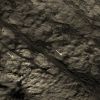
LRO-2500-Epigenes_A_Crater-2~0.jpgEpigenes A (Natural Colors; credits: Dr Paolo C. Fienga - Lunexit Team)75 visitenessun commentoMareKromium
(4 voti)
|
|

LRO-2500-Saha_E_Crater.jpgThe Floor of Crater "Saha E"63 visiteThe lava-like melt produced by impacts on the Moon can have a variety of morphologies.
The polygonal texture you see here is located on the Floor of Crater Saha E, an approx. 28-Km-diameter Impact Crater located East of Mare Smythii.
This texture could be the result of impact melt coating boulders and other deposits on the Floor of the Crater. From the perspective of exploration planning, impact melt deposits are scientifically interesting because they can be used to age-date impacts. Impact melts can also contain geochemical traces of the original impact, and often contain small fragments of the original pre-impact target rocks. LROC will be providing high-resolution images of many other fresh, relatively undegraded craters to document the complex aftermath of impact events as well as to define targets for future human lunar exploration.MareKromium
(4 voti)
|
|

LRO-2501-Oceanus_Procellarum~0.jpgLunar Landslide in an Unnamed Crater of Oceanus Procellarum (Natural Colors; credits: Dr Paolo C. Fienga - Lunexit Team)75 visitenessun commentoMareKromium
(4 voti)
|
|

LRO-2502-Mare_Imbrium.jpgMare Imbrium73 visitenessun commentoMareKromium
(4 voti)
|
|
| 69 immagini su 6 pagina(e) |
2 |  |
|
|
|








