|
|
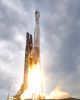
00-LRO-0001.jpgLiftoff...To the Moon!67 visitenessun commentoMareKromium
|
|

00-LRO-0002.jpgLiftoff...To the Moon!69 visitenessun commentoMareKromium
|
|
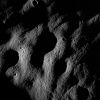
LRO-0000-365426main_nacl000000fd_middle.jpgCraters in the Lunar Highlands near Mare Nubium (1)70 visiteThese first two images show cratered regions near the moon's Mare Nubium Region, as photographed by the Lunar Reconnaissance Orbiter's LROC instrument. Impact craters feature prominently in both images. Older craters have softened edges, while younger craters appear crisp.
Each image shows a region 1400 meters (0,87 miles) wide, and features as small as 3 meters (9,8 feet) wide can be discerned. The bottoms of both images face Lunar North.MareKromium
|
|
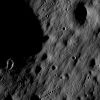
LRO-0001-365431main_nacl000000fd_top_detail.jpgCraters in the Lunar Highlands near Mare Nubium (2)74 visiteNASA's Lunar Reconnaissance Orbiter has transmitted its first images since reaching the moon on June 23, 2209.
The spacecraft's two cameras, collectively known as the Lunar Reconnaissance Orbiter Camera, or LROC, were activated June 30.
The cameras are working well and have returned images of a Region in the Lunar Highlands, South of Mare Nubium (Sea of Clouds).
As the moon rotates beneath LRO, LROC gradually will build up photographic maps of the Lunar Surface.
"Our first images were taken along the Moon's Terminator -- the dividing line between day and night -- making us initially unsure of how they would turn out", said LROC Principal Investigator Mark Robinson of Arizona State University in Tempe.
"Because of the deep shadowing, subtle topography is exaggerated, suggesting a craggy and inhospitable surface. In reality, the area is similar to the region where the Apollo 16 Astronauts safely explored in 1972. While these are magnificent in their own right, the main message is that LROC is nearly ready to begin its mission".MareKromium
|
|
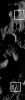
LRO-0002-365424main_nacl000000fd_boxes_small.jpgLocator Image73 visiteThis frame (Locator Image) shows the location of the previous two images in relation to each other. The Locator Image shows an area that is 3.542 meters (2,2 miles) wide by 14.000 meters (8,7 miles) long.
The Lunar coordinates are 34,4° South Lat. and 6,0° West Long.
MareKromium
|
|

LRO-0003a-369440main_lroc_apollo11_lrg.jpgSea of Tranquillity: the Apollo 11 Descent Stage from orbit115 visiteEd ora che è stato fatto quello che veniva chiesto da quasi 25 anni (e cioè FOTOGRAFARE le zone di Landing delle Missioni Apollo - affollate di mezzi abbandonati ed utensileria varia - così da essere "sicuri" che sulla Luna ci fossimo andati davvero), che cosa diranno mai i Saggi che, in dispetto dei sacrifici fatti e delle perdite sofferte (anche umane), hanno sempre negato che l'Uomo fosse arrivato a metter piede sulla Luna?
A che cosa si attaccheranno, questa volta?
Tranquilli, ve lo diciamo noi: diranno che queste immagini, ritraendo oggetti che "non possono" essere sulla Luna (perchè sulla Luna - ovviamente - non ci siamo mai andati...), sono a loro volta false. E così si potrà ricominciare a discutere, su libri, magazines e public forum (pieni, come sempre, di quegli individui che chiamiamo "Anonimi Sapienti"...) del "Nulla travestito da Qualcosa".
Perchè è così che si andrà avanti, sino a che il viaggio Terra-Luna non diventerà REALMENTE una routine, alla stregua di un "Roma - New York" o di un "Francoforte - Tokio".
Questo per gli Uomini di Domani.
Per quelli di Oggi, invece, solo una serie di fotografie, di ottima qualità ed altamente evocative, che ci riportano, quarant'anni dopo, a contemplare - come fossero "reliquie spaziali" - quello che i Valorosi "Apollo Boys" lasciarono sulla Luna: souvenir per le Generazioni che verranno e che, si spera, saranno più illuminate e lungimiranti di coloro che, oggi, calpestano il nostro Pianeta.
Caption NASA:"NASA's Lunar Reconnaissance Orbiter, or LRO, has returned its first imagery of the Apollo Moon Landing Sites. The pictures show the Apollo Missions' Lunar Module Descent Stages sitting on the Moon's Surface, as long shadows from a low Sun angle make the modules' locations evident.
The Lunar Reconnaissance Orbiter Camera, or LROC, was able to image 5 of the 6 Apollo Sites, with the remaining Apollo 12 Site expected to be photographed in the coming weeks. The satellite reached Lunar Orbit June 23 and captured the Apollo Sites between July 11 and 15. Though it had been expected that LRO would be able to resolve the remnants of the Apollo Mission, these first images came before the Spacecraft reached its final mapping orbit. Future LROC images from these sites will have two to three times greater resolution.
"The LROC team anxiously awaited each image", said LROC principal investigator Mark Robinson of Arizona State University.
"We were very interested in getting our first peek at the Lunar Module Descent Stages just for the thrill -- and to see how well the cameras had come into focus. Indeed, the images are fantastic and so is the focus".
Although these pictures provide a reminder of past NASA exploration, LRO's primary focus is on paving the way for the future. By returning detailed lunar data, the mission will help NASA identify safe landing sites for future explorers, locate potential resources, describe the moon's radiation environment and demonstrate new technologies.
"Not only do these images reveal the great accomplishments of Apollo, they also show us that Lunar Exploration continues", said LRO project scientist Richard Vondrak of NASA's Goddard Space Flight Center in Greenbelt, Md. "They demonstrate how LRO will be used to identify the best destinations for the next journeys to the Moon".
The spacecraft's current elliptical orbit resulted in image resolutions that were slightly different for each site but were all around four feet per pixel. Because the deck of the descent stage is about 12 feet in diameter, the Apollo relics themselves fill an area of about nine pixels. However, because the Sun was low to the horizon when the images were made, even subtle variations in topography create long shadows. Standing slightly more than ten feet above the Surface, each Apollo Descent Stage creates a distinct shadow that fills roughly 20 pixels.
The image of the Apollo 14 Landing Site had a particularly desirable lighting condition that allowed visibility of additional details. The Apollo Lunar Surface Experiment Package, a set of scientific instruments placed by the astronauts at the landing site, is discernable, as are the faint trails between the module and instrument package left by the Astronauts' footprints.
Launched on June 18, LRO carries seven scientific instruments, all of which are currently undergoing calibration and testing prior to the spacecraft reaching its primary mission orbit. The LROC instrument comprises three cameras - 2 High-Resolution Narrow Angle Cameras and one lower resolution Wide Angle Camera. LRO will be directed into its primary mission orbit in August, a nearly-circular orbit about 31 miles above the Lunar Surface.
Goddard built and manages LRO, a NASA mission with international participation from the Institute for Space Research in Moscow. Russia provided the neutron detector aboard the Spacecraft".MareKromium
|
|
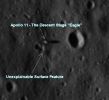
LRO-0003b-369440main_lroc_apollo11_lrg.jpgThe Apollo 11 Descent Stage and the "Mistery Cloud" (edm; credits: Lunar Explorer Italia)102 visiteA nostro parere non serve questionare - stupidamente - la realtà o meno delle Missioni Apollo per cercare "Mistero" (o "Complotto"...): guardate questo edm derivato dal frame precedente. Le ombre ci dicono tutto: altezze ipotetiche degli oggetti ripresi, inclinazioni, albedo etc.
L'ombra del Descent Stage dell'Apollo 11 è spettacolarmente chiara e va anche a dimostrare la correttezza della nostra ricostruzione (vecchia di 5 anni ormai) in ordine al motivo per cui alcuni frames Apollo 11 SEMBRAVANO presentare un orizzonte "tagliato".
E allora? Dov'è il "Mistero"?
Semplice: osservate il rilievo indicato dalla freccia e capirete. Visivamente si presenta come un piccolo "mound" - simile a quello prossimo all'area di Landing dell'Apollo 12 e fotografato più volte da Bean e Conrad - ma, in realtà, la sua texture lo rende simile ad una sorta di nuvola. Inoltre, se guardate con attenzione, noterete un'ombra incongrua fra il rilievo misterioso ed il cratere latistante.
Insomma: la Luna è vicina...Ma ancora ben lungi dall'essere pienamente compresa in tutte le sue sfaccettature e fenomenologie.MareKromium
|
|

LRO-0004a-369441main_lroc_apollo14_lrg.jpgFra Mauro: the Apollo 14 Landing Site (ctx frame)95 visitenessun commentoMareKromium
|
|

LRO-0005b-369228main_ap14labeled_540.jpgFra Mauro: the Apollo 14 Landing Site (edm - labeled)75 visitenessun commentoMareKromium
|
|

LRO-0006a-369442main_lroc_apollo15_lrg.jpgMount Hadley: the Apollo 15 Landing Site (ctx frame)69 visitenessun commentoMareKromium
|
|
LRO-0006b-369442main_lroc_apollo15_lrg.jpgMount Hadley: the Apollo 15 Landing Site (edm)105 visitenessun commentoMareKromium
|
|
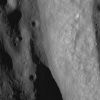
LRO-0007-375109main_lroc_20090730_burgcrater_full.jpgInside Bürg Crater78 visiteBürg is a 40-Km (about 25 miles) diameter, Copernican-aged, complex crater located within Lacus Mortis (the Lake of Death), on the Near-Side of the Moon.
Complex craters, like this one, have terraced walls and a Central Peak (not shown here). The Rim of the crater is along the right side and the walls slope down towards the left of the image.
The terrace is about 3,5 Km (about 2,2 miles) wide and is pockmarked with smaller craters. Terraces form as sections of the Crater wall slump downward after the impact (image width: about 7,9 Km across, roughly 4,9 miles).
Note that there are very few impact craters on the wall of the Crater. Usually fewer craters indicate a surface is younger, however in this case it's simply that material slides down the crater wall's steep slopes, erasing craters.
Note also that LROC, LRO's camera, is powerful enough to see a shadow cast by a boulder about 8 mt wide (about 26 feet) at the contact between the wall and the terrace near the top of the figure.MareKromium
|
|
| 69 immagini su 6 pagina(e) |
1 |
 |
|
|
|








