| |

| Piú viste - The Moon After Apollo 17 |

ZZ-ZZ-U-Flash-MeteorImpact-Moon.gifMeteor Strike on the New Moon's limb? (GIF-Movie)205 visiteTLP? No: questo GIF-Movie ci mostra - e MOLTO bene! - l'effetto luminoso prodotto da un bolide che impatta la Luna. Un rapido lampo particolarmente intenso ("Primary Flash" o "bagliore da impatto") e quindi una serie di lampi ulteriori - dovete osservare il filmato varie volte per riuscire a coglierli - che degradano in una debole luminescenza la quale, infine, viene avvolta dall'oscurità ("Secondary Flashes" o "bagliori secondari da impatto").
Ora, la domanda che ci è stata rivolta è questa: i "Lunar Flash" derivanti da (o connessi a) Meteor Strikes (o Impatti Meteorici) possono essere considerati del Transient Lunar Phoenomena?
Ebbene, se - da un certo punto di vista - ogni fenomeno estemporaneo (ergo anche il lampo di luce derivante da un impatto) è, per definizione, un "Evento Transiente", la Verità, se non altro a parere di chi scrive, è che i TLP "Puri" NON RICOMPRENDONO i bagliori da impatto.MareKromium
|
|

ZZ-ZZ-U-March-2013-lunar-impact-as-seen-from-Earth_NASAS-Scientific-Viz-Studio.jpgImpact or Volcanic Residual Activity?204 visiteFor a while now, astronomers with their telescopes pointed at the Moon have noticed short flashes of light, multiple times a week on the Moon's surface. The flashes seemed to begin, light up a part of the moon's landscape and die off in a matter of seconds. Other times, it's the exact opposite: the surface grows darker in a small region than the rest of the Moon very briefly.
Oddly, this phenomena has been observed on-and-off by astronomers for over 60 years, but without an explanation for it. A team of researchers from the Julius-Maximilians-Universitat Wurzburg (JMU) in Bavaria, Germany decided they've had enough of the mystery — they're decoding the strange, regular flashes with the hope of finding what's causing the "transient lunar phenomena".
The team has built a special telescope for the task that uses artificial intelligence (AI) to autonomously watch for and pick up on the light flashes.
The telescope collects video and photographs whenever it picks up on a flash of light, which will then be studied by scientists to decode the underlying cause. The team is planning to upgrade it soon with a neural network that can also filter out false positives, like birds and airplanes, from actual flashes from the lunar surface. For now, researchers do have some ideas about what could be causing them.
One of the causes could be the Moon's seismic activity, Hakan Kayal, professor of space technology at JMU, told Metro. "When the surface moves, gases that reflect sunlight could escape from the interior of the moon. This would explain the luminous phenomena, some of which last for hours".
However, the brief flashes that only last minutes or seconds are less understood. The leading theory for these shorter flashes is meteorite impacts. "Such flashes could also occur when electrically charged particles of the solar wind react with moon dust".MareKromium
|
|

Tycho Crater - Clem (color).jpgTycho Crater (true color)201 visitenessun commento
|
|
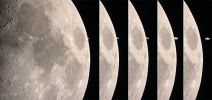
ZV-Moon and Saturn.jpgMoon and Saturn201 visiteCaption NASA originale:"In this sharp sequence of telescopic digital images from the Powell Observatory near Louisburg, Kansas, USA, Saturn is seen reappearing from behind the bright lunar limb over a period of about 2 minutes. The ringed planet emerges above the dark, smooth Lunar Mare Crisium".
|
|

Moon Eclypse - full.jpgFrom white, to white (passing through orange and red)201 visiteUn bel montaggio fotografico che ci mostra l'intera eclissi di Luna dello scorso Ottobre 2004. Si va dal "bianco brillante" della Luna prima dell'eclissi, sino al "bianco brillante" del dopo-eclissi, passando per la ramatura e le altre diverse colorazioni - ora aranciate, ora rossastre - che il nostro Satellite assume durante le diverse fasi del fenomeno.
Una bella immagine, ottenuta facendo ricorso ad uno stile fotografico molto in voga - nel campo della fotografia delle eclissi lunari - tra la fine degli anni '60 e la metà degli anni '70.
|
|

New_Lunar_Crater.jpgManmade new Lunar Impact Crater: Luna 25193 visitenessun commentoMareKromium
|
|

ZZ-ZZ-MoonMirEarth_STS91_big.jpgEarth - Moon - MIR from STS 91191 visiteDa "NASA - Picture of the Day" del 30 Aprile 2005:"While orbiting the planet during their June 1998 mission, the crew of the Space Shuttle Discovery photographed this view of two moons of Earth. Thick storm clouds are visible in the lovely Blue Planet's nurturing atmosphere and, what was then Earth's largest artificial moon, the spindly Russian Mir Space Station can be seen above the Planet's limb. The bright spot to the right of Mir is Earth's very large natural satellite, the Moon. The Mir orbited planet Earth once every 90 minutes about 200 miles above the planet's surface or about 4.000 miles from Earth's center. The Moon orbits once every 28 days at a distance of about 250.000 miles from the center of the Earth".
|
|

ZZ-ZZ-ZZ-Crater 297.jpgCrater 297 and "artificial blurring" over the Moon191 visiteUn bellissimo fotomosaico regalatoci dal Dr Alessio Feltri per vedere non solo la zona sorvolata dall'Apollo 10 al momento del suo 'strano incontro' con quello che abbiamo definito "space debris" (rottame spaziale), ma anche un (nuovo) esempio di come la NASA (o chi per essa...) manipola, altera ed infine confonde le immagini (probabilmente) imbarazzanti della superficie lunare.
Scopo della sfuocatura che vediamo nel frame Clementine alla Vostra Dx? Beh, noi non lo sappiamo, ma Voi potete sempre provare a chiedere lumi alla NASA...
|
|
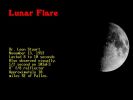
ZZ-ZZ-U-Flare.jpgTransient Lunar Phoenomena (TLP) - 1190 visiteDietro l'acronimo TLP (linguaggio internazionale per "Transient Lunar Phoenomena") o FLT (per "Fenomeni Lunari Transitori") si nasconde, forse, uno dei più grandi - e vicini! - "misteri" ai quali la Scienza Convenzionale ancora NON è riuscita a dare una risposta convincente, sebbene la fenomenologia in oggetto le fosse nota sin dall'Antichità. Ma che cosa sono i TLP?
Sono "Eventi Estemporanei", imprevisti ed imprevedibili, i quali si risolvono - nella maggior parte dei casi - in "brillamenti" (che possono manifestarsi in forma di "sparks"--> scintille o "flares"--> fiammate o fiaccole) della superficie lunare. Si tratta di luci (di colore bianco, rossastro o azzurro, per lo più) che si accendono sulla superficie della Luna e che sono così brillanti da risultare visibili anche dalla Terra e SENZA l'ausilio di particolari strumenti. Questi TLP, come avremo occasione di vedere, si manifestano in alcune zone in particolare (i.a. i Crateri Aristarco ed Alfonso) e sono stati osservati da Astronomi ed Astronauti.
|
|

ZZ-ZZ-The Moon-1.jpgThe "Towers" of the Moon: Alien artifacts, Myth or Bogus? (1)190 visiteNoi non abbiamo idea di chi sia il Ricercatore - anzi: l'Investigatore - che si firma Joseph P. Skipper (il "Capitano" J.P.), ma abbiamo letto quasi tutti i suoi lavori (tanti, tutti pubblicati sul Sito "Mars Anomaly Research", che Vi suggeriamo caldamente di andare a guardare) e ci siamo convinti di aver trovato degli spunti molto interessanti, sia sul Capitolo "Luna", sia sul Capitolo "Marte", che proveremo a rivedere insieme a Voi.
Forse siamo solo su una piccola isola sperduta nel 'Mare Magnum' delle speculazioni e/o forse ci siamo imbattuti in una sorta di Richard Hoagland dalle idee leggermente più 'alternative' e, dal nostro punto di vista, sostanziabili: non lo sappiamo ancora.
Ciò che sappiamo è che il materiale raccolto e studiato dall'Investigatore J.P. Skipper è decisamente interessante e quindi meritevole di essere visto e commentato: noi ci proveremo, al meglio delle nostre capacità e poi sarete Voi, come sempre, a giudicare i risultati.
Purtroppo, con una comunicazione da noi ricevuta oggi, 12 Giugno 2005, il Dr Skipper ci ha NEGATO il permesso di utilizzare – in qualsiasi modo ed a qualsiasi fine – il materiale da lui prodotto e pubblicato sul Sito “Mars Anomaly Research”.
Questa decisione – che, in tutta onestà, ci lascia un po’ perplessi – rientra comunque nel diritto che ciascun Ricercatore ha di usare il proprio materiale ed i propri studi come meglio crede e ritiene, in ottemperanza a quanto previsto e stabilito dalle Leggi e dalle Normative Internazionali in materia di Copyright e di tutela del Diritto di Autore.
Pertanto, pur ritenendo la decisione del Dr Skipper come un atto ‘vagamente ed inutilmente scortese’, siamo costretti e rimuovere tutti i frames (ed i relativi commenti) estratti dal Sito “Mars Anomaly Research”, al quale comunque Vi rimandiamo.
|
|

ZZ-ZZ-U-September-2013.jpgAnother "Meteor Strike"?190 visiteAny type of clustering in sightings would be significant because one would expect a rather random distribution across the surface of the moon. This has not been the case. During Moon-Blink, NASA discovered that almost a third of the known sightings at the time came from the Aristarchus crater. The first known sighting was on February 4th, 1821, by Captain Kater and several more were seen for the next 100 years. Many described the event as resembling a star appearing momentarily in the crater or a wall being illuminated (Armagh, Hanks).
The first notable modern observation of the event took place on October 13, 1959, when E.H. Rowe looked at the crater through his 36-inch telescope. He also saw the white flash, but unlike others, he also spotted a reddish glow that was at the perimeter of the white flash. It lasted a few seconds, then only the normal glow remained. Just over 4 years later, on October 29, 1963, James A, Greenacre and Edward Barr (both at Lowell Observatory) examined the crater. They too saw red, orange, and pink colors but did not secure any pictures. However, Greenacre was established as a well-respected lunar expert, so the findings had some weight to them. And a few days later, on November 1 and 2, 1963 Zdenek Kopal and Thomas Rackham see similar luminescence on the moon and were able to photograph them. These findings were published in Scientific American that year, and more and more sightings of the event were being recorded by others. Astronauts even got a first-hand view of this. During Apollo 11, NASA was told that a TLP was happening at that moment in the crater. They asked the Apollo 11 crew to look at the crater from their vantage point and found that indeed the general area seemed to glow (Seargent 14, Hanks).
The usual theories came into play with the crater to explain its glowing aspects, and it should be noted that Aristarchus has some interesting properties in and of itself that make the seemingly anomalous clustering make more sense. For starts, its albedo (reflectivity) is much higher than its surroundings. Also, it has a central peak in its center that is rather high, catching lots of sunlight and adding to the contrast of its surroundings. And it’s in a prime viewing spot, being easy to spot and also visually interesting to look at. All of these make it a prime location for seeing TLPs.
Hanks, Micah. “The Aristarchus Anomaly: A Beacon on the Moon?” mysteriousuniverse.org. 8th Kind Pty Ltd, 28 Nov. 2013. Web. 25 Sept. 2018MareKromium
|
|

Moon Eclypse.jpgMoon's eclypse188 visiteUna suggestiva immagine della Luna durante il verificarsi di un fenomeno conosciuto anche come "ambratura" (o "ramatura"). Si tratta, come la stessa parola ce lo fa intuire chiaramente, dell'assunzione, da parte della Luna, di un colore tipo ambra o rame, durante le fasi iniziali di un'eclisse. Ad onor del vero, però, l'effetto cromatico di questa immagine è stato leggermente esaltato, così da potersi mettere in migliore evidenza non solo i colori, ma anche alcuni dettagli superficiali del nostro Satellite naturale. Per gli amanti e cercatori di TLP, fra l'altro, occorre dire che le fasi di eclisse sono generalmente consigliate per cercare di individuare fenomeni transitori.
|
|
| 165 immagini su 14 pagina(e) |
|
|
4 | |
|
|
|
|
|
|
|
|
|








