| Piú viste - The Moon After Apollo 17 |

Triesnecker-01.jpgTriesnecker (2)90 visitenessun commento
|
|

Triesnecker-02.jpgTriesnecker (3) - detail mgnf90 visitenessun commento
|
|
The Moon-05.jpgThe Moon, full frame, from Mars Reconnaissance Orbiter (5)90 visitenessun commento
|
|
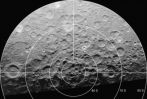
ZZ-ZZ-ZZ-ZZ-ZZ-Lunar South Pole.jpgNo "Lunar Ice" at the South Pole...89 visite"...a new radar survey of the Moon’s Southern Pole has cast doubt on the hope that there might be accessible deposits of water ice in permanently dark craters. This new survey, performed with the Arecibo Observatory in Puerto Rico, found elevated Hydrogen levels in regions of bright sunlight - not just inside the shadowed walls of craters. It seems that scattered rocks associated with impact craters have given previous instruments a false reading...".
|
|

Kane Crater - Light Ray (1).jpgLight rays inside Kane Crater (1)87 visitenessun commento
|
|
Moon Panorama - 2.jpgMoon Panorama (3)87 visitenessun commento
|
|

The Moon-00.jpgThe Moon, in natural colors, from Mars Reconnaissance Orbiter (1)87 visitenessun commento
|
|

The Moon-04.jpgThe Moon, in red filter, from Mars Reconnaissance Orbiter (4)87 visitenessun commento
|
|

The Moon - North Pole - Galileo.JPGThe North-Pole of the Moon, from Galileo86 visitenessun commento
|
|

The Moon-02.jpgThe Moon, in infrared, from Mars Reconnaissance Orbiter (3)85 visitenessun commento
|
|

ZZ-ZZ-ZZ-ZZ-ZZ-ZZ-ZZ-The Moon.jpgThe North Pole of the Moon85 visiteCaption NASA originale:"This arresting image of the third quarter Moon in the excellent skies above the Pine Crest Farm Observatory, Dell Prairie, Wisconsin, was recorded with a 24" telescope and digital camera on October 19, 2000. Marvelously detailed, especially along the terminator or shadow line between lunar night and day, this cropped version of the full mosaicked image shows the cratered North Polar Region and the broad smooth Mare Imbrium. Notable at the northern edge of the Mare Imbrium (Sea of Rains) is the 95 Km wide dark crater Plato, while the dramatic straight "cut" to the right of Plato, (toward the terminator) is the Vallis Alpes (Alpine Valley). The long, graceful arc of the lunar Montes Apenninus in the lower portion of the image sweeps Southward along the boundary of the mare toward the left and ends near the bright ray crater Copernicus at the picture's edge. In 1971, Apollo 15 landed near the gap beyond the opposite (northern) end of the Montes Apenninus arc".
|
|

00-Libration-250px-Lunar_libration_with_phase2.gifThe "Lunation": such as a full "Lunar Cycle"85 visitenessun commentoMareKromium
|
|
| 165 immagini su 14 pagina(e) |
 |
|
|
|
|
|
|
|
|
13 |
|








