| Piú viste - The Moon through LRO |

LRO-1003-392734-MainCabaeus1_full.jpgLCROSS Impact Location70 visitenessun commentoMareKromium
|
|
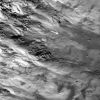
LRO-2500-Epigenes_A_Crater-3.jpgEpigenes A70 visiteImpact Melt (the dark material) flowed around and over Rocky Outcrops on the upper portion of the Crater Wall.
The white arrow points to the Crater Floor.
The initial outward surge of material during the excavation of the crater threw Impact Melt near the Rim and then gravity pulled the Melt downward during the modification stage of the impact.
(this image is approx. 540 meters wide)MareKromium
|
|

LRO-0006a-369442main_lroc_apollo15_lrg.jpgMount Hadley: the Apollo 15 Landing Site (ctx frame)69 visitenessun commentoMareKromium
|
|

LRO-2500-Marius_Crater.jpgLandslides or unusual Surface-decoloration in Marius Crater?69 visiteImpact Events, Volcanism, and Tectonism form the majority of features found on the Moon. However, Landslides are an important modifier of the landscape at small scales.
Ultimately, the source of Landslides are Seismic Events triggered by Impacts or movements deep inside the Moon. These shaking events cause poorly consolidated material on steep slopes to slide downhill.
In this case the slide spreads out in a complex of narrow finger-like streamers. What controls this distinctive pattern? The process is controlled by the energy of the shaking, the size of particles in the slide, the steepness of the slope, and volume of the source deposit.
Mars also has many Landslide Deposits, so scientists are using the new LROC data to compare with these martian counterparts.
Marius Crater (approx. 41 Km diameter) is located in Oceanus Procellarum (11,9° North and 50,8° West) and is notable for its mare filled floor (unequivocal evidence that it formed before before the surrounding mare basalts flooded the Region).MareKromium
|
|
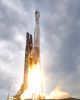
00-LRO-0001.jpgLiftoff...To the Moon!68 visitenessun commentoMareKromium
|
|

LRO-0007a-369443main_lroc_apollo16_lrg.jpgDescartes Highlands: the Apollo 16 Landing Site (ctx frame)66 visitenessun commentoMareKromium
|
|

LRO-1006-392811main_vlcsnap-2009-10-09-04h20m01s95_full.jpgLCROSS impacting the Moon66 visiteThe LCROSS mission operations team initiated power-up of the LCROSS science payload and saw this view of the Moon.MareKromium
|
|

LRO-0008b-369444main_lroc_apollo17_lrg.jpgTaurus-Littrow Highlands: the Apollo 17 Landing Site (edm)63 visitenessun commentoMareKromium
|
|

LRO-2500-Saha_E_Crater.jpgThe Floor of Crater "Saha E"63 visiteThe lava-like melt produced by impacts on the Moon can have a variety of morphologies.
The polygonal texture you see here is located on the Floor of Crater Saha E, an approx. 28-Km-diameter Impact Crater located East of Mare Smythii.
This texture could be the result of impact melt coating boulders and other deposits on the Floor of the Crater. From the perspective of exploration planning, impact melt deposits are scientifically interesting because they can be used to age-date impacts. Impact melts can also contain geochemical traces of the original impact, and often contain small fragments of the original pre-impact target rocks. LROC will be providing high-resolution images of many other fresh, relatively undegraded craters to document the complex aftermath of impact events as well as to define targets for future human lunar exploration.MareKromium
|
|
|
|
|
| 69 immagini su 6 pagina(e) |
 |
|
|
6 |
|








