| Piú viste - The Moon through LRO |
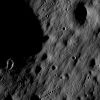
LRO-0001-365431main_nacl000000fd_top_detail.jpgCraters in the Lunar Highlands near Mare Nubium (2)75 visiteNASA's Lunar Reconnaissance Orbiter has transmitted its first images since reaching the moon on June 23, 2209.
The spacecraft's two cameras, collectively known as the Lunar Reconnaissance Orbiter Camera, or LROC, were activated June 30.
The cameras are working well and have returned images of a Region in the Lunar Highlands, South of Mare Nubium (Sea of Clouds).
As the moon rotates beneath LRO, LROC gradually will build up photographic maps of the Lunar Surface.
"Our first images were taken along the Moon's Terminator -- the dividing line between day and night -- making us initially unsure of how they would turn out", said LROC Principal Investigator Mark Robinson of Arizona State University in Tempe.
"Because of the deep shadowing, subtle topography is exaggerated, suggesting a craggy and inhospitable surface. In reality, the area is similar to the region where the Apollo 16 Astronauts safely explored in 1972. While these are magnificent in their own right, the main message is that LROC is nearly ready to begin its mission".MareKromium
|
|

LRO-2501-Oceanus_Procellarum~0.jpgLunar Landslide in an Unnamed Crater of Oceanus Procellarum (Natural Colors; credits: Dr Paolo C. Fienga - Lunexit Team)75 visitenessun commentoMareKromium
|
|
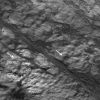
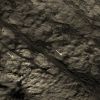
LRO-2500-Epigenes_A_Crater-2.jpgEpigenes A75 visiteAnother example of dark Impact Melt flows channeling through the preexisting material on the Crater Wall.
The white arrow points to the Crater Floor.
(this image is approx. 540 meters wide)MareKromium
|
|
LRO-2500-Epigenes_A_Crater-2~0.jpgEpigenes A (Natural Colors; credits: Dr Paolo C. Fienga - Lunexit Team)75 visitenessun commentoMareKromium
|
|
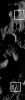
LRO-0002-365424main_nacl000000fd_boxes_small.jpgLocator Image74 visiteThis frame (Locator Image) shows the location of the previous two images in relation to each other. The Locator Image shows an area that is 3.542 meters (2,2 miles) wide by 14.000 meters (8,7 miles) long.
The Lunar coordinates are 34,4° South Lat. and 6,0° West Long.
MareKromium
|
|

LRO-2501-Oceanus_Procellarum.jpgLunar Landslide in an Unnamed Crater of Oceanus Procellarum74 visiteA key part of the LROC science investigation is the imaging and analysis of fresh, Copernican-aged Craters (such as Craters younger than 1,1 Billion Years), like this small (6-Km diameter) example at the edge of Oceanus Procellarum, West of Balboa Crater.
The LROC team has seen a variety of landforms related to these important lunar features. For example, a Landslide on the Crater wall partially covers the solidified impact melts on the floor. The Landslide clearly happened after the Crater initially formed; the materials were likely dislodged by seismic shaking from nearby smaller impacts.
These young, fresh craters preserve an vital record of the impact process.
Where does ejecta come from? How much impact melt is produced? How thick is ejecta? What is the importance of self-secondary impacts?
These are only some of the important scientific questions that lunar scientists can address by studying these craters.
As geologic time progresses, the pristine features in fresh craters are worn down by impacts of all sizes. Understanding young craters help geologists piece together the history of ancient degraded craters, an understanding particularly useful for planning future human missions to the Moon. The best way to explore fresh craters like this one, of course, would be with Astronauts.
However, until humans return to the Moon, lunar geologists will analyze images like this for clues, as well as comparing the landforms like the one visible here with other craters on the Moon, Mars, and impact structures on Earth.MareKromium
|
|
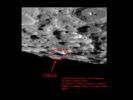
LRO-1005-392781main_800_600_NMSU_3_5m_Agile_preimpact_full.jpgLCROSS impacting the Moon73 visitenessun commentoMareKromium
|
|
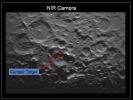
LRO-1013-392902main_LCROSS_2_full.jpgLCROSS Impact Location73 visiteLCROSS impact crater as seen with the Near InfraRed (NIR) camera.MareKromium
|
|

LRO-2502-Mare_Imbrium.jpgMare Imbrium73 visitenessun commentoMareKromium
|
|

LRO-0008a-369444main_lroc_apollo17_lrg.jpgTaurus-Littrow Highlands: the Apollo 17 Landing Site (ctx frame)72 visitenessun commentoMareKromium
|
|

LRO-0000-365426main_nacl000000fd_middle.jpgCraters in the Lunar Highlands near Mare Nubium (1)71 visiteThese first two images show cratered regions near the moon's Mare Nubium Region, as photographed by the Lunar Reconnaissance Orbiter's LROC instrument. Impact craters feature prominently in both images. Older craters have softened edges, while younger craters appear crisp.
Each image shows a region 1400 meters (0,87 miles) wide, and features as small as 3 meters (9,8 feet) wide can be discerned. The bottoms of both images face Lunar North.MareKromium
|
|

00-LRO-0002.jpgLiftoff...To the Moon!70 visitenessun commentoMareKromium
|
|
| 69 immagini su 6 pagina(e) |
 |
|
|
5 |
|








