| Piú viste - The Moon through LRO |
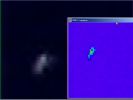
LRO-1008-392738main_vlcsnap-2009-10-08-19h02m22s101.pngGo "Centaur", go!84 visiteImage of the Centaur separation as viewed from the InfraRed Camera.
LCROSS Centaur Separation occurred at 9:50 p.m. EDT (6:50 p.m. PDT), Oct. 8, 2009. After separation, the Spacecraft performed a 180° pitch maneuver (turning around) to reorient the LCROSS science payload towards the receding Centaur.MareKromium
|
|
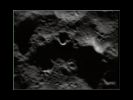
LRO-1007-392833main_vlcsnap-2009-10-09-04h33m37s65_full.jpgLCROSS impacting the Moon84 visiteA closer view of the Moon as the LCROSS Spacecraft approaches impact.MareKromium
|
|

LRO-2503-Mare_Moscoviense.jpgMare - Highlands Boundary in Mare Moscoviense84 visiteMare Moscoviense: a "Window" to the Lunar Far-Side Volcanism
It's clear from looking at pictures of the Moon that the Near-Side and the Far-Side are very different from a geologic standpoint.
The darker, basaltic mare deposits dominate the Near-Side, whereas the Far-Side is dominated by bright deposits of anorthosite thought to be remnants of the Moon's original crust. Mare Moscoviense is one of the few (and also the largest) deposits of mare basalts on the Lunar Far-Side.
Why are there so many mare basalts on the Near-Side, but so few on the Far-Side? Lunar scientists simply don't know the answer to that question. One idea is that the Far-Side crust is simply thicker than the near side crust, and rising basaltic magma simply solidified before it was able to push through the thicker Far-Side crust. That's where Moscoviense comes in. We know enough about the Moscoviense Region from previous missions that we have a well-defined set of questions that potential future missions might be able to answer. For example, the Lunar Prospector mission showed that there are high concentrations of thorium in the Moscoviense Basin. Thorium acts as a tracer for the Lunar KREEP (Potassium - K -, Rare Earth Elements and Phosphorus) geochemical component found in abundance on the Near-Side but not on the Far-Side.
Understanding the extent and distribution of thorium in the basin may tell us about the global distribution of the Lunar KREEP component and thus the evolution of the Lunar Mantle. We also know from the Clementine mission that the Moscoviense basalts are rich in both Iron and Titanium. Since basalts form by partial melting of the Lunar Mantle, sampling Moscoviense basalts provides lunar scientists with vital insights into how the Lunar Mantle on the Far-Side differs from the Near-Side one, which in turn would help us to learn why mare basalts are so much rarer on the Far-Side and provide key insights about the formation of all of the terrestrial planets, including Mars and Earth.
For these reasons, a Constellation Program region of interest is located within Mare Moscoviense. The region is at the edge of Moscoviense, allowing explorers to collect samples from both the mare basalts and the surrounding highlands terrain during their traverses.
The materials at the edge of the basin provide important insights into the formation of the Moscoviense Basin itself. By exploring and sampling the Moscoviense Region, we would date the basalt flows and definitively determine their composition. This sampling would let us determine how Moscoviense basalts differ from the near side basalts sampled during Apollo. Age-dating Moscoviense basalts also provides important insights into the history of lunar volcanism by determining whether the Moscoviense basalts are older or younger than Near-Side basalts.
While the scientific goals of exploring the Moscoviense Region are certainly important, no less important is access to key lunar resources. The lunar regolith (the broken-up rocks and impact products that make up the first 10 meters or so of the Lunar Surface) in this region is derived in part from the local titanium-rich Moscoviense basalts. This regolith material could be used for a variety of vital purposes, including the construction of human habitats, radiation shielding, or as feedstock for local resource utilization.
Taking a longer view, Titanium is an important industrial material on Earth, and it will be very important for indigenous lunar industrial development.MareKromium
|
|
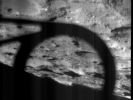
LRO-1004-392792main_1024_768_GeminiNorth_NightBeforeImpact_full.jpgLCROSS impacting the Moon83 visitenessun commentoMareKromium
|
|

LRO-2500-Peary_Crater.jpgPeary Crater and the North Pole of the Moon82 visiteOne day in the not-too-distant future, lunar explorers may spend their winter holidays at the Lunar North Pole.
Peary, an irregularly-shaped Impact Crater centered at 88,5° North Lat. and approx. 30° East Long., could be the place to do just that.
Adjacent to the Lunar North Pole, Peary has areas along its Crater Floor cast in permanent shadow, but it also has areas along its rim that may be permanently illuminated by the Sun. The proximity to the North Pole, possible areas of permanent shadow and light, plus the potential for in-situ resources make Peary crater a challenging and enticing location for future human and robotic exploration.
Peary Crater is one of 50 specific sites being explored by lunar geologists using LROC images for NASA's Constellation Program.MareKromium
|
|

LRO-0007b-369443main_lroc_apollo16_lrg.jpgDescartes Highlands: the Apollo 16 Landing Site (edm)81 visitenessun commentoMareKromium
|
|
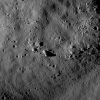
LRO-0008-376470main_tsiol438_lr_area.jpgTsiolkovskiy Crater81 visiteThe Far-Side Crater Tsiolkovskiy is one of the most spectacular and unique geologic features on the Moon.
Identified in the first image of the Far-Side, and named after visionary space pioneer Konstantin Tsiolkovskiy, Tsiolkovskiy Crater (185 Km diameter) has a an irregular (meaning: non-circular) shape, a Central Peak, and is completely filled with mare basalt.
Many geological and geomorphological features can be seen within and around the Crater, making this a particularly interesting place on the Moon to work and study.MareKromium
|
|

LRO-2500-Epigenes_A_Crater-1.jpgEpigenes A80 visiteA plethora of Boulders surrounds braided flows of impact melt along the Inner Wall of the Crater Epigenes A. As the melt moves toward the Crater Floor (direction indicated by white arrow), the flow buries and moves boulders.
Epigenes A is an about 18-Km-diameter Impact Crater located at 66,9° North and 0,3° West, on the Rim of crater W. Bond.
(this NAC image is 540 meters wide)MareKromium
|
|
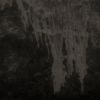
LRO-2500-Marius_Crater~0.jpgLandslides or unusual Surface-decoloration in Marius Crater? (Natural Colors; credits: Dr Paolo C. Fienga - Lunexit Team)80 visiteGrazie alla nostra Grande Amica e Partner Elisabetta Bonora, da oggi "Lunar Explorer Italia" è presente ed accessibile anche su Twitter.
Il nostro (e Vostro!) link - comunque già indicato nei "Links Suggeriti" nella Front Page di TruePlanets (sulla Dx) - è questo: http://twitter.com/lunexit .
Perchè questa "presenza" ulteriore?
Semplice, in un Mondo laddove la divulgazione della stupidità sembra costituire un trend in ascesa continua, noi (e Voi!) stiamo cercando di controbilanciare questa - orribile - tendenza mediante la Divulgazione della Ricerca, della Passione e, con tutti i nostri limiti, della Scienza.
Dalla Luna all'Infinito, naturalmente...
Dr Paolo C. Fienga - Lunar Explorer Italia
Presidente e Socio FondatoreMareKromium
|
|
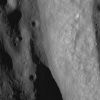
LRO-0007-375109main_lroc_20090730_burgcrater_full.jpgInside Bürg Crater79 visiteBürg is a 40-Km (about 25 miles) diameter, Copernican-aged, complex crater located within Lacus Mortis (the Lake of Death), on the Near-Side of the Moon.
Complex craters, like this one, have terraced walls and a Central Peak (not shown here). The Rim of the crater is along the right side and the walls slope down towards the left of the image.
The terrace is about 3,5 Km (about 2,2 miles) wide and is pockmarked with smaller craters. Terraces form as sections of the Crater wall slump downward after the impact (image width: about 7,9 Km across, roughly 4,9 miles).
Note that there are very few impact craters on the wall of the Crater. Usually fewer craters indicate a surface is younger, however in this case it's simply that material slides down the crater wall's steep slopes, erasing craters.
Note also that LROC, LRO's camera, is powerful enough to see a shadow cast by a boulder about 8 mt wide (about 26 feet) at the contact between the wall and the terrace near the top of the figure.MareKromium
|
|

LRO-1002-392723-MainCabaeus_full.jpgLCROSS Impact Location79 visitenessun commentoMareKromium
|
|

LRO-0005b-369228main_ap14labeled_540.jpgFra Mauro: the Apollo 14 Landing Site (edm - labeled)76 visitenessun commentoMareKromium
|
|
| 69 immagini su 6 pagina(e) |
 |
|
4 | |
|








