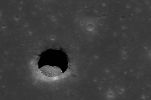
LRO-Mare_Ingenii-M191830503LR-PCF-LXTT-IPF.jpgFeatures of Mare Ingenii (Absolute Natural Colors; credits for the additional process. and color.: Dr Paolo C. Fienga - Lunexit Team)147 visiteDear Friends, shall we go back to the Moon! The answer, of course, is "Yes", but...How? Well, since (apparently) there are no human missions planned in the very near Future (and for the time being), in order to do so (and possibly a little earlier than the AD 2025...), we decided to offer you, in Today's APOD, a really suggestive and impressive photographic panorama of the Lunar Mare Ingenii (such as the "Sea of Ingenuity") that was obtained by the NASA - Lunar Reconnaissance Orbiter.
Mare Ingenii is one of the few Lunar "Mare-like" Surface Features that is located in the so-called Far (or either "Dark") Side of the Moon. As a matter of fact, this Mare sits in the Ingenii Basin, whose material (according to some Planetary Scientists) can be related to the Pre-Nectarian Epoch or Period (note that the so-called Pre-Nectarian Period of the Lunar Geologic Timescale, runs from approx. 4,5 Billion Years ago - such as the time of the alleged formation of the Moon - to about 3,9 Billion Years ago, when the Nectaris Impact Basin formed after the occurrence of a large Meteor Strike); however, the Surface Material located in the Mare Ingenii itself, as well as in the Impact Craters which are immediately surrounding it, seems to relate, instead, to the Late Imbrian Epoch (remember that the Late Imbrian Epoch occurred, on the other hand, between approx. 3,8 to about 3,2 Billion Years ago and it is believed to be the Lunar Epoch during which the Mantle existing below the Major Lunar Impact Basins partially melted, and so filled them up with - mostly - Basalt).
The Dark Circular Surface Feature which dominates the Mare Ingenii is the Impact Crater named Thomson (a Crater that is approx. 112 Km in diameter). The Mare Ingenii also appears to be unevenly and thinly covered by a Layer of Lava (a fact, this one, which leads us to believe, once again, that the very distant past of the Moon was characterized by an almost continuous and, somehow, extraordinary violent Volcanic Activity, which was likely caused - if not entirely, at least for a very large part - by the occurrence of some powerful Tidal Stress which we believ that can be related to the action of the Earth itself). Furthermore, the Mare Ingenii contains one of the very few "Lunar (Collapse) Pits" which have so far been located on the Moon (but, anyway and for sake of clarity, just one of the VERY MANY Collapse Features located outside our Home Planet Earth).
The frame has been colorized in Absolute Natural Colors (such as the colors that a normal - meaning "in average" - human eye would actually perceive if someone were onboard the NASA - Lunar Reconnaissance Orbiter and then looked outside, towards the Surface of the Moon), by using an original technique created - and, in time, dramatically emproved - by the Lunar Explorer Italia Team.
MareKromiumGiu 23, 2012
|
|
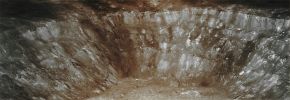
LRO-2500-Aristarchus_Crater_Wall-LROC_2000-PCF-LXTT.jpgFeatures of Aristarchus Crater (Absolute Natural Colors; credits for the additional process. and color.: Dr Paolo C. Fienga - Lunexit Team)166 visiteAristarchus is a prominent Lunar Impact Crater that lies in the North/Western portion of the Moon's Near Side. It is considered the brightest of the large formations on the Lunar Surface, with an Albedo that is nearly two times brighter that the one of most of the Lunar Features. In fact, Aristrachus is bright enough to be visible to the naked eye, and it becomes dazzling in a large telescope. It is also relatively easy to identify when most of the Lunar Surface is illuminated by the Earthshine.
This Crater lies at the South/Eastern Edge of the Aristarchus Plateau: an elevated rocky rise located within the Oceanus Procellarum and that contains a number of Volcanic Features and that is also well known for the occurrence of a large number of reported Transient Lunar Phenomena (or TLP), as well as for very recent emissions of Radon Gas (emission which were duly registered and measured by the Lunar Prospector Spacecraft). As additional reference points, we remind you that Aristarchus Crater is located just to the East of the Crater Herodotus and the Vallis Schröteri, and South of a system of narrow Sinuous Rilles named Rimae Aristarchus. Probably, the main reason for Aristarchus' brightness is that it is a (relatively, of course) young formation (such as approximately 450 Million Years old) and so the Solar Wind has not yet had enough time to darken the excavated material via the process known as "Space Weathering". The impact which created Aristarchus likely occurred after the creation of the Rayed Crater Copernicus, but some time before the appearance of the Crater Tycho.
Aristarchus was originally named after the Greek Astronomer Aristarchus of Samos, by the Italian map maker Giovanni Riccioli. His work "Almagestum Novum", published in 1651, gave to the, in that time known "spot-shaped telescopic features" (such as the Impact Craters) the eponyms of famous Astronomers and Philosophers. Although the name of Aristarchus Crater has always been widely accepted and adopted, it actually did not become "official" (from an International point of view), until the International Astronomical Union (IAU) so decided to name it, during a General Assembly that was taken in the AD 1935.
As we already wrote hereabove, the Region of the Aristarchus Plateau (and the Crater Aristarchus in particular) has been (and still is) the site of many reported Transient Lunar Phenomena, with a total of 122 reports by the AD 2007: the highest recorded for any Lunar Feature.
Such a TLPs include, among others, Temporary Obscurations and Colorations of the Surface; the appearence of Star-like Shinings (either fixed or slightly moving) as well as isolated Flashes of Red, Blue or even Green light. Official Catalogues mentioning these TLPs show that more than one-third of the most reliable observations came from Aristarchus Crater and its immediate surroundings.
In 1971, when the NASA Apollo 15 Spacecraft passed at about 110 Km from the Surface of the Aristarchus Plateau, a significant rise in Alpha Particles was detected and these particles are thought to be caused by the presence of huge amounts, in the area, of Radon-222: a radioactive and colorless Noble Gas that forms naturally during and as part of the normal Decay Chain of Uranium or Thorium; the Radon -222 possesses a so-called "half-life" of only 3,8 days.
The Lunar Prospector Mission later confirmed Radon-222 emissions from Aristarchus. Some of these fascinating (and still not totally understood) observations could be explained by the occurrence of discrete Explosive Events (Outgassings).MareKromiumMag 21, 2012
|
|

LRO-M139171283-PCF-LXTT.jpgThe "Lobachevskiy Anomaly": a possible Lunar "Seepage" (Absolute Natural Colors; credits for the additional process. and color.: Dr Paolo C. Fienga - Lunexit Team)604 visiteL'Anomalia di Lobachevskiy ha costituito (e, per certi versi, ancora costituisce) un Mistero.
Certo, una volta vista la sua configurazione esteriore e considerata l'area alla quale essa accede, questa "Colata Scura" (nero, marrone e arancio/rosso ruggine sono i colori che siamo riusciti ad isolare nel frame LRO) risulta davvero difficile da spiegarsi, anche se - lo dobbiamo dire - si tratta CERTAMENTE di un rilievo naturale (al limite, in immagini a bassa risoluzione ed attraverso riprese ottenute da determinate angolazioni e dunque secondo delle geometrie di illuminazione davvero peculiari, l'Anomalìa di Lobachevskiy la potremmo anche considerare come una sorta di "Struttura Effimera", ma nulla di più).
Non è un'Anomalìa, nel senso "Borderline" del termine ma, volendo, la possiamo comunque considerare tale in senso geologico e geomorfologico.
Ad un esame di dettaglio del Rilievo Controverso (un "grazie" alle ottiche della Sonda LRO ed un "grazie" anche al lavoro svolto da un Tecnico dell'Immagine già citato in passato - che per motivi oscuri si cela dietro il nickname "Manny"), la sensazione che ne abbiamo ricavato è quella per cui si potrebbe - AL LIMITE! - trattare di un "Seepage" ("Colamento"), in buona sostanza simile a quelli che abbiamo visto e vediamo su Marte.
Certo, l'idea che si possano verifcare delle (periodiche?) estrusioni di acqua sul Pianeta Rosso le quali, alla fine, si risolvono (visivamente) in tracce di colamento (Seepage, appunto), è accettabile; ma che una tale fenomenologia possa occorrere sulla Luna e per giunta attualmente (o in tempi recentissimi), la dobbiamo escludere in maniera assolutamente radicale.
Ad ogni modo, se l'Anomalia di Lobachevskiy fosse, effettivamente, un Seepage, allora esso potrebbe e dovrebbe - ragionevolmente - essersi verificato tra gli ottocento milioni ed il miliardo di anni fa, quando la Luna, sensibilmente più vicina alla Terra, era ancora un mondo attivo (vulcanicamente parlando) e, probabilmente, dotato di una (forse minimale, ma non è detto) Atmosfera.
Diverso è il discorso se assumessimo il dettaglio controverso come il prodotto di un fenomeno:
a) di "Vulcanismo Residuale" (una "mini-eruzione", ad esempio, ma, se lo fosse, purtroppo non riusciamo a vedere la "bocca", o "fissure", dalla quale sarebbe avvenuto il colamento di magma contenente i minerali colorati ora visibili), oppure di semplice
b) Gravity Wasting (nel qual caso, la "colata" altro non sarebbe che il prodotto di una frana, occorsa a seguito di vibrazioni del suolo dovute a "logoramento e stanchezza" delle strutture superficiali più elevate, oppure - perchè no? - ad attività sismica (anch'essa residuale) o da impatto (magari un bolide di discrete dimensioni il quale è andato a schiantarsi non troppo lontano dalla zona di interesse).
La Verità, come ovvio, sarà difficilissimo scoprirla (semmai lo sarà), ma la certezza che abbiamo oggi - lo ripetiamo, grazie alle immagini LRO - è che questo controverso dettaglio è un Rilievo Naturale, il quale si caratterizza, come la NASA stessa ci insegna, per la presenza, su un'area (relativamente) "piccola", di un'elevata Diversità Mineralogica (evidente anche nel frame RAW in b/n, ma eclatante post-colorizzazione).
Una Diversità Mineralogica che ci dimostra ancora una volta - semmai ce ne fosse stato bisogno - che la Superficie del nostro unico Satellite Naturale è ancora ben lontana dall'essere pienamente compresa ed è, comunque, di gran lunga più variegata ed intrigante di quanto ci potessimo aspettare (anche se delle più che discrete evidenze di Surface Mineral Diversity le avevamo già ottenute attraverso la Missione Apollo 17).MareKromiumLug 12, 2011
|
|

LRO-Craters-Tycho-Central_Peak-PCF-LXTT-1.jpgTycho's Peak (Extremely Saturated Absolute Natural Colors; credits for the additional process. and color.: Dr Paolo C. Fienga - Lunexit Team)277 visiteUn piccolo "Enigma Lunare": la "oversaturation" del frame che abbiamo operato, unita alla colorizzazione Assoluta, evidenzia un curioso, quanto palese, dettaglio ambiguo. C'è, infatti, una sorta di "linea di demarcazione" tra due zone della Superficie Lunare le quali giacciono entrambe nell'ombra del Picco Centrale di Tycho.
Di qualsiasi cosa si tratti, il dettaglio, se non altro, ci lascia perplessi: sarà un vizio di trasmissione o di montaggio del frame, oppure è (il solito) cover-up? Decidetelo Voi. L'immagine è lì: basta guardarla, studiarla e quindi avere il coraggio di dire (e scrivere!) quello che si pensa...MareKromiumLug 06, 2011
|
|