|
|
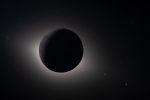
0015-In_the_Night.jpegIn the Night11 visiteFrom the crew’s perspective, the Moon appeared large enough to completely block the Sun, creating nearly 54 minutes of eclipse totality. The corona forms a glowing halo around the dark lunar disk, revealing details of the Sun’s outer atmosphere typically hidden by its brightness. The faint glow of the nearside of the Moon is visible in this image, having been illuminated by light reflected off the Earth.
Moments to honor the past infused the entire day of the lunar flyby, the sixth of the mission. Upon waking, the crew heard a message from Jim Lovell, the astronaut who piloted Apollo 8 and commanded Apollo 13, and who recorded the missive for Artemis II before his death in August 2025. “Welcome to my old neighborhood!” Lovell said. “When Frank Borman, Bill Anders, and I orbited the moon on Apollo 8, we got humanity’s first up-close look at the moon and got a view of the home planet that inspired and united people around the world. I’m proud to pass that torch on to you.”
And in a particularly heartfelt moment, shortly after the crew reached the farthest point ever traveled in space, Canadian Astronaut Jeremy Hansen communicated the crew’s desire to name a crater close to the moon’s nearside-farside boundary after Commander Reid Wiseman’s late wife, Carroll Wiseman who died from cancer in 2020. “It’s a bright spot on the moon,” Hansen said. “We would like to call it Carroll.” And then the crew embraced.MareKromium
|
|
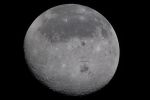
0016-The_Orientale_Basin.jpegThe Orientale Basin11 visiteThe Artemis II crew became the first humans to see the Moon's Orientale Basin, a nearly 600-mile-wide Impact Crater, visible in the bottom half of this image.MareKromium
|
|
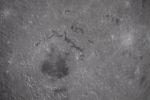
0017-The_Orientale_Basin.jpgThe Orientale Basin13 visiteart002e012090 (April 6, 2026) - In this view of the Moon, the Artemis II crew captured an intricate snapshot of the rings of the Orientale Basin, one of the Moon’s youngest and best-preserved large Impact Craters on his first shift during the Lunar Fly-By observation period.MareKromium
|
|
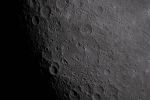
0018-Hertzprung_Basin_Rim.jpgVavilov Crater Along the Hertzsprung Basin Rim15 visiteart002e012093 (April 6, 2026) - Hertzsprung Basin comes into view with its distinctive two concentric rings of mountains, revealing the scale of this ancient impact structure.
Near the lower left, Vavilov crater — identified by its Central Peak — stands out, a feature often described by the Artemis II crew during their Lunar Fly-by.MareKromium
|
|
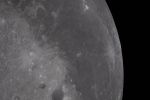
0019-Aristarcus_and_more.jpgA hint of Lunar Geography13 visiteart002e012114 (April 6, 2026) - A diverse set of Lunar Surface Features is visible in this view, including the brightly colored Aristarchus Crater, whose high reflectivity stands out against the surrounding terrain.
Nearby, the Marius Hills Region reveals a field of volcanic domes and cones, evidence of past lunar volcanism.
The sinuous Reiner Gamma swirl contrasts with the darker mare surface, while rays from Glushko crater streak across the plains.
At the bottom of the frame, the dark-floored Grimaldi Crater anchors the scene.MareKromium
|
|
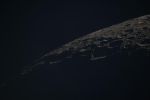
0020-Lunar_Limb.jpgThe Lunar Limb and the Terminator Line12 visiteart002e014045 (April 6, 2026) - This view of the Moon captures the Terminator — the shifting boundary between day and night — where sunlight grazes the surface at a low angle.
Taken by the crew during the Artemis II Mission, the lighting accentuates the Moon’s rugged terrain, casting long shadows that reveal the depth and structure of craters, ridges, and surrounding highlands.MareKromium
|
|
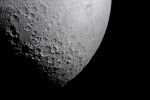
0021-The_Orientale_Basin.jpg8 visiteart002e020686 (April 6, 2026) – A portion of the Moon’s Far Side (a.k.a. "Dark Side") is seen along the Terminator, where low-angle Sunlight casts long shadows across the surface.
A section of the Orientale Basin is visible along the upper right portion of the lunar disk, its structure subtly revealed under grazing illumination. This lighting enhances contrast across the cratered terrain, highlighting variations in Surface Features and providing insight into the Moon’s Geologic History.MareKromium
|
|
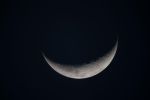
0022-Crescent_Moon.jpgCrescent Moon8 visiteart002e019570 (April 7, 2026) – On flight day seven, following their Lunar Fly-By, the Artemis II crew captured this view of a delicate crescent Moon on their journey back to Earth.
Along the Terminator, where low-angle Sunlight casts long shadows that accentuate craters, ridges, and subtle variations in terrain.
The softly illuminated surface highlights the Moon’s rugged landscape, while much of it remains in shadow.MareKromium
|
|
| 20 immagini su 2 pagina(e) |
2 |
|





