|
|

LRO-2500-Bessel_Crater.jpgBessel (possible Natural Colors on a Radar Image; credits: Dr Paolo C. Fienga - Lunexit Team)92 visiteMini-RF S-band Zoom Synthetic Aperture Radar (SAR) image strip through central Mare Serenitatis on the Near-Side of the Moon (approx. Long. of the strip ~ 18° East; center Lat. ~ 20° North).
The radar strip runs through the crater Bessel (inset; approx. 15 km (or about 9 mile) diameter; center at 21,8° North Lat. and 17,9° East Long.) and covers the highlands of the Haemus Mountains (on the Rim of the Serenitatis Basin) in its Southern (bottom) third.
The full-resolution SAR data are 30 mt (90 feet). The Streaks of bright and dark material in the Walls of Bessel probably reflect the blockiness of Landslides within the Crater, brighter Streaks having more blocks of the 10-cm (4") scale.
The radar strip covers a major geological boundary in Mare Serenitatis; the darker, lower Maria has higher Titanium content than central Serenitatis. We see this geological boundary in the Mini-RF radar image, caused by higher absorption of RF energy by the high content of the Iron-Titanium Oxide mineral "Ilmenite".
Thus, Mini-RF SAR images can be used to map the Titanium content of the Lunar Maria. The background image is part of the Clementine global mosaic.MareKromium
|
|

LRO-2500-Epigenes_A_Crater-1.jpgEpigenes A80 visiteA plethora of Boulders surrounds braided flows of impact melt along the Inner Wall of the Crater Epigenes A. As the melt moves toward the Crater Floor (direction indicated by white arrow), the flow buries and moves boulders.
Epigenes A is an about 18-Km-diameter Impact Crater located at 66,9° North and 0,3° West, on the Rim of crater W. Bond.
(this NAC image is 540 meters wide)MareKromium
|
|
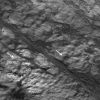
LRO-2500-Epigenes_A_Crater-2.jpgEpigenes A75 visiteAnother example of dark Impact Melt flows channeling through the preexisting material on the Crater Wall.
The white arrow points to the Crater Floor.
(this image is approx. 540 meters wide)MareKromium
|
|
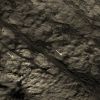
LRO-2500-Epigenes_A_Crater-2~0.jpgEpigenes A (Natural Colors; credits: Dr Paolo C. Fienga - Lunexit Team)75 visitenessun commentoMareKromium
|
|
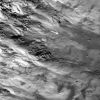
LRO-2500-Epigenes_A_Crater-3.jpgEpigenes A70 visiteImpact Melt (the dark material) flowed around and over Rocky Outcrops on the upper portion of the Crater Wall.
The white arrow points to the Crater Floor.
The initial outward surge of material during the excavation of the crater threw Impact Melt near the Rim and then gravity pulled the Melt downward during the modification stage of the impact.
(this image is approx. 540 meters wide)MareKromium
|
|

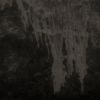
LRO-2500-Marius_Crater.jpgLandslides or unusual Surface-decoloration in Marius Crater?69 visiteImpact Events, Volcanism, and Tectonism form the majority of features found on the Moon. However, Landslides are an important modifier of the landscape at small scales.
Ultimately, the source of Landslides are Seismic Events triggered by Impacts or movements deep inside the Moon. These shaking events cause poorly consolidated material on steep slopes to slide downhill.
In this case the slide spreads out in a complex of narrow finger-like streamers. What controls this distinctive pattern? The process is controlled by the energy of the shaking, the size of particles in the slide, the steepness of the slope, and volume of the source deposit.
Mars also has many Landslide Deposits, so scientists are using the new LROC data to compare with these martian counterparts.
Marius Crater (approx. 41 Km diameter) is located in Oceanus Procellarum (11,9° North and 50,8° West) and is notable for its mare filled floor (unequivocal evidence that it formed before before the surrounding mare basalts flooded the Region).MareKromium
|
|
LRO-2500-Marius_Crater~0.jpgLandslides or unusual Surface-decoloration in Marius Crater? (Natural Colors; credits: Dr Paolo C. Fienga - Lunexit Team)80 visiteGrazie alla nostra Grande Amica e Partner Elisabetta Bonora, da oggi "Lunar Explorer Italia" è presente ed accessibile anche su Twitter.
Il nostro (e Vostro!) link - comunque già indicato nei "Links Suggeriti" nella Front Page di TruePlanets (sulla Dx) - è questo: http://twitter.com/lunexit .
Perchè questa "presenza" ulteriore?
Semplice, in un Mondo laddove la divulgazione della stupidità sembra costituire un trend in ascesa continua, noi (e Voi!) stiamo cercando di controbilanciare questa - orribile - tendenza mediante la Divulgazione della Ricerca, della Passione e, con tutti i nostri limiti, della Scienza.
Dalla Luna all'Infinito, naturalmente...
Dr Paolo C. Fienga - Lunar Explorer Italia
Presidente e Socio FondatoreMareKromium
|
|

LRO-2500-Peary_Crater.jpgPeary Crater and the North Pole of the Moon82 visiteOne day in the not-too-distant future, lunar explorers may spend their winter holidays at the Lunar North Pole.
Peary, an irregularly-shaped Impact Crater centered at 88,5° North Lat. and approx. 30° East Long., could be the place to do just that.
Adjacent to the Lunar North Pole, Peary has areas along its Crater Floor cast in permanent shadow, but it also has areas along its rim that may be permanently illuminated by the Sun. The proximity to the North Pole, possible areas of permanent shadow and light, plus the potential for in-situ resources make Peary crater a challenging and enticing location for future human and robotic exploration.
Peary Crater is one of 50 specific sites being explored by lunar geologists using LROC images for NASA's Constellation Program.MareKromium
|
|

LRO-2500-Saha_E_Crater.jpgThe Floor of Crater "Saha E"63 visiteThe lava-like melt produced by impacts on the Moon can have a variety of morphologies.
The polygonal texture you see here is located on the Floor of Crater Saha E, an approx. 28-Km-diameter Impact Crater located East of Mare Smythii.
This texture could be the result of impact melt coating boulders and other deposits on the Floor of the Crater. From the perspective of exploration planning, impact melt deposits are scientifically interesting because they can be used to age-date impacts. Impact melts can also contain geochemical traces of the original impact, and often contain small fragments of the original pre-impact target rocks. LROC will be providing high-resolution images of many other fresh, relatively undegraded craters to document the complex aftermath of impact events as well as to define targets for future human lunar exploration.MareKromium
|
|

LRO-2501-Oceanus_Procellarum.jpgLunar Landslide in an Unnamed Crater of Oceanus Procellarum74 visiteA key part of the LROC science investigation is the imaging and analysis of fresh, Copernican-aged Craters (such as Craters younger than 1,1 Billion Years), like this small (6-Km diameter) example at the edge of Oceanus Procellarum, West of Balboa Crater.
The LROC team has seen a variety of landforms related to these important lunar features. For example, a Landslide on the Crater wall partially covers the solidified impact melts on the floor. The Landslide clearly happened after the Crater initially formed; the materials were likely dislodged by seismic shaking from nearby smaller impacts.
These young, fresh craters preserve an vital record of the impact process.
Where does ejecta come from? How much impact melt is produced? How thick is ejecta? What is the importance of self-secondary impacts?
These are only some of the important scientific questions that lunar scientists can address by studying these craters.
As geologic time progresses, the pristine features in fresh craters are worn down by impacts of all sizes. Understanding young craters help geologists piece together the history of ancient degraded craters, an understanding particularly useful for planning future human missions to the Moon. The best way to explore fresh craters like this one, of course, would be with Astronauts.
However, until humans return to the Moon, lunar geologists will analyze images like this for clues, as well as comparing the landforms like the one visible here with other craters on the Moon, Mars, and impact structures on Earth.MareKromium
|
|

LRO-2501-Oceanus_Procellarum~0.jpgLunar Landslide in an Unnamed Crater of Oceanus Procellarum (Natural Colors; credits: Dr Paolo C. Fienga - Lunexit Team)75 visitenessun commentoMareKromium
|
|

LRO-2502-Mare_Imbrium.jpgMare Imbrium73 visitenessun commentoMareKromium
|
|
| 69 immagini su 6 pagina(e) |
 |
|
4 | |
|








