|
|
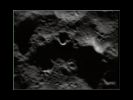
LRO-1007-392833main_vlcsnap-2009-10-09-04h33m37s65_full.jpgLCROSS impacting the Moon84 visiteA closer view of the Moon as the LCROSS Spacecraft approaches impact.MareKromium
|
|
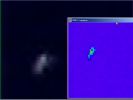
LRO-1008-392738main_vlcsnap-2009-10-08-19h02m22s101.pngGo "Centaur", go!84 visiteImage of the Centaur separation as viewed from the InfraRed Camera.
LCROSS Centaur Separation occurred at 9:50 p.m. EDT (6:50 p.m. PDT), Oct. 8, 2009. After separation, the Spacecraft performed a 180° pitch maneuver (turning around) to reorient the LCROSS science payload towards the receding Centaur.MareKromium
|
|
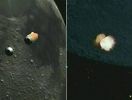
LRO-1009-Crash1.jpgLCROSS impacting the Moon92 visitenessun commentoMareKromium
|
|
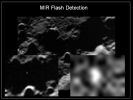
LRO-1010-392933main_LCROSS_5_full.jpgLCROSS impacting the Moon: the "Flash" in MIR Light100 visiteThis Mid-InfraRed (MIR) image was taken in the last minutes of the LCROSS flight mission to the Moon.
The small white spot (enlarged in the insets) seen within the dark shadow of lunar crater walls is the initial flash created by the impact of a spent Centaur upper stage rocket. Traveling at 1,5 mps (miles-per-second), the Centaur rocket hit the Lunar Surface yesterday at 04:31 UT, followed a few minutes later by the shepherding LCROSS Spacecraft.
Earthbound observatories have reported capturing both impacts. But before crashing into the Lunar Surface itself, the LCROSS Spacecraft's instrumentation successfully recorded close-up the details of the rocket stage impact, the resulting crater and debris cloud.
In the coming weeks, data from the challenging mission will be used to search for signs of water in the Lunar Material blasted from the Surface.MareKromium
|
|

LRO-1011-392970main_LCROSS_9_full.jpgLCROSS impacting the Moon: the "Flash"128 visitenessun commentoMareKromium
|
|
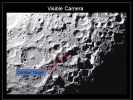
LRO-1012-392894main_LCROSS_full.jpgLCROSS Impact Location131 visiteLCROSS impact crater as seen with the Visible Light (VL) camera.MareKromium
|
|
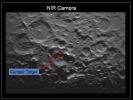
LRO-1013-392902main_LCROSS_2_full.jpgLCROSS Impact Location73 visiteLCROSS impact crater as seen with the Near InfraRed (NIR) camera.MareKromium
|
|
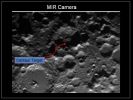
LRO-1014-392915main_LCROSS_3_full.jpgLCROSS Impact Location92 visiteLCROSS impact crater as seen with the Mid InfraRed (MIR) camera.MareKromium
|
|

LRO-1015-Lunar-Plume.jpgAfter the Impact: the "Plume"114 visiteDa "NASA - Picture of the Day" del giorno 18 Novembre 2009:"In October 2009, the LCROSS Mission crashed a large impactor into a permanently shadowed crater near the Lunar South Pole and a "Plume" (---> pennacchio) of dust rose enough to be visible by the LRO, although hard to discern from Earth.
The Plume in question is now shown in this frame - taken in Visible Light.
The results of a preliminary chemical analysis gave a clear indication that such a Dust Plume contained water, and water is of high importance not only for understanding the history of the Moon, but also as a possible reservoir for future astronauts trying to live on the Moon for long periods.
The source of the Lunar Water is still a topic of debate (water could have been carried by many small meteorites, or a comet, or - maybe - it was an inborn component of the Primordial Moon Soil").MareKromium
|
|

LRO-2000-eAGLE-WestCrater-00.jpgThe Lunar Module "Eagle", from LRO (CTX Frame - credits: NASA)101 visite...Due immagini (questa e l'EDM che segue) ASSOLUTAMENTE FANTASTICHE e da guardare, a nostro parere, non solo con Deferenza e grande Rispetto, ma anche dedicando, nel contempo, un pensiero ed una preghiara a coloro che, per realizzare questo Sogno, sono morti e poi sono anche stati - in larga misura - dimenticati (e NON ci riferiamo solamente agli Astronauti Americani, ma a TUTTI i Cosmonauti USA ed URSS i quali, negli Anni d'Oro della "Moon Quest" e poi in seguito, arrivando ai nostri giorni, hanno inseguito un Sogno ed hanno obbedito agli ordini, sino a compiere l'Estremo Sacrificio).MareKromium
|
|

LRO-2000-eAGLE-WestCrater-01.jpgThe Lunar Module "Eagle", from LRO (EDM - credits: NASA)119 visiteIl dettaglio magnificato del Descent Stage del Modulo Lunare "Eagle", il quale portò sulla Luna gli Astronauti Armstrong ed Aldrin, nel Luglio del 1969.
I "Complottisti", a questo punto, dovrebbero essere stati "serviti", non credete?
Ma è già totalmente ovvio quello che gli irriducibili detrattori della più GRANDE Avventura Umana e Scientifica mai compiuta nella Storia dell'Umanità ci diranno adesso...
Che cosa? Semplice: che ANCHE questi frames sono "tarocchi"...MareKromium
|
|
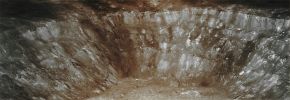
LRO-2500-Aristarchus_Crater_Wall-LROC_2000-PCF-LXTT.jpgFeatures of Aristarchus Crater (Absolute Natural Colors; credits for the additional process. and color.: Dr Paolo C. Fienga - Lunexit Team)167 visiteAristarchus is a prominent Lunar Impact Crater that lies in the North/Western portion of the Moon's Near Side. It is considered the brightest of the large formations on the Lunar Surface, with an Albedo that is nearly two times brighter that the one of most of the Lunar Features. In fact, Aristrachus is bright enough to be visible to the naked eye, and it becomes dazzling in a large telescope. It is also relatively easy to identify when most of the Lunar Surface is illuminated by the Earthshine.
This Crater lies at the South/Eastern Edge of the Aristarchus Plateau: an elevated rocky rise located within the Oceanus Procellarum and that contains a number of Volcanic Features and that is also well known for the occurrence of a large number of reported Transient Lunar Phenomena (or TLP), as well as for very recent emissions of Radon Gas (emission which were duly registered and measured by the Lunar Prospector Spacecraft). As additional reference points, we remind you that Aristarchus Crater is located just to the East of the Crater Herodotus and the Vallis Schröteri, and South of a system of narrow Sinuous Rilles named Rimae Aristarchus. Probably, the main reason for Aristarchus' brightness is that it is a (relatively, of course) young formation (such as approximately 450 Million Years old) and so the Solar Wind has not yet had enough time to darken the excavated material via the process known as "Space Weathering". The impact which created Aristarchus likely occurred after the creation of the Rayed Crater Copernicus, but some time before the appearance of the Crater Tycho.
Aristarchus was originally named after the Greek Astronomer Aristarchus of Samos, by the Italian map maker Giovanni Riccioli. His work "Almagestum Novum", published in 1651, gave to the, in that time known "spot-shaped telescopic features" (such as the Impact Craters) the eponyms of famous Astronomers and Philosophers. Although the name of Aristarchus Crater has always been widely accepted and adopted, it actually did not become "official" (from an International point of view), until the International Astronomical Union (IAU) so decided to name it, during a General Assembly that was taken in the AD 1935.
As we already wrote hereabove, the Region of the Aristarchus Plateau (and the Crater Aristarchus in particular) has been (and still is) the site of many reported Transient Lunar Phenomena, with a total of 122 reports by the AD 2007: the highest recorded for any Lunar Feature.
Such a TLPs include, among others, Temporary Obscurations and Colorations of the Surface; the appearence of Star-like Shinings (either fixed or slightly moving) as well as isolated Flashes of Red, Blue or even Green light. Official Catalogues mentioning these TLPs show that more than one-third of the most reliable observations came from Aristarchus Crater and its immediate surroundings.
In 1971, when the NASA Apollo 15 Spacecraft passed at about 110 Km from the Surface of the Aristarchus Plateau, a significant rise in Alpha Particles was detected and these particles are thought to be caused by the presence of huge amounts, in the area, of Radon-222: a radioactive and colorless Noble Gas that forms naturally during and as part of the normal Decay Chain of Uranium or Thorium; the Radon -222 possesses a so-called "half-life" of only 3,8 days.
The Lunar Prospector Mission later confirmed Radon-222 emissions from Aristarchus. Some of these fascinating (and still not totally understood) observations could be explained by the occurrence of discrete Explosive Events (Outgassings).MareKromium
|
|
| 69 immagini su 6 pagina(e) |
 |
3 | |
|
|








