|
|

LRO-0007a-369443main_lroc_apollo16_lrg.jpgDescartes Highlands: the Apollo 16 Landing Site (ctx frame)66 visitenessun commentoMareKromium
|
|

LRO-0007b-369443main_lroc_apollo16_lrg.jpgDescartes Highlands: the Apollo 16 Landing Site (edm)81 visitenessun commentoMareKromium
|
|
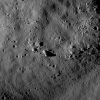
LRO-0008-376470main_tsiol438_lr_area.jpgTsiolkovskiy Crater81 visiteThe Far-Side Crater Tsiolkovskiy is one of the most spectacular and unique geologic features on the Moon.
Identified in the first image of the Far-Side, and named after visionary space pioneer Konstantin Tsiolkovskiy, Tsiolkovskiy Crater (185 Km diameter) has a an irregular (meaning: non-circular) shape, a Central Peak, and is completely filled with mare basalt.
Many geological and geomorphological features can be seen within and around the Crater, making this a particularly interesting place on the Moon to work and study.MareKromium
|
|

LRO-0008a-369444main_lroc_apollo17_lrg.jpgTaurus-Littrow Highlands: the Apollo 17 Landing Site (ctx frame)72 visitenessun commentoMareKromium
|
|

LRO-0008b-369444main_lroc_apollo17_lrg.jpgTaurus-Littrow Highlands: the Apollo 17 Landing Site (edm)63 visitenessun commentoMareKromium
|
|

LRO-0009-369230main_apollolandinglocator_full.jpgWhere did we go?!?102 visite...Un utile "Promemoria"...MareKromium
|
|

LRO-1000-391631-SouthPole.jpgLCROSS Impact Location154 visiteCaption NASA:"About 100 Km from the Lunar South Pole, the about 100 Km wide crater Cabeus is the target for two LCROSS mission spacecraft on course to impact the Moon tomorrow (October, 9th, 2009).
The shadowed crater is strongly foreshortened in this mosaic, a representative view of the Region for earthbound telescopes. The impacts are intended to create billowing debris plumes extending into the sunlight above the Crater Walls, that could reveal signs of water.
First to impact will be the mission's Centaur upper stage rocket at 11:30 UT (07:30 am Eastern Daylight Time - 13:30 Central Europe Time).
The instrumented LCROSS mothership will image the impact and then fly through the resulting debris plume analyzing the material blasted from the crater floor.
Four minutes after the first impact, the LCROSS mothership itself will crash into Cabeus. The plumes are expected to be visible in telescopes about 10" in diameter or larger, with the timing favoring Moon watchers in Western North America and the Pacific. NASA also plans to broadcast live footage from the LCROSS mission on NASA TV starting at 06:15 a.m. EDT - 12:15 CET on October 9, 2009".MareKromium
|
|

LRO-1002-392723-MainCabaeus_full.jpgLCROSS Impact Location79 visitenessun commentoMareKromium
|
|

LRO-1003-392734-MainCabaeus1_full.jpgLCROSS Impact Location70 visitenessun commentoMareKromium
|
|
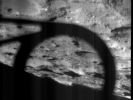
LRO-1004-392792main_1024_768_GeminiNorth_NightBeforeImpact_full.jpgLCROSS impacting the Moon83 visitenessun commentoMareKromium
|
|
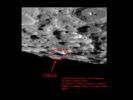
LRO-1005-392781main_800_600_NMSU_3_5m_Agile_preimpact_full.jpgLCROSS impacting the Moon73 visitenessun commentoMareKromium
|
|

LRO-1006-392811main_vlcsnap-2009-10-09-04h20m01s95_full.jpgLCROSS impacting the Moon66 visiteThe LCROSS mission operations team initiated power-up of the LCROSS science payload and saw this view of the Moon.MareKromium
|
|
| 69 immagini su 6 pagina(e) |
2 |  |
|
|
|








