Inizio Registrati Login

Elenco album Ultimi arrivi Ultimi commenti Più viste Più votate Preferiti Cerca

Inizio > MOON > The Moon After Apollo 17
Ritorna alla pagina delle miniature FILE 141/165 Torna all'inizio Guarda foto precedente Guarda foto successiva Salta alla fine
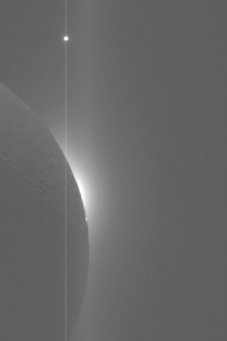
Transient Lunar Phoenomena (TLP) - 2
EccoVi due testimonianze (decisamente autorevoli) riguardo a questi strani fenomeni, estratte dall'articolo 'LTP-Lunar Transient Phoenomena' di W.S. Cameron:"On the night of November 2, 1958, Soviet astronomer Nikolai A. Kozyrev witnessed a strange phenomenon while making spectrograms of the crater Alphonsus with the Crimean Astrophysical Observatory's 50-inch reflector. As he watched through the telescope's guiding eyepiece, he saw the crater's central peak blur and turn an unusual reddish color. The spectrograms confirmed his visual impressions of a volcanic event; they showed an emission spectrum of carbon vapor (S&T: February, 1959, page 184).
On July 19, 1969, the Apollo 11 command module had just achieved orbit around the Moon when the Mission Control Center in Houston received word that amateur astronomers reported a TLP in the vicinity of the crater Aristarchus. Asked to check out the situation, astronaut Neil Armstrong looked out his window toward the earthlit region and observed an "area that is considerably more illuminated than the surrounding area. It just has -- seems to have a slight amount of fluorescence to it." Although he wasn't sure, Armstrong believed the region was Aristarchus".
Parole chiave: Transient Lunar Phoenomoena

Transient Lunar Phoenomena (TLP) - 2

EccoVi due testimonianze (decisamente autorevoli) riguardo a questi strani fenomeni, estratte dall'articolo 'LTP-Lunar Transient Phoenomena' di W.S. Cameron:"On the night of November 2, 1958, Soviet astronomer Nikolai A. Kozyrev witnessed a strange phenomenon while making spectrograms of the crater Alphonsus with the Crimean Astrophysical Observatory's 50-inch reflector. As he watched through the telescope's guiding eyepiece, he saw the crater's central peak blur and turn an unusual reddish color. The spectrograms confirmed his visual impressions of a volcanic event; they showed an emission spectrum of carbon vapor (S&T: February, 1959, page 184).
On July 19, 1969, the Apollo 11 command module had just achieved orbit around the Moon when the Mission Control Center in Houston received word that amateur astronomers reported a TLP in the vicinity of the crater Aristarchus. Asked to check out the situation, astronaut Neil Armstrong looked out his window toward the earthlit region and observed an "area that is considerably more illuminated than the surrounding area. It just has -- seems to have a slight amount of fluorescence to it." Although he wasn't sure, Armstrong believed the region was Aristarchus".

ZZ-ZZ-U-March-2013-lunar-impact-as-seen-from-Earth_NASAS-Scientific-Viz-Studio.jpg ZZ-ZZ-U-September-2013.jpg ZZ-ZZ-V-Flare from Clem.jpg ZZ-ZZ-Z-Flare from Clem.jpg ZZ-ZZ-ZZ-Crater 297.jpg
Informazioni sul file
Nome del file:ZZ-ZZ-V-Flare from Clem.jpg
Nome album:The Moon After Apollo 17
Valutazione (18 voti):55555(Mostra dettagli)
Parole chiave:Transient / Lunar / Phoenomoena
Copyright:NASA - Clementine Mission
Dimensione del file:3443 Bytes
Data di inserimento:Feb 07, 2005
Dimensioni:227 x 341 pixels
Visualizzato:172 volte
URL:https://www.lunexit.it/gallery/displayimage.php?pid=4311
Preferiti:Aggiungi ai preferiti


Powered by Coppermine Photo Gallery