Inizio Registrati Login

Elenco album Ultimi arrivi Ultimi commenti Più viste Più votate Preferiti Cerca

Inizio > MOON > The Moon After Apollo 17
Ritorna alla pagina delle miniature FILE 139/165 Torna all'inizio Guarda foto precedente Guarda foto successiva Salta alla fine
Impact or Volcanic Residual Activity?
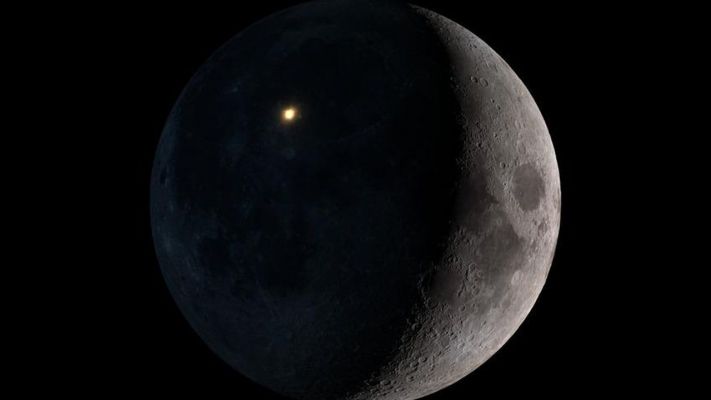
For a while now, astronomers with their telescopes pointed at the Moon have noticed short flashes of light, multiple times a week on the Moon's surface. The flashes seemed to begin, light up a part of the moon's landscape and die off in a matter of seconds. Other times, it's the exact opposite: the surface grows darker in a small region than the rest of the Moon very briefly.
Oddly, this phenomena has been observed on-and-off by astronomers for over 60 years, but without an explanation for it. A team of researchers from the Julius-Maximilians-Universitat Wurzburg (JMU) in Bavaria, Germany decided they've had enough of the mystery — they're decoding the strange, regular flashes with the hope of finding what's causing the "transient lunar phenomena". 

The team has built a special telescope for the task that uses artificial intelligence (AI) to autonomously watch for and pick up on the light flashes.

The telescope collects video and photographs whenever it picks up on a flash of light, which will then be studied by scientists to decode the underlying cause. The team is planning to upgrade it soon with a neural network that can also filter out false positives, like birds and airplanes, from actual flashes from the lunar surface. For now, researchers do have some ideas about what could be causing them.
One of the causes could be the Moon's seismic activity, Hakan Kayal, professor of space technology at JMU, told Metro. "When the surface moves, gases that reflect sunlight could escape from the interior of the moon. This would explain the luminous phenomena, some of which last for hours".

However, the brief flashes that only last minutes or seconds are less understood. The leading theory for these shorter flashes is meteorite impacts. "Such flashes could also occur when electrically charged particles of the solar wind react with moon dust".
Parole chiave: Moon - TLP

Impact or Volcanic Residual Activity?

For a while now, astronomers with their telescopes pointed at the Moon have noticed short flashes of light, multiple times a week on the Moon's surface. The flashes seemed to begin, light up a part of the moon's landscape and die off in a matter of seconds. Other times, it's the exact opposite: the surface grows darker in a small region than the rest of the Moon very briefly.
Oddly, this phenomena has been observed on-and-off by astronomers for over 60 years, but without an explanation for it. A team of researchers from the Julius-Maximilians-Universitat Wurzburg (JMU) in Bavaria, Germany decided they've had enough of the mystery — they're decoding the strange, regular flashes with the hope of finding what's causing the "transient lunar phenomena".

The team has built a special telescope for the task that uses artificial intelligence (AI) to autonomously watch for and pick up on the light flashes.

The telescope collects video and photographs whenever it picks up on a flash of light, which will then be studied by scientists to decode the underlying cause. The team is planning to upgrade it soon with a neural network that can also filter out false positives, like birds and airplanes, from actual flashes from the lunar surface. For now, researchers do have some ideas about what could be causing them.
One of the causes could be the Moon's seismic activity, Hakan Kayal, professor of space technology at JMU, told Metro. "When the surface moves, gases that reflect sunlight could escape from the interior of the moon. This would explain the luminous phenomena, some of which last for hours".

However, the brief flashes that only last minutes or seconds are less understood. The leading theory for these shorter flashes is meteorite impacts. "Such flashes could also occur when electrically charged particles of the solar wind react with moon dust".

ZZ-ZZ-U-Flash-MeteorImpact-Moon.gif ZZ-ZZ-U-Lunar_impact_Gif_pillars.gif ZZ-ZZ-U-March-2013-lunar-impact-as-seen-from-Earth_NASAS-Scientific-Viz-Studio.jpg ZZ-ZZ-U-September-2013.jpg ZZ-ZZ-V-Flare from Clem.jpg
Informazioni sul file
Nome del file:ZZ-ZZ-U-March-2013-lunar-impact-as-seen-from-Earth_NASAS-Scientific-Viz-Studio.jpg
Nome album:MareKromium / The Moon After Apollo 17
Valutazione (4 voti):55555(Mostra dettagli)
Parole chiave:Moon / - / TLP
Copyright:NASA
Dimensione del file:59 KiB
Data di inserimento:Lug 21, 2022
Dimensioni:1280 x 720 pixels
Visualizzato:187 volte
URL:https://www.lunexit.it/gallery/displayimage.php?pid=31717
Preferiti:Aggiungi ai preferiti

Commento 1 a 5 di 5
Pagina: 1

Paolo C. Fienga   [Lug 22, 2022 at 06:23 PM]
...eppure, anche questo frame ha qualcosa che non va... E' stupendo, perfetto. Forse troppo perfetto. E la Lunar Flare, se genuina, è enorme e può solo essere un fenomeno di vulcanismo esplosivo. Guardate le Flares Vulcaniche della luna Gioviana "Io", e poi ditemi la Vostra, se Vi va. - paolo
Anakin   [Lug 26, 2022 at 10:12 AM]
Quando vedo queste immagini la prima domanda che mi pongo è: quanto quello che vediamo non è qualcosa a metà strada tra noi e la Luna con l'illusione che invece sia sulla Luna?
Paolo C. Fienga   [Lug 26, 2022 at 04:00 PM]
La domanda è pertinente Anakin. Io conosco un solo modo, avendo visto due TLP "veri" e svariati "non veri". Basta un binocolo. Se il movimento della luce, della sfuocatura, del cambio di luminosità ecc. (vari tipi di TLP) è sincronico rispetto al movimento apparente della Luna, si tratta di evento allocato sulla Luna. Se è asincronico, l'evento NON è allocato sulla Luna. Ad occhio nudo, almeno per me, è impossibile vederlo al volo, anche perché, tranne rarissimi casi, i TLP durano poco. Ma con un buon binocolo o meglio, con un telescopio che ha un sistema di tracking, lo capisci subito se il TLP è genuino oppure no. Spero di essere stato abbastanza chiaro. Abbraccio! - paolo
Anakin   [Lug 27, 2022 at 09:07 AM]
Sei stato chiaro ed effettivamente questa analisi la trovo sensata e valida
Senza scomodare alieni e ufo vari, propenderei per una sorta di eruzione
Paolo C. Fienga   [Lug 27, 2022 at 02:09 PM]
Grazie Anakin. E' il "Metodo Sperimentale", l'unico in cui credo davvero. Ti quoto sull'interpretazione dell'Evento.

Commento 1 a 5 di 5
Pagina: 1


Powered by Coppermine Photo Gallery