Inizio Registrati Login

Elenco album Ultimi arrivi Ultimi commenti Più viste Più votate Preferiti Cerca

Inizio > MOON > The Project Artemis
Ritorna alla pagina delle miniature FILE 12/20 Torna all'inizio Guarda foto precedente Guarda foto successiva Salta alla fine
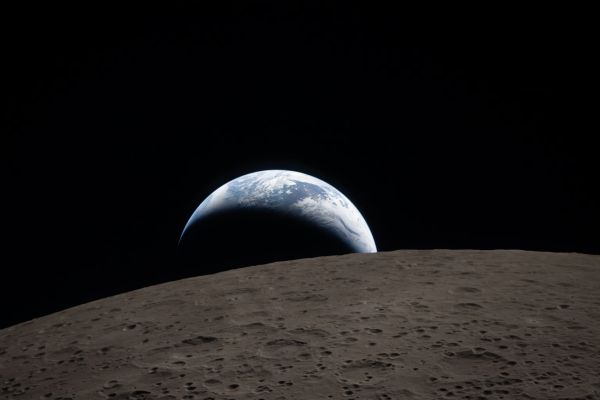
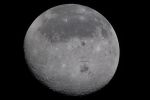
Earthset and Ohm Crater
Earthset captured through the Orion Spacecraft window during the Artemis II crew’s flyby of the Moon. 
The dark portion of the Earth is experiencing nighttime. On Earth’s day side, swirling clouds are visible over Australia and Oceania. 
In the foreground, Ohm Crater on the Moon has terraced edges and a flat Floor interrupted by Central Peaks.
Artemis II’s historic lunar flyby on Monday was one of new milestones and spaceflight records, but it was also deeply resonant with the past. After flying farther beyond the Earth than any human has ever been before—beating the record set in 1970 during Apollo 13 by about 4,102 miles—and seeing parts of the moon no humans had ever witnessed, the crew recreated “Earthrise,” one of the most famous photographs of all time, with a small twist.

Instead of Earthrise, the Artemis II photo is of Earthset, capturing the surface of the moon and the crescent-lit Earth setting beyond it in the same frame.

In 1968, a year of global political unrest, the crew of Apollo 8 was on a similar flight around the moon, on a test of a spacecraft that would be used for future lunar landings. In an unplanned moment, crew member William “Bill” Anders snapped a photo of the Earth and the moon in the same frame. The photo, called “Earthrise,” would become iconic—inspiring the global environmental movement in the years before the establishment of Earth Day in 1970.
Parole chiave: Earthset

Earthset and Ohm Crater

Earthset captured through the Orion Spacecraft window during the Artemis II crew’s flyby of the Moon.
The dark portion of the Earth is experiencing nighttime. On Earth’s day side, swirling clouds are visible over Australia and Oceania.
In the foreground, Ohm Crater on the Moon has terraced edges and a flat Floor interrupted by Central Peaks.
Artemis II’s historic lunar flyby on Monday was one of new milestones and spaceflight records, but it was also deeply resonant with the past. After flying farther beyond the Earth than any human has ever been before—beating the record set in 1970 during Apollo 13 by about 4,102 miles—and seeing parts of the moon no humans had ever witnessed, the crew recreated “Earthrise,” one of the most famous photographs of all time, with a small twist.

Instead of Earthrise, the Artemis II photo is of Earthset, capturing the surface of the moon and the crescent-lit Earth setting beyond it in the same frame.

In 1968, a year of global political unrest, the crew of Apollo 8 was on a similar flight around the moon, on a test of a spacecraft that would be used for future lunar landings. In an unplanned moment, crew member William “Bill” Anders snapped a photo of the Earth and the moon in the same frame. The photo, called “Earthrise,” would become iconic—inspiring the global environmental movement in the years before the establishment of Earth Day in 1970.

0011-nasa-artemis-orion-flyby-2_gif.gif 0012-The_Dark_Side-Artemis_2.jpeg 0014-Earthset.jpeg 0015-In_the_Night.jpeg 0016-The_Orientale_Basin.jpeg
Informazioni sul file
Nome del file:0014-Earthset.jpeg
Nome album:MareKromium / The Project Artemis
Valutazione (1 voti):55555(Mostra dettagli)
Parole chiave:Earthset
Copyright:NASA - Artemis II Mission
Dimensione del file:345 KiB
Data di inserimento:Mag 07, 2026
Dimensioni:3072 x 2048 pixels
Visualizzato:10 volte
URL:https://www.lunexit.it/gallery/displayimage.php?pid=32046
Preferiti:Aggiungi ai preferiti


Powered by Coppermine Photo Gallery