| Piú votate - MOON |

APOLLO 11 AS 11-37-5437 HR-2.jpgAS 11-37-5437 - US Highway Number "ONE"350 visiteOriginal caption:"Crater Maskelyne (bottom right), Rima Hypatia (or "US Highway Number One") and Moltke (left of center), "Boot Hill" and "Duke Island" (bottom center)".
Nota: nella Cerchiatura Blu, un possibile TLP (il punto luminoso NON pare essere un photoartifact)
(9 voti)
|
|

ZZ-ZZ-ZZ-FM-TLP.gifTLP or illuminated "peaks" (again)?132 visiteObserver Joshua Try located in Whangarei, New Zealand reported that on 25-09-2001 at 8:30 U.T. he observed two possible L.T.Ps. on the edge of the terminator near the crater Archimedes. They appeared to be 2 bright points of light about the size of Mount Piton. They seem to form a triangle with Mount Piton. He observed them for 2 hours and they were still visible when he ended his observing session.
I had the opportunity to conduct some video tapping of the Moon on 22 January 2002 at 00 hr 18 min U.T. and was able to capture the Moon under similar lighting conditions. The image was taken with SCT C8 using 25mm eyepiece in projections. This image was taken when the Moon was 8.4 days old and the colongitude was 8.92. It may be that since the locations are very close that what Joshua saw was the tops of the mountain peaks just catching the sunlight. My image which is one lunar day later shows the mountains fully illuminated. I have had several reports in the past years that have reported these features as possible L.T.P. It can be very impressive and striking when one first sees these feature just catching the sunlight. It is my opinion that what the observer witness was peaks of these two mountains deep past the sunrise terminator.
(9 voti)
|
|

65-Vitello Crater 02 - GW.JPGRolling Rock... - detail mgnf (2)165 visite3) Sisma Lunare: ipotesi "esotica", secondo i Ricercatori più pragmatici, ma accettabilissima dal nostro punto di vista (ed anche alla luce degli interessanti appunti sui rilevamenti di "Moon-Quakes" - PSE – di cui siamo venuti in possesso grazie anche alla collaborazione di Amici che lavorano presso la University of Texas);
4) Sonda (aliena?) in movimento: altra ipotesi esotica che comunque, ad oggi, (sempre a nostro modesto parere) vale più o meno quanto le altre tre;
5) Ejecta: ossìa un frammento della superficie Lunare scaraventato via dal suo luogo di origine a seguito di un impatto occorso nelle vicinanze di Vitello Crater. Ipotesi plausibile...ma improbabile;
6) Frammento di un bolide: ossìa un frammento di qualcosa che ha colpito la Luna e che non si è totalmente disintegrato al momento dell'impatto. Plausibile...ma improbabile.
La nostra opinione?
Grazie a questo bellissimo detail mgnf (sempre realizzato da Fabio Italiano), diremmo che le tracce lasciate dall'oggetto (tutte di diversa forma e profondità e diremmo mai ripetitive) ci fanno escludere – con ogni probabilità – una sua origine artificiale.
Ed infatti, se quello che “leggiamo” sulla superficie della Luna corrisponde a verità, questa “Rolling Thing” dovrebbe essere totalmente irregolare (come un boulder, appunto).
Fra le ipotesi esplicative del movimento, la più interessante e plausibile, a nostro avviso, è quella che fa riferimento ad un possibile Sisma Lunare.
Ma in fondo, sia le ipotesi che abbiamo elencato, sia tutte le altre che potrebbero venirci in mente, sinchè non andremo a verificare “in loco”, sono e resteranno – ahinoi... – soltanto delle (più o meno credibili e sostanziabili) speculazioni.
(9 voti)
|
|
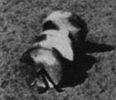
59-Luna 13 - Q-Detail 2.JPGLunik 13: Oceanus Procellarum (5)254 visiteNon abbiamo elementi decisivi che supportano questa conclusione: si tratta solo di una nostra sensazione, basata sull'esperienza (nell'analisi di oggetti similari) e confortata, in parte, dal fatto che abbiamo già visto in passato dei macigni simili (ma l'immagine, sebbene qualitativamente buona, è comunque poco chiara nel caso specifico). In realtà il problema è tutt'altro che risolto, ma la vera - ed inspiegabile - Anomalìa appare in questo secondo detail mgnf. La forma di questo oggetto ci ricorda la cosiddetta "vite senza fine" e, a ben guardare, un corpo simile - laddove naturale - verrebbe a costituire una Singolarità enorme.
Di che si tratta?
Diremmo che non è un oggetto metallico (e ce lo rivelano la sua albedo e tessitura) e che non è un "pezzo" del Lander (troppo grande, decisamente sproporzionato rispetto al Lander ed è pure troppo irregolare - sebbene lineare - per essere man-made).
Che cos'è dunque? Se fossimo su Marte, potremmo azzardarci a dire "è un fossile"; ma sulla Luna...
(9 voti)
|
|

APOLLO 13 AS 13-62-8898-1.jpgAS 13-62-8898 - A "streak" in the Sky?242 visiteUn'altra immagine enigmatica e...unexplaianable, come - ahinoi... - tante altre. Le domande che ci sovvengono allorchè ci troviamo ad analizzare un frame di questo tipo sono le solite (e qui ci appoggiamo alla "scuola del Prof. Hoagland"): si tratta di un riflesso? E' un photoartifact? E' un oggetto "reale" (ivi: una cosiddetta "Anomalia Orbitale")?
A nostro parere, se volete darci un piccolo credito (non fosse altro perchè abbiamo, in più di 8 anni di lavoro, esaminato quasi l'intero Apollo Image Catalog) questo frame rappresenta un'autentica Anomalia Orbitale - e cioè, per i meno esperti, un "oggetto fisico (quindi non un riflesso o un photoartifact) che si trova all'esterno della Navicella USA e che "transita" o "si libra" nelle sue prossimità". Molto interessante il successivo detail mgnf realizzato dall'Amico "OldGrey" il quale, a nostro avviso, va a dare ulteriore supporto alla teoria che vorrebbe escludere il semplice riflesso o il difetto della pellicola.
(9 voti)
|
|

ZZ-ZZ-TC-!cid_000801c53f43_6c932af0_34c33052@xxx90a8d37818b.jpgTsiolkowsky Crater (3D)213 visiteUna bellissima immagine in 3D - cortesemente fornitaci dal Dr Alessio Feltri - che ci mostra uno dei luoghi più enigmatici della Luna: il Cratere Tsiolkowsky.
Questo Cratere, molto noto a tutti i Selenologi, ci mostra una Singolarità così particolare che abbiamo deciso di occuparcene in una Investigation ad hoc!
(9 voti)
|
|

0-The launch of Apollo12-s69-58564.jpgThe Launch of Apollo 12116 visiteLa seconda "Avventura Lunare" sta avendo inizio: un cielo cupo e nuvoloso aspetta il vettore Saturno V che, in questa immagine, si sta appena sollevando da terra.
Una "missione di routine", si dira' in seguito.
Routine.
Che equivale a dire "ordinaria".
Andare sulla Luna era, a parere degli "Esperti", una cosa "ordinaria"!
Eravamo all'inizio degli anni '70... Oggi, andare sulla Luna, e' poco meno di un sogno.
C'e' da pensare, non credete?!?
(9 voti)
|
|

01-Lunar Orbiter 1.jpgCrescent Earth from the Lunar Orbiter 1113 visiteCaption NASA originale:"Lunar Orbiter 1 new of the Moon and crescent Earth. This is the first good image of the Earth taken from the vicinity of the Moon, 380.000 km away. The Earth sunset terminator runs through Odessa, Istanbul and slightly west of Capetown. The center of the Lunar Surface corresponds to the location of the crater Pasteur, just on the eastern farside at 10° S,105° E, but the high sun angle makes it hard to see the craters. The horizon covers about 550 Km and north is to the right in this west facing image. (LO1 - frame 102; H1, H2, H3)".
Location & Time Information
Date/Time (UT): 1966-08-23 T 16:36:23
Distance/Range (km): 1476
Central Latitude/Longitude (deg): -14.68/104.34
(9 voti)
|
|

APOLLO 15 AS 15 82-11101.jpgAS 15-82-11101 - "Slickensides" rocks (1)976 visiteCross-Sun "before" from the north of the "slickensides" rock. A "slickensides" is a smooth surface created when two rock faces slide across each other.
Noi, dopo aver preso atto di quanto detto in questa caption originale, ci domandiamo "che cosa" possa spingere due rocce a sfregarsi l'una contro l'altra sino a diventare lisce.
Se lo "sfregamento" avviene sulla Luna, poi, la domanda diventa ancora più interessante...
(9 voti)
|
|

ZZ-Z-On Earth.jpgApollo 13 - Mission Overview228 visiteApollo 13 (Odyssey and Aquarius)
Saturn V
April 11-17, 1970
James A. Lovell, Jr.
John L. Swigert, Jr.
Fred W. Haise, Jr.
05 days, 22 hours, 54 minutes
Third lunar landing attempt. Mission aborted after rupture of service module oxygen tank. Classed as "successful failure" because of experience in rescuing crew. Spent upper stage successfully impacted on the Moon.
(9 voti)
|
|

ZZ-Near Moon, Far Moon (3).jpgNear Moon, far Moon (3)107 visitenessun commento
(9 voti)
|
|

ZZ-Near Moon, Far Moon (2).jpgNear Moon, far Moon (2)109 visitePer meglio apprezzare la sensibile differenza di diametro apparente che caratterizza la Luna in queste due fasi del suo ciclo, Vi precisiamo che le 5 istantanee che la ritraggono sono state tutte quante riprese impiegando lo stesso telescopio, il medesimo ingrandimento e la stessa fotocamera.
(9 voti)
|
|
| 2188 immagini su 183 pagina(e) |
 |
|
|
|
|
8 | |
|
|
|
|





