| Piú votate - MOON |

APOLLO_14_AS_14-66-9291_(HR).jpgAS 14-66-9291 (HR) - Looking for the Blue Flare... (3)58 visiteDifficile dare opinioni definitive al riguardo e quindi ci fermiamo ai fatti: la Blue Flare che si vede in AS 14-66-9286, 9297 e 9299 (ed anche in svariati altri frames - due addirittura orbitali! - meno noti, ma certo non meno intriganti ed affascinanti) sembra proprio la Blue Flare dei frames 9290, 9295 e 9301 (provate, per questi ultimi, a vedere le loro versioni Original Uncompressed nella Sezione "Apollo: the early NASA Original Apollo Frames").
Sembra...
...E per gli Amanti dei minimi dettagli, anche il frame AS 66-9293 ci mostra qualcosa che potrebbe essere (ANCORA UNA VOLTA!) la Blue Flare...MareKromium
(5 voti)
|
|

Spherule_Apollo11.jpgA "Glass Spherule" from the Moon66 visiteCaption NASA:"How did this spherule come to be on the Moon? When a meteorite strikes the Moon, the energy of the impact melts some of the splattering rock, a fraction of which might cool into tiny glass beads. Many of these glass beads were present in lunar soil samples returned to Earth by the Apollo missions.
Pictured above is one such glass spherule that measures only a quarter of a millimeter across. This spherule is particularly interesting because it has been victim to an even smaller impact.
A miniature crater is visible on the upper left, surrounded by a fragmented area caused by the shockwaves of the small impact.
By dating many of these impacts, astronomers can estimate the history of cratering on our Moon".MareKromium
(5 voti)
|
|

APOLLO_15_-_AS_15-P-9625-00.jpgAS 15-P-9625 - The buried "Spacecraft" and the "Lunar Eel" (context frame)474 visiteAppena a Sx (Dx dell'Osservatore), a poca distanza dal double-crater posto nella regione centrale del frame (Delporte), sul Lato Oscuro della Luna, si riesce a vedere un rilievo davvero curioso (una sorta di "scettro" o di struttura simil-colonnare che giace sul proprio lato lungo) il quale, recentemente ripreso con dei filmati-bufala pubblicati sul Sito "U-Tube" e quindi discusso dagli Amici che frequentano il Forum SpazioUfo.com, ha ridestato attenzioni sopite da anni. Di che cosa si tratta? Ascoltando quello che si dice nei (ribadiamo) "filmati-bufala" di U-Tube, si dovrebbe trattare di una "Astronave" precipitata sulla Luna e rimasta inerte per ere. Milioni di anni, forse.
Noi, onestamente, non avevamo mai prestato un occhio particolare a questo rilievo e, dopo averlo fatto, ci siamo resi conto ed abbiamo preso atto della circostanza per cui siamo davanti NON SOLO AD UNA, MA A DUE ANOMALIE SUPERFICIALI che necessitano investigazione e riflessioni.
La prima Anomalìa è, ovviamente, nel bizzarro (ed inesplicabile) rilievo il quale ha scatenato le discussioni (la presunta Astronave, appunto) ma...c'è dell'altro! Basta osservare con attenzione, proprio laddove l'"Astronave" termina: c'è qualcosa, infatti, che emerge dall'oscurità.MareKromium
(5 voti)
|
|

36-Shackleton_Crater-AMI_EAE3_001775_00002_00020.jpgSchakleton Crater in natural colors62 visiteThe Advanced Moon Imaging Experiment Camera (AMIE) obtained this image on 13 January 2006 - close to the time of Lunar Southern Summer - from a distance of about 646 Km over the surface and with a ground resolution of 60 mt per pixel.
Shackleton crater lies at the Lunar South Pole (89,54° S. Lat. and 0° East Lng.) and has a diameter of approx. 19 Km.
SMART-1 monitored this area almost every orbit. This will allow to produce very high resolution maps of the area as well as illumination maps. The long shadows that surround the crater make it very hard to observe. The analysis of the data obtained allowed a very detailed map of its rim, surrounding ejectas and craters.
SMART-1 also made long repeated exposures to see inside the shadowed areas. The purpose was detecting the very weak reflected light from the crater rims, and therefore study the surface reflection properties (albedo) and its spectral variations (mineralogical composition). These properties could reveal patchy ice surface layers inside the crater.
On the 2-kilometre wide inner edge of the crater ridge, at times barely visible from Earth, astronomers using ground radio-telescopes have recently reported they were not able to detect a distinctive signature of thick deposits of ice in the area. Earlier measurements by NASA's Lunar Prospector reported of hydrogen enhancement over large shadowed areas.
"We still do not know if this hydrogen is due to enhanced trapping of solar wind, or to the water ice brought on the Moon by the bombardment of comets and asteroids," says Bernard Foing, ESA's SMART-1 Project Scientist. "These bodies may have deposited on the Moon patchy layers of ice filling about 1.5 percent of the areas in permanent shadow, down to one metre below the surface."
"We need to analyse all remote sensing data sets consistently. Future lander and rover missions to the Moon will help in the search and characterisation of lunar polar ice, both on the surface and below the subsurface," Foing continues. "In any case, one day we may even be able to simply combine the implanted hydrogen and the oxygen extracted from lunar rocks to produce clean water, like we do in laboratory experiments on Earth.”
The crater is named after Ernest Shackleton (1874-1922), an explorer famous for his Antartic expeditions.
MareKromium
(5 voti)
|
|

APOLLO_15_AS_15-M-R70-2433.jpgAS 15-M-R70-2433 - Menelaus Crater57 visiteCoord.: 15° North Lat. and 15,5° East Long.
Lens Focal Length: 3"
Camera Tilt: VERT
Camera Altitude: 118 Km
Sun Elevation (on local horizon): 73°
Nota: oltre alla incredibile albedo delle pareti (vetrificate) di Menelaus, Vi suggeriamo di prestare grande attenzione agli spettacolari "streaks" che, di fatto si estendono intorno a Menelaus da ore 05:00 ad ore 12:00, con "sbuffi" particolarmente lunghi e luminosi (e difficilmente spiegabili...), circa ad ore 05:00/06:00 ed ore 09:00/10:00.
La meccanica dei "wind-streaks" Lunari è molto complessa e discutibile e quindi, con ogni probabilità, ne parleremo in un articolo ad hoc, prossimamente su TruePlanets.
(5 voti)
|
|

APOLLO_16_AS_16-M-R28-0997.jpgAS 16-M-R28-0997 - Davy and Davy "Y" Crater Region59 visiteCoord.: 9,3° South Lat. and 10,6° West Long.
Lens Focal Length: 3"
Camera Tilt: VERT
Camera Altitude: 110 Km
Sun Elevation (on local horizon): 1°MareKromium
(5 voti)
|
|

APOLLO_16_AS_16-M-R04-0023.jpgAS 16-M-R04-0023 - Dufay and Valier Crater Region58 visiteCoord.: 7,5° North Lat. and 171° East Long.
Lens Focal Length: 3"
Camera Tilt: VERT
Camera Altitude: 94 Km
Sun Elevation (on local horizon): 21° MareKromium
(5 voti)
|
|

APOLLO_11_AS_11-45-6710_HR.jpgAS 11-45-6710 - Moon-dust and cristals (HR)86 visitenessun commentoMareKromium
(5 voti)
|
|
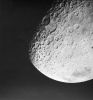
APOLLO_17_AS_17-M-STE-3183.jpgAS 17-M-STE-3183 - Good-bye Moon!59 visiteImage Collection: Mapping (Metric)
Revolution: TE (Trans Earth Cruise)
Coord. (Center of the Moon): 5,1° South Lat. and 117,9° East Long.
Lens Focal Length: 3"MareKromium
(5 voti)
|
|
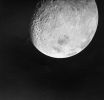
APOLLO_17_AS_17-M-STE-3205.jpgAS 17-M-STE-3205 - Good-bye Moon!57 visiteImage Collection: Mapping (Metric)
Revolution: TE (Trans Earth Cruise)
Coord. (Center of the Moon): 16° North Lat. and 91,5° East Long.
Lens Focal Length: 3"MareKromium
(5 voti)
|
|

APOLLO_17_AS_17-M-R74-2798.jpgAS 17-M-R74-2798 - Tsiolkovsky Crater60 visiteCoord.: 20,6° South Lat. and 128,9° East Long.
Lens Focal Length: 3"
Camera Tilt: VERT
Camera Altitude: 110 Km
Sun Elevation (on local horizon): 6°
(5 voti)
|
|

APOLLO_15_AS_15-M-R16-0281.jpgAS 15-M-R16-0281 - East side of Paracelsus Crater59 visiteCoord.: 25° South Lat. and 166,5° East Long.
Lens Focal Length: 3"
Camera Tilt: VERT
Camera Altitude: 115 Km
Sun Elevation (on Local Horizon): 2° MareKromium
(5 voti)
|
|
| 2188 immagini su 183 pagina(e) |
 |
|
|
|
|
33 | |
|
|
|
|





