| Piú votate - MOON |

APOLLO 11 AS 11-37-5449.jpgAS 11-37-5449 - Eagle has landed!376 visiteQuesta è la prima fotografia della Luna scattata DALLA Luna. Una delle procedure alle quali gli astronauti dovevano attenersi prevedeva l'effettuazione di una serie di foto panoramiche della zona circostante l'area di allunaggio così, nel caso in cui si fosse reso necessario un decollo immediato (?), sarebbe almeno rimasto qualcosa da analizzare e studiare...
(6 voti)
|
|

APOLLO 11 AS 11-37-5446.jpgAS 11-37-5446 - Undocking (4)313 visitenessun commento
(6 voti)
|
|

0006-Artemis_One-photo1669025926.jpegHello Moon!98 visitenessun commentoMareKromium
(5 voti)
|
|

0003-Artemis_One.jpgLook! The Moon, again...115 visiteOn Nov. 20, 2022, such as the fifth day of the 25,5-day Artemis I mission, a camera mounted on the tip of one of Orion’s solar array wings captured this footage of the Spacecraft and the Moon as it continued to grow nearer to our neighbor. The Spacecraft entered the lunar sphere of influence at 2:09 p.m. EST, making the Moon, instead of Earth, the main gravitational force acting on it. Orion completed its first fly-by on the morning of Nov. 21, 2022.MareKromium
(5 voti)
|
|

Luna17_Lander.jpgLuna 17 Lander from atop (small)82 visiteAn amazing spacecraft gently settled to the lunar surface on 17 November 1970. It carried the first successful robotic lunar rover -- Lunokhod 1. For the next ten months the rover was driven by operators in the Soviet Union, with the total distance traveled exceeding 10 km. For comparison, in six years of operation the Mars Exploration Rover Opportunity has traveled about 12 km.
After landing, the rover drove down a ramp onto the lunar surface and tested its eight wheels. The rover was driven by solar power during the day; at night it parked and relied on thermal energy from a polonium-210 radioisotope heater to survive the cold (-150°C).
The intrepid rover sent back valuable data concerning the composition of the regolith (soil), close up views of the local topography, and important engineering measurements of the regolith.
Note: Soviet Robotic Lander Luna 17 still sitting on Mare Imbrium where it delivered the Lunokhod 1 Rover in November 1970. MareKromium
(5 voti)
|
|

Lunokhod_2_Rover.jpgLook at that! The Lunokhod 2 Rover, from LRO129 visiteLunokhod 2 Rover, note its tracks tracing its route southward. The enlargement is specially stretched to show the form of the Rover, the brighest area may be the open clamshell lid, ~400 meters wide.MareKromium
(5 voti)
|
|
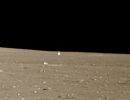
APOLLO_11_AS_11-37-5455HR-1.jpgAS 11-37-5455 - Flare-like Light? (EDM)165 visite..."Highly reflective boulder", venne definito da un Tecnico NSSDC da me interpellato, oltre 15 anni fa.
In altre parole: una "roccia ad alta riflettenza". Ok. Ma che emette un "fascio di Luce blu" e "sparisce" nel frame successivo, scattato a 3 secondi di distanza????
E poi, qualche imbecille, é pure venuto a dirmi - scrivermi, anonimamente, come ovvio... - che erano "cassiate cosmiche"....
Ma aprite gli occhi e guardate: questo è "il piccolo oggetto strano che sembra una fiaccola" descritto da Armstrong in "live from the Moon"! Poi, per carità, se vedete Paperino, Topolino o chissà cosa (probabilmente nulla), ci sta. Ma non venite a dirmi che é un image-artifact od un macigno che brilla al Sole, please....MareKromium
(5 voti)
|
|

LRO-Mare_Orientale-PCF-LXTT.jpgMare Orientale (Absolute Natural Colors; credits for the additional process. and color.: Dr Paolo C. Fienga - Lunexit Team)340 visitenessun commentoMareKromium
(5 voti)
|
|

The_Moon_-_Rupes_Recta-0.jpgRupes Recta386 visiteRupes Recta is a Linear Fault, or Rille, located on the Moon, in the South-Eastern part of the Mare Nubium, at about 22,1° South Latitude and 7,8° West Longitude.
The name is Latin for "Straight Fault", although this feature is more commonly known as "The Straight Wall". This is the most well-known Escarpment existing on the Moon, and it is also a VERY popular target for amateur astronomers. When the Sun illuminates the feature at an oblique angle, around Day 8 of the Moon's orbit, the Rupes Recta casts a wide shadow that gives it the appearance of a Steep Cliff.
This Fault has a length of approx. 110 Km, a typical width of 2–3 Km and a height of approx. 240–300 mt. Even though the Rupes Recta appears to be a Vertical Cliff on the Lunar Surface, the actual grade of the slope is relatively shallow (low).
To the West of the Rupes, lays the Crater Birt, which is about 10,5 miles in diameter. Also to the West is the Rima Birt Rille. At the Southern End of the Fault, there is a group of Hills often called the "Stag's-Horn Mountains", although this name is not officially recognized by the IAU. To the North-East of the Rupes, the Crater Alpetragius can be found, while to the East lays the Crater Thebit.MareKromium
(5 voti)
|
|

APOLLO_14_-_AS_14-66-9335-b-GB-LXTT.jpgAS 14-66-9335 - Lunar Panorama with "Red Lights" (Credits for the additional process. and color.: Dr Gianluigi Barca - Lunexit Team)174 visiteProblema risolto, grazie al nostro Vice-Presidente, Dr Gianluigi Barca: le due "Bolle" di Luce Rossa sono delle Lens Flares, causate - apparentemente - dai due leds rossi che vedete tracciati ed indicati dalle linee gialle.
Gradi Complimenti al Dr Barca, dunque, per aver "spento" sul nascere la maturazione di ipotesi "esotiche"!
Va detto, in ogni caso, che cercheremo anche di capire che cosa fossero ed a cosa potessero servire i due leds rossi che, se li osservate attentamente, ci rammentano (piuttosto bene) i "puntatori laser" usati da un famosissimo "mostro alieno" della (quasi) moderna Science-Fiction: il "Predator".MareKromium
(5 voti)
|
|
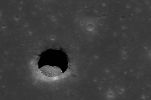
LRO-S12_710873re.jpgLunar Pit Crater343 visitenessun commentoMareKromium
(5 voti)
|
|

APOLLO_17_-_AS_17-145-22172-76-MF-LXTT.jpgAS 17-145-22172 until 22176 - Colourful Panorama (an Image-Mosaic in Natural Colors by Dr M. Faccin - Lunexit Team)281 visite...Arte, ovviamente....MareKromium
(5 voti)
|
|
| 2188 immagini su 183 pagina(e) |
 |
|
|
|
|
30 | |
|
|
|
|





