| Piú votate - MOON |

APOLLO 17 AS 17-3125.jpgAS 17-3125 - Rimless crater54 visiteThe very young rimless crater near the center of this picture is located near the area where Oceanus Procellarum and Mare Imbrium join. The crater apparently formed in regolith-covered mare basalt. It differs from lunar impact craters of comparable size and age by its lack of a raised rim, surrounding ejecta deposit, or associated secondary impact craters. In addition, its interior walls do not show the steep slopes with craggy outcrops of rock in their upper parts, nor the streams of debris-avalanche deposits and talus that are usually seen in the walls of impact craters of comparable age and size.
Judging from the clear and sharply formed pattern of concentrically curved grooves and scarps that surround the hole, the material near this depression has apparently subsided into a subsurface void. Because of the extreme rarity and inferred short lifetime of steep slopes on the Moon, the latest subsidence must have taken place very recently, after most of the 50- to 300- m diameter craters that densely pepper the nearby mare surface were formed. Movement of the regolithic debris layer during subsidence apparently smoothed out most, if not all, of the craters that must have existed near the depression. Now the depression is surrounded by low, curved fault scarps and narrow, curved grooves that may be fault troughs (grabens) or may represent drainage of regolithic debris into cracks that opened in the underlying sagging basalt rock. The few craters that have formed on the subsided surface compare in density to the craters formed on the cluster (arrow) of Aristarchus secondary impact craters and associated herring- bone ridges; comparable ages for the Aristarchus secondary features and the depression are thus indicated. The subsidence was triggered either by the ground shock or seismic wavetrain generated when Aristarchus was formed 300 km to the west, or by the impacts of the secondary features.
The subdued depression in the upper left may be a similar older feature that was flooded by a later lava flow that now covers the area. The density of craters within the depression and the density on the surrounding lava are comparable. Alternatively, the subsidence there may have been incomplete; however, there is no sign that this subsidence is as young as that in the deeper crater

(6 voti)
|
|

ZZ-ZZ-ZZ-FM-TLP-Proclus-Lunar Flash.jpgLunar "Flash" near the Terminator126 visite"Among the most enigmatic astronomical occurences are Lunar Transient Phenomena, instances of areas on the Moon appearing to brighten, darken, or change color on a time-scale of minutes. The very existence of LTP's is controversial, though they have been reported for 2 centuries (S&T: November, 1988, page 478).
Now a most remarkable one seems to have been photographed. On May 23, 1985, G. Kolovos (University of Thessaloniki) was testing a 4 1/4-inch refractor by taking pictures of the four-day-old Moon from a small village in Northern Greece. One of his seven photographs revealed a bright dot near the Moon's Terminator.
Kovolos and colleagues from the university closely analyzed the image of the dot, near the crater Proclus "C".
They write in the December, 1988 "Icarus", that the oval spot is 22 Km across and seems to conform to the local topography. What could causee such a bright flash on the Moon? The authors consider and dismiss several possibilities. Kodak Laboratories in Athens examined the film and concluded that the spot was not a film defect. It was not a surface reflection, because the illumination pattern implies that the flash occurred ABOVE the lunar surface. A volcanic eruption would have left an obscuring cloud on subsequent photos. So would a meteor impact.
Kovolos and co-workers hazard a guess that the intense heating of the lunar surface after sunrise might force cracks open, allowing trapped gas to escape. As the gas rises and expands, an electrical discharge could conceivably make it glow brightly. Many LTP sightings do occur near the lunar terminator within a day of sunrise. The researchers warn that their theory is far from being an explanation for all LTP's. "We present our results with caution," they write, "and we hope that additional data may lead to their indisputable explanation."
(6 voti)
|
|

APOLLO_17_AS_17_134-20437_detail_mgnf.jpgAS 17-134-20437 - What is that?!? (detail mgnf)405 visiteAncora un detail mgnf da frame originale e non compresso, sempre portato alla nostra attenzione dal Dr Barca. Che cos'è il rilievo cerchiato in giallo?
Ad occhio si direbbe una pinza o...un ferro di cavallo!
La verità è che non ne abbiamo idea e che alla NASA non forniscono informazioni relative a questo tipo di oggetti (probabilmente utensili) che si possono individuare, semi-sepolti nella polvere della Luna, solo avendo un ottimo occhio ed una grandissima pazienza (oltre, come ovvio, avendo a disposizione i frames originali NASA-Apollo).
(6 voti)
|
|
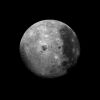
The Moon - Far Side - Galileo.JPGThe "Far-Side" of the Moon, from Galileo79 visitenessun commento
(6 voti)
|
|

The Moon-04.jpgThe Moon, in red filter, from Mars Reconnaissance Orbiter (4)67 visitenessun commento
(6 voti)
|
|

Moon Panorama - 0.jpgMoon Panorama (1)94 visitenessun commento
(6 voti)
|
|

APOLLO 15 AS 15 88-11930 HR.jpgAS 15-88-11930 - LM, LR and far distant lights...226 visiteCerchiatura Blu: due star-like objects in prossimità della vetta della collina che sovrasta la pianura dove si trovano il LM ed il LR.
Non riteniamo che si tratti di photographic-artifacts.
(6 voti)
|
|

APOLLO 15 AS 15 82-11087~0.jpgAS 15-82-11086 and 11087 - You look at me, I look at you! (2)522 visite"...torretta sinaptica con binocolo: classico esempio di fotografo fotografato. (Questo 3D) Penso sia utile a far capire come i dettagli più significativi siano spesso stati taroccati o resi incompatibili con una visione "normale" dei frames e richiedano, quindi, un approccio un po' più tecnologico (...)
(per quanto attiene l'attualità, da notare che) alla "famosa" Falsificazione Progressiva (FP) ultimamente si è aggiunta la Delocalizzazione Tranquillizzante (DT), in base alla quale vengono ammessi su pianeti extra-solari tutti quei fenomeni che sono negati nel nostro Sistema (...).
Si tratta come sempre di riflessioni acute, attente e - a nostro parere - del tutto "corrette": il resto dell'Universo è ormai riconosciuto come un luogo dove ci si può (anzi CI SI DEVE) attendere l'inatteso. Sempre.
Ma il nostro Sistema Solare no: in esso tutto è quieto, tutto prevedibile, tutto normale.
Tutto sicuro.
Ora la nostra riflessione conclusiva - che formuliamo, come d'abitudine, in una domanda - non può che essere questa: ma chi è più stupido? Colui o coloro che continuano da anni a raccontare storielle pseudo-scientifiche (ancorchè figlie di una Scienza Consolidata...) che diventano sempre più ridicole (basta leggere, studiare ed aprire gli occhi per vederlo e capirlo), oppure coloro che queste storielle continuano ad accettarle e berle, avidamente ed acriticamente?
Vedete Voi...
(6 voti)
|
|

APOLLO 15 AS 15 82-11086.jpgAS 15-82-11086 - You look at me, I look at you! (1)791 visiteUn occhio attento, che sa dove guardare e che sa, soprattutto, che cosa cercare, finisce sempre - e noi diremmo "inevitabilmente" - con il trovare.
Dalla Private Collection di Kipp Teague "Contact Light", il Dr Feltri ha estrapolato questo frame ed il successivo, ottenendo uno stereo-pair, e - come sempre - qualcosa di inatteso (ma non troppo...) è emerso dalle sabbie della Luna.
L'Anomalìa di Superficie è cerchiata in giallo, nel prossimo quadro un detail mgnf della curiosa formazione che sembra dirci qualcosa...
(6 voti)
|
|

APOLLO 15 AS 15 88-11894 HR.jpgAS 15-88-11894 - In Loving Memory175 visiteImmagine della placca commemorativa contenente i nomi degli Astronauti defunti durante la "Race to the Moon".
Una splendida immagine, di grandissimo valore simbolico.
(6 voti)
|
|
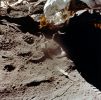
APOLLO 15 AS 15 88-11890 HR.jpgAS 15-88-11890 - A feather in the Sun... (HR)256 visiteL'esperimento Galileiano eseguito davanti alle telecamere (a proposito: siamo riusciti ad entrare in possesso del filmato originale!) è interessante e, per chi non lo conoscesse, davvero sorprendente (si tratta di due corpi aventi un peso sostanzialmente diverso - ivi: un martello ed una piuma - i quali, lasciati cadere dalla stessa altezza, raggiugono il suolo lunare esattamente allo stesso momento).
Premesso che non è comunque questa la sede per trattare le implicazioni fisiche dell'esperimento, desideriamo attrarre la Vostra attenzione su un dettaglio. Guardate la piuma: essa giace sulla superficie Lunare, al Sole. Temperatura della Luna al Sole? Tra i +120° ed i +140° Celsius.
E come reagisce la piuma a queste condizioni estreme? Brucia?
Macchè: intatta.
Galileo a parte, questa immagine ci sembra essere meritevole di qualche riflessione. In quanti si sono chiesti, infatti (specie allorquando si inizia a parlare di 'Moon Hoax') 'come mai le tute degli Astronauti non si bruciano al Sole'? 'Come mai il metallo del LM o del LR non fonde'? 'Come mai le miracolose pellicole Kodak non si sciolgono'?
Rispondiamo noi: per lo stesso motivo per cui anche una semplice piuma d'oca, gettata sulla superficie della Luna, in una zona esposta al Sole ed assolutamente non protetta nè schermata - come vedete - non brucia.
Sulla Luna e nello Spazio, cari Amici, le cose non funzionano esattamente come sulla Terra.
(6 voti)
|
|

APOLLO 15 AS 15-93-12601 HR.jpgAS 15-93-12601 - Prinz Crater (HR)116 visitenessun commento
(6 voti)
|
|
| 2188 immagini su 183 pagina(e) |
 |
|
|
|
|
23 | |
|
|
|
|





