| Piú votate - MOON |

APOLLO 13 AS 13-60-8627.jpgAS 13-60-8627 - Moon from orbit295 visiteForse questa è pura fantascienza o forse è la semplicissima realtà, ma noi crediamo che l'interruzione repentina dello Human Space Programme sia stata provocata, in qualche modo, anche dal timore di giungere totalmente impreparati (scientificamente, tecnologicamente, culturalmente ed umanamente) ad un "faccia a faccia" con Creature più evolute rispetto a noi di secoli, millenni o, forse, addirittura di milioni di anni (terrestri). 
(7 voti)
|
|

APOLLO 12 AS 12-46-6767.jpgAS 12-46-6767 - Moon Panorama (8) - Up-Sun - Surveyor Crater161 visitenessun commento
(7 voti)
|
|

APOLLO 11 AS11-40-5883 HR.jpgAS 11-40-5883 - A strange shadow - HR206 visitePerchè il Sole è ancora estremamente basso e le ombre che derivano da una sorgente luminosa "radente" tendono ad essere lunghissime.
La vera curiosità del frame AS 40-5875 sta, secondo noi, nel fatto che si può vedere abbastanza bene il volto di Armstrong, attraverso il visore del casco, mentre guarda verso Aldrin che sta scattando.
Per quanto attiene il frame AS 40-5883 invece (adesso in versione HR) ribadiamo quanto già detto in precedenza: c'è un'ombra, secondo noi, inspiegabile a lato dell'ombra del LM.
Sapreste identificarla?
(7 voti)
|
|

APOLLO 11 AS 11-37-5457ANOMALY.jpgAS 11-37-5457 - Flying away...292 visiteLa panoramica dell'orizzonte Lunare continua, ma le "luci" che avevano caratterizzato i due frames precedenti sono ora sparite. Si può intuire, tuttavia, sull'estrema Sn dell'immagine, Dx dell'Osservatore, a mezza altezza, un debole punto luminoso. Non pensiamo che si tratti di una stella. Potrebbe essere l'oggetto "minore" del frame 5456 che si sta (forse) definitivamente allontanando dalla vista degli astronauti e della loro telecamera. O forse no?!?
(7 voti)
|
|

APOLLO 11 AS 11-37-5445-2.jpgAS 11-37-5445 - Undocking (3)408 visiteQuesto frame è un esempio evidente di come un difetto di "processo" o di "elaborazione" dell'immagine può determinare malintesi, dubbi, illazioni e poi, inevitabilmente, discussioni (sterili ed inutili).
Qual'è il vero colore della Luna? Questo bianco cinereo luminoso oltre ogni possibile credibilità oppure quello dell'immagine precedente o successiva?
E se una delle immagini è "artefatta", quale è quella "genuina"?
Se osservate il seriale che contraddistingue ogni frame (e che noi riportiamo SEMPRE!), noterete che questo frame ed il successivo sono contraddistinti dal medesimo numero (AS 11-37-5455).
Ne consegue che si dovrebbe trattare dello stesso frame, giusto?!? Ma ecco la cosa strana - veramente strana! -: le 2 immagini, almeno a nostro parere, sono leggermente diverse.
Eppure entrambe provengono dagli archivi ufficiali dalla NASA e sono entrambe - ovviamente - autentiche.
Questo è un fatto su cui riflettere (colore del "fondale" a parte).
O no?!?
(7 voti)
|
|

LRO-3003-Gruithuisen_Domes.pngGruithuisen Domes86 visitenessun commentoMareKromium
(6 voti)
|
|

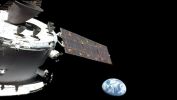
0009-Artemis_One-Far_Side_of_the_Moon.jpgThe bright and yet dark side of the Moon...98 visiteNASA officials say Artemis 1 mission teams are "giddy" after witnessing how well their Orion spacecraft has been performing so far on its way towards Lunar Orbit.
Artemis 1 launched at 01:47 EST (06:47 GMT) on Nov. 16, blasting off from Kennedy Space Center in Florida in a spectacular display of the sheer power of NASA's Space Launch System (SLS) rocket. The Orion spacecraft reached Earth orbit shortly after, and then at 87 minutes after launch performed a so-called Trans Lunar Injection burn to send it hurtling towards the moon. On Monday (Nov. 21), Orion performed another burn to send the Spacecraft close enough to the Lunar Surface to leverage (---> use, take advantage of) the Moon's Gravity to pull the Spacecraft around the Moon itself into a distant retrograde orbit.
After collecting data from that propulsive maneuver, NASA Officials held a briefing Monday evening (Nov. 21) to discuss Orion's powered flyby of the Moon. Judd Frieling, flight director at NASA's Johnson Space Center, said Orion Mission Team Members are "giddy" (to have a sensation of whirling and then a tendency to fall; synonym: dizzy) with the current performance they are seeing from the spacecraft after the flyby, which saw the Spacecraft come within about 80 miles of the Lunar Surface.MareKromium
(6 voti)
|
|

0008-Artemis_One-photo1669033801.jpegWhat a "Couple"!117 visitenessun commentoMareKromium
(6 voti)
|
|
0005-Artemis_One.jpgLook at Us!100 visitenessun commentoMareKromium
(6 voti)
|
|

0001-Artemis_One-52503823645_68f1fc0f28_o.jpgLift-off: back to the Moon?!?113 visiteThe most powerful rocket in the World, carrying the Orion Spacecraft, goes on the Artemis I flight test, Wednesday, Nov. 16, 2022, from Launch Complex 39B at NASA’s Kennedy Space Center in Florida at 1:47 a.m. EST.MareKromium
(6 voti)
|
|

0002-Artemis_One.jpgThe Artemis Mission128 visiteFrame auto-esplicativo.MareKromium
(6 voti)
|
|

Moon_Quakes-Aldrin_and_Seismometer-Apollo_11.jpgMoon Quakes?145 visiteLunamoti? Eventi inesistenti o, nella migliore delle ipotesi, "eventi residuali". Questa la posizione ufficiale NASA sino a pochissimo tempo fa.
Poi, nella rubrica "NASA - Picture of the Day" del giorno 10 Ottobre 2010, ecco che i Moonquakes vengono definiti come eventi "surprisingly common" (la traduzione non serve...).
E meno male che la NASA è sempre chiara, coerente e cristallina...
"Why are there so many moonquakes?
A recent reanalysis of seismometers left on the Moon by the Apollo Moon Landings has revealed a surprising number of Moonquakes occurring within 30 Km of the Surface. In fact, 28 Moonquakes were detected in data recorded between 1972 and 1977. These Moonquakes were not only strong enough to move furniture but the stiff rock of the Moon continued vibrating for many minutes, significantly longer than the soft rock Earthquakes on Earth.
The cause of the Moonquakes remains unknown, with one hypothesis holding that Landslides in Craters cause the vibrations. Regardless of the source, future Moon buildings need to be built to withstand the frequent shakings.
Pictured above in 1969, Apollo 11 Astronaut Buzz Aldrin stands beside a recently deployed Lunar Seismometer, looking back toward the Lunar Landing Module".
Dunque, se ho capito bene, i dati raccolti sono stati rivisitati (con quarant'anni di ritardo...) ed è stato scoperto che i Lunamoti ci sono, eccome, ma non dovrebbero esserci. Perchè la Luna, ovviamente, è un Astro "geologicamente defunto". Si, questa posizione è molto simile a quella assunta dalla NASA stessa a proposito dell'Evento Della Torre.
"...Si, c'è stato. Però non può essere dipeso da nessuna causa conosciuta e/od ipotizzabile. Dunque non c'è stato...".
Pubblicheremo (prestissimo) la corrispondenza NASA laddove la summenzionata (pseudo)"posizione" viene presa ed esplicitata. E poi qualcuno si offende se si pensa che, forse, l'Ente Spaziale più ricco, preparato e potente al Mondo, potrebbe nascondere qualcosa...
MareKromium
(6 voti)
|
|
| 2188 immagini su 183 pagina(e) |
 |
|
|
|
|
19 | |
|
|
|
|





