| Piú votate - MOON |

APOLLO_08_AS_08-10074967.jpgAS 08 - 10074967 (NASA Archives' Serial)56 visite
(8 voti)
|
|

0-APOLLO_08_Insignia.jpgThe Apollo 8 "Insignia"53 visite
(8 voti)
|
|

APOLLO_08_AS_08-10074960.jpgAS 08 - 10074960 (NASA Archives' Serial) - The "Third Stage" is floating away (3)55 visite
(8 voti)
|
|
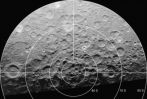
ZZ-ZZ-ZZ-ZZ-ZZ-Lunar South Pole.jpgNo "Lunar Ice" at the South Pole...64 visite"...a new radar survey of the Moon’s Southern Pole has cast doubt on the hope that there might be accessible deposits of water ice in permanently dark craters. This new survey, performed with the Arecibo Observatory in Puerto Rico, found elevated Hydrogen levels in regions of bright sunlight - not just inside the shadowed walls of craters. It seems that scattered rocks associated with impact craters have given previous instruments a false reading...".
(8 voti)
|
|

ZZ-ZZ-ZZ-APOLLO 14 AS 14-13-3b.jpgA very old - but ORIGINAL - Apollo frame: LM and possible Surface Anomaly (1)136 visiteUn esempio visibile e tangibile delle - purtroppo - orribili condizioni in cui versano molti frames NASA-Apollo Originali: i difetti (graffi e quant'altro) che costellano l'immagine sono davvero tanti e, a nostro parere, sono quasi tutti segni di una conservazione inadeguata del frame originale. Il corpuscolo luminoso che vedete sulla Dx, a ridosso dell'orizzonte, è il LM; l'altro corpuscolo luminoso (ed apparentemente metallico) che invece si vede sulla Sx, a ridosso dell'orizzonte ma non esattamente sul filo dell'orizzonte, è - a nostro parere - una possibile Anomalìa di Superficie. Comunque non dovrebbe essere un photo-artifact.
Ora portate il frame sino al full-size e poi giudicate Voi stessi!...
(8 voti)
|
|

Zond-07-09.jpgSetting Earth, from ZOND-7 (2)201 visiteZond-7 photographed the Earth on August 9, 1969, and performed two photo sessions at the Moon on August 11, 1969. It shot 35 pictures with the SKD camera and 300 mm objective, on 5,6 × 5,6 cm frames of color and panchromatic film.
Come definire i risultati fotografici di Zond-7? Giudicate Voi stessi: sono, a nostro parere, delle immagini splendide e di una qualità così alta da far impallidire i miseri e scialbi fotogrammi ottenuti dalla Sonda ESA SMART-1 la quale, dopo tante chiacchiere e promesse di scoperta e divulgazione (promesse, ad oggi, NON mantenute), sembra già essere piombata - con merito - nel dimenticatoio...
(8 voti)
|
|

Zond-07-01.jpgSetting Earth, from ZOND-7 (1)99 visiteZond-7 was launched towards the Moon from a mother spacecraft (69-067B) on a mission focused on further studies of the Moon and Circum-Lunar Space; to obtain color photography of both Earth and Moon from varying distances, and to flight test the spacecraft systems.
Earth photos were obtained on August 9, 1969.
On August 11, 1969, the spacecraft flew past the Moon at a distance of 1984,6 Km and conducted two picture taking sessions.
Zond-7 reentered the Earth's atmosphere on August 14, 1969, and achieved a soft landing in a preset region, south of Kustanai.
(8 voti)
|
|

Rheita-E-01.jpgA possible Anomaly near Rheita E? (1)192 visiteSu segnalazione dell'Amico Massimo Granzo (che ci ha inviato questo bellissimo frame) abbiamo provato a verificare se l'oggetto visibile nella cerchiatura rossa fosse un semplice photoartifact, o un rilievo curioso e parzialmente illuminato, oppure un'Anomalìa Orbitale vera e propria (un Fast-Walker - lett. "Veloce Camminatore" - il quale è: "...an object - or more objects - moving across the Lunar Disc. Alexey Arkhipov, an astronomer in Prague, refers to these objects as 'FMOs' or 'Fast-Moving Objects'...").
Si, avete capito bene: un oggetto (naturale o non) il quale si muove - dal nostro punto di vista - in prossimità della superficie della Luna ed quindi - talvolta - capace di produrre un'ombra sulla medesima.
L'analisi riguardo a questo interessante frame è stata svolta dal Dr A. Feltri.
(8 voti)
|
|
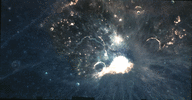
ZZ-ZZ-ZZ-FP-Clem-BrightAristarchus.gifAristarchus: the TLPs "Hottest Spot" (1)148 visiteA mosaic of more than 250 images showing the complex and diverse Aristarchus Region of the Moon in approximately "natural" colors (blue = 415 nanometers, green = 750 nanometers, red = 950 nanometers). The plateau is an uplifted block of complex, highland terrain, partly flooded by later mare basalt lavas. Dark, pyroclastic glasses partly cover the uplifted terrain. The crater Aristarchus (47 Km in diameter) has formed in the South-Western corner of the Plateau, excavating both highlands and mare rocks."
(8 voti)
|
|
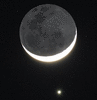
ZZ-ZZ-ZZ-FN-Earthshine.gifCoronal Mass Ejection and Earthsine110 visiteThis photograph was taken by Devgun Chander of Sohna, Haryana, of India. It shows a striking clarity to the earthshine region of the Moon. When I first look at the photograph I was impressed that Aristarchus was standing out so bright even though it very close to the sunset terminator. I sent the photograph to Dr. Anthony Cook the senior recorder for the L.T.P. sections of BAA and ALPO. He sent me the measured brightness of specific lunar formations and of the Lunar Maria.
(...) The Maria across the face of the Moon is uniformly bright except for the formations Mare Humorum, Mare Frigoris and Maria located near Aristarchus. Dr. Anthony Cook believes they are brighter due to the glare from the nearby sunset terminator. (...) The fact that we had a significant coronal mass ejections into space or CME take place on November 8-9,2004 causing aurora reports all over the World. If Solar Excitation is a factor for the extreme brightness of the Earthshine this would be the event to cause it.
(8 voti)
|
|
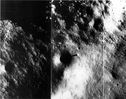
64-Vitello Crater 01 - GW.JPGRolling Rock... (1)145 visiteSempre grazie all'Amico Fabio Italiano, andiamo ora a vedere con un pò più di attenzione la famosa "pietra rotolante" di Vitello Crater.
Il frame, sebbene chiarissimo, non ci è di grande aiuto per riuscire a capire "come mai" un macigno si sia messo a rotolare in un ambiente - in teoria - completamente "still" (immobile) e quindi - come logica e prassi suggeriscono - tenteremo la via delle ipotesi concorrenti. Poi, ognuno di Voi deciderà sulla base di quello che ritiene più sensato, più credibile e/o più probabile.
1) Gravity Wasting: si tratta di un meccanismo assai controverso e, sebbene scientificamente accettabile, diremmo ancora insostanziabile nelle sue conseguenze immediate e dirette. Questa, comunque, è l'ipotesi preferita da Scienziati e Ricercatori;
2) Impatto nelle prossimità del boulder e susseguente scossa/vibrazione del suolo: in ottemperanza a questa costruzione si dice che la roccia, già (ovviamente) in equilibrio precario, si è messa a rotolare lungo un pendìo;
(8 voti)
|
|

14-Peirce Crater-LO4.jpgPeirce Crater122 visiteCrateri (piccoli e geologicamente giovani) all'interno di un cratere (grande ed antico): questo, in pochissime e semplici parole, è quanto ci mostra ad una prima e superficiale occhiata il Cratere Peirce - immortalato nella sua curiosa forma e grande bellezza in questo frame d'epoca (Lunar Orbiter 4 - 1967). Da notare anche i "gradoni" che sembrano caratterizzare il suo versante Nord (come ricollegarli ad una meccanica formativa da impatto?) ed i modesti dossi - knobs e collinette, si direbbe - che intravediamo in area centrale e verso Sud, Sud-Est.
(8 voti)
|
|
| 2188 immagini su 183 pagina(e) |
 |
|
|
|
|
10 | |
|
|
|
|





