| Piú votate - THE LUNAR EXPLORER ARCHIVES |

Sunset~0.jpgSunset on Mars (by Roberto Tremolada)101 visite"...The wolf shall live with the lamb,
The leopard shall lie down with the kid,
The calf and the lion and the fatling together,
And a little child shall lead them..."
- Isaiah, 11:6MareKromium
(13 voti)
|
|
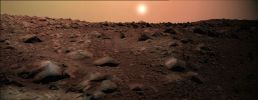
WinterMorning-2.jpgMartian Winter (credits: Dr Marco Faccin & Lunexit)151 visitenessun commentoMareKromium
(13 voti)
|
|

as12_50_7438.jpgAS 12-50-7438 - Pseudo-Pyramids along the Terminator100 visiteNon è difficile vedere, in questo spettacolare frame ottenuto dal CSM Yankee Clipper da circa 330 Km di altezza, una serie di rilievi estremamente squadrati e spettacolari. Sono "piramidi" o, comunque, sono "rilievi artificiali"?
Allora, dato che i malintesi sono all'ordine del giorno (anzi: del "Sol", così ci mettiamo dentro anche le Anomalìe Marziane) e dato altresì che ognuno ha il diritto di pensare quello che vuole (e ci mancherebbe pure!), diciamo questo: maggiore è l'altezza da cui la ripresa viene effettuata, maggiori sono le possibilità di prendere sviste (ed il Caro Prof. Hoagland è, anche in questo campo, un Precursore e Maestro). Ciò che da 1000 Km sembra un cubo, da 500 diventa una piramide e poi, da 7/800 metri di altitudine, si rivela (spesso, ma non sempre) per quello che è davvero.
Giudicare le immagini orbitali è soltanto un gioco: cerchiamo di capirlo bene. C'è chi vede "facce", chi "edifici" (piramidi & co.) e chi vede rilievi bizzarri. Qualcuno, come ovvio, avrà ragione e tutti gli altri (inevitabilmente) avranno torto: ma chi abbia ragione e chi torto lo potremo scoprire fra (ahinoi...) molto tempo. Oggi, dire con audace convinzione che "dalle immagini orbitali si vedono CHIARAMENTE strutture artificiali" significa solo bluffare, tirare ad indovinare. Nulla di più.
Per correggere il tiro ed essere un pò più realisti, pragmatici e credibili - almeno a nostro parere - basterebbe limare un minimo il tono espositivo ed aggiungere, qua e là, un "forse", un "potrebbe essere" e/od un "potrebbe sembrare". Tutto qui.
Certo, così facendo si scontenteranno un sacco di persone (per lo più frequentatori di Forum e divoratori di libri, libretti, libelli e riviste "alternative...) le quali "si attivano intellettualmente" solo quando sentono odore di Scoperta Epocale ma...Che ci volete fare?
Non si possono sempre accontentare tutti...
(13 voti)
|
|

Black Hole-PIA08696.jpgBlack Hole64 visiteThis artist's concept depicts a supermassive black hole at the center of a galaxy. NASA's Galaxy Evolution Explorer found evidence that black holes -- once they grow to a critical size -- stifle the formation of new stars in elliptical galaxies. Black holes are thought to do this by heating up and blasting away the gas that fuels star formation.
The blue color here represents radiation pouring out from material very close to the black hole. The grayish structure surrounding the black hole, called a torus, is made up of gas and dust. Beyond the torus, only the old red-colored stars that make up the galaxy can be seen. There are no new stars in the galaxy.
(13 voti)
|
|

APOLLO 12 AS 12-50-7369.jpgAS 12-50-7369 - Icy Streaks on the "Hatch Window"90 visiteCaption NASA originale:"According to National Space Science Data Center document NSSDC-70-11 (July 1970), this photo shows the 'Fouled Hatch Window; streaks go (left) away from the CMS cone (right)'.
This photo was taken inside the Command Space Module (CSM) during the Translunar Coast".
Nota: un commento asciutto ed un dettaglio intrigante ma...che cosa si vede - realmente - fuori dall'oblo'?!?
(13 voti)
|
|

Mars Full Panorama.jpgSummer afternoon on Mars65 visite
(13 voti)
|
|

PIA07854.jpgA beautiful "Asteroid Belt"62 visiteThis artist's animation illustrates a massive asteroid belt in orbit around a star the same age and size as our Sun. Evidence for this possible belt was discovered by NASA's Spitzer Space Telescope when it spotted warm dust around the star, presumably from asteroids smashing together.
The view starts from outside the belt, where planets like the one shown here might possibly reside, then moves into to the dusty belt itself. A collision between two asteroids is depicted near the end of the movie. Collisions like this replenish the dust in the asteroid belt, making it detectable to Spitzer.
The alien belt circles a faint, nearby star called HD 69830 located 41 light-years away in the constellation Puppis. Compared to our own solar system's asteroid belt, this one is larger and closer to its star - it is 25 times as massive, and lies just inside an orbit equivalent to that of Venus. Our asteroid belt circles between the orbits of Mars and Jupiter.
Because Jupiter acts as an outer wall to our asteroid belt, shepherding its debris into a series of bands, it is possible that an unseen planet is likewise marshalling this belt's rubble. Previous observations using the radial velocity technique did not locate any large gas giant planets, indicating that any planets present in this system would have to be the size of Saturn or smaller.
Asteroids are chunks of rock from "failed" planets, which never managed to coalesce into full-sized planets. Asteroid belts can be thought of as construction sites that accompany the building of rocky planets.
(13 voti)
|
|

Life-PIA03538.jpgLife!63 visiteThis artist's conception symbolically represents complex organic molecules, known as polycyclic aromatic hydrocarbons, seen in the early universe. These large molecules, comprised of carbon and hydrogen, are considered among the building blocks of life.
NASA's Spitzer Space Telescope is the first telescope to see polycyclic aromatic hydrocarbons so early -- 10 billion years further back in time than seen previously. Spitzer detected these molecules in galaxies when our universe was one-fourth of its current age of about 14 billion years.
These complex molecules are very common on Earth. They form any time carbon-based materials are not burned completely. They can be found in sooty exhaust from cars and airplanes, and in charcoal broiled hamburgers and burnt toast.
Polycyclic aromatic hydrocarbons are pervasive in galaxies like our own Milky Way, and play a significant role in star and planet formation.
(13 voti)
|
|

ZZ-ZZ-ZZ-ZZ-ZZ-ZZ-ZZ-ZZ-ZZ-ZZ-054-Isolamento anomalia.JPGSkull-Rock: pseudo-rock or pseudo-fossil? (6) - from Sol 44312 visiteHo cercato di fare 2 “isolamenti dell’Anomalìa dal resto dell'immagine e questo è il primo risultato.
Il contorno rispetta in maniera quasi perfetta quello che è il contorno dell’Anomalia e comprende le zone d’ombra nella parte che poggia sul terreno (ad esclusione della zona sinistra).
A mio parere questa zona non rispetta in maniera fedele quella che potrebbe essere la forma reale dell’Anomalia in quanto essa, come si vede, poggia su pietre e sabbia che ne mascherano i veri lineamenti.
(13 voti)
|
|

ZZ-ZZ-ZZ-ZZ-ZZ-ZZ-ZZ-MFAGONE001.jpgThe "True Colors" of Mars (2)632 visite QUALI SONO I VERI COLORI DI MARTE?
di Matteo Fagone di www.pianetamarte.net, per Lunar Explorer Italia
Lontano qualche centinaio di milioni di km dalla Terra, il "Pianeta Rosso" viene (quasi) quotidianamente ripreso ed immortalato da diverse Sonde, sia poste su un’orbita stabile attorno ad esso, sia “in marcia” sul suo suolo.
Tuttavia, contrariamente alle aspettative di molti appassionati – ed anche, in effetti, di svariati “Addetti ai Lavori” –, gli archivi fotografici “marziani” pullulano di una enorme raccolta....in bianco e nero! Credevamo che i tempi del cinema muto e delle care vecchie pellicole in black&white fosse ormai solo un (gran bel) ricordo ma, almeno alla NASA, sembrerebbe proprio che l'amore per l'obsoleto sopravviva con audacia.
(13 voti)
|
|

Craters-Newton_Crater-03.jpgNewton Crater's Gullies (Original NASA/MGS/MSSS b/w Frame)201 visiteDa "NASA - Picture of the Day" del 26.6.2000:"...Inside a small crater that lies inside large Newton Crater on Mars, numerous narrow channels run from the top down to the crater floor. The above picture covers a region spanning about 3000 meters across. These and other gullies have been found on Mars in recent HR pictures taken by the orbiting Mars Global Surveyor robot spacecraft. Similar channels on Earth are formed by flowing water, but on Mars the temperature is normally too cold and the atmosphere too thin to sustain liquid water. Nevertheless, many scientists now hypothesize that liquid water did burst out here from underground Mars, eroded the gullies and pooled at the bottom as it froze and evaporated. If so, life-sustaining ice and water might exist even today below the Martian surface (...)". L'idea che ci sia acqua allo stato liquido sotto la superficie di Marte non è nuova, anzi: la NASA stessa lo ipotizzava 4 anni fa. Oggi, dopo mesi di esplorazione "in loco", tutto tace. Forse un ripensamento?
(13 voti)
|
|

North_Polar_Regions-North_Pole.jpgThe North Pole of Mars (Natural Colors; credits: NASA/MGS/MSSS)317 visiteNon ci sono parole sufficienti per descrivere questa meravigliosa immagine ad HD del Polo Nord di Marte ed il volume di dettagli che risultano percepibili è davvero enorme. EccoVi il testo originale di commento al frame:"Spring reached the North Pole of Mars (foto del Maggio 2002) and brought with it the usual dust storms. As the North Polar Cap begins to thaw, a temperature difference occurs between the cold frost region and recently thawed surface, resulting in swirling winds between the adjacent regions. In the above image mosaic from the Mars Global Surveyor spacecraft, the white material is frozen carbon dioxide that covers much of the extreme north. The choppy clouds of at least three dust storms can be identified". Che altro dire???
(13 voti)
|
|
| 3218 immagini su 269 pagina(e) |
 |
|
|
|
|
7 | |
|
|
|
|





