| Piú votate - THE LUNAR EXPLORER ARCHIVES |
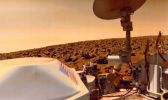
vl2_22a158_old.jpgThe "Rocky Horizon" of Utopia Planitia - Frame Viking Lander 2 n. 22a158 (Natural Colors - credits: NASA/JPL)61 visitenessun commento
(9 voti)
|
|

APOLLO 12 AS 12-50-7364.jpgAS 12-50-7364 - The Earth's Terminator...64 visitenessun commento
(9 voti)
|
|

as11-37-5494.JPGAS 11-37-5494 - Far & distant "star-like objects"...63 visite
(9 voti)
|
|

as11-37-5456.JPGAS 11-37-5456 - Where is the "Flare-like light"?75 visite
(9 voti)
|
|

as11-44-6661.JPGAS 11-44-6661 - The Moon, on the way home...67 visite
(9 voti)
|
|

as11-44-6608.JPGAS 11-44-6608 - East of Daedalus Crater84 visite
(9 voti)
|
|

as11-36-5353.JPGAS 11-36-5353 - Little Blue, in the Darkness72 visite
(9 voti)
|
|

Chasma Boreale-01.JPGChasma Boreale (2)66 visiteTapering from a width of 120 Km (75 miles) at its mouth, Chasma Boreale is only about 35 Km (22 miles) wide here. The cliffs on the Northern (top) and Eastern (right) sides of the image rise about 1400 meters (4600 feet) above the base. On the inside walls of this gigantic amphitheater are stacked layers of ice, while on its floor lie a dark sheet of what is likely frozen sand and a horde of sand dunes marching down-canyon under the winds' direction.
Chasma Boreale is so dramatic a feature that it forms part of a proposed martian "Polar Park." Yet setting aside future tourist revenues, the canyon is rewarding scientists today with glimpses into the history of the martian climate.
(9 voti)
|
|

as12-47-6870.JPGAS 12-47-6870 - Tsiolkovsky Crater66 visite
(9 voti)
|
|
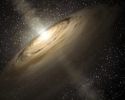
PIA03243.jpgThe way we were...85 visiteThis artist's concept illustrates a solar system that is a much younger version of our own. Dusty disks, like the one shown here circling the star, are thought to be the breeding grounds of planets, including rocky ones like Earth. Astronomers using NASA's Spitzer Space Telescope spotted some of the raw ingredients for DNA and protein in one such disk belonging to a star called IRS 46. The ingredients, gaseous precursors to DNA and protein called acetylene and hydrogen cyanide, were detected in the star's inner disk, the region where scientists believe Earth-like planets would be most likely to form.
(9 voti)
|
|

ORIGINAL NASA - APOLLO 15 - AS 15-96-13048.JPGAS 15-96-13048 - Rimae Prinz Region81 visite
(9 voti)
|
|
ORIGINAL NASA - APOLLO 15 - AS 15-91-12383.JPGAS 15-91-12383 - Tsiolkovsky Crater69 visite
(9 voti)
|
|
| 3218 immagini su 269 pagina(e) |
 |
|
|
|
|
23 | |
|
|
|
|





