| Piú votate - THE LUNAR EXPLORER ARCHIVES |

CIA-RDP96-00788R001900760001-9.pdfTrue or false?104 visiteMareKromium
(9 voti)
|
|

Italy.jpgTake a close look...121 visiteSuggestiva. Bisognerebbe farla vedere a qualche "Esperto" dell'Aeronautica Militare ed a tutti i sostenitori delle teorie più assurde e strampalate sul perché il Nord-Italia sia in siccità conclamata da almeno 15 anni. E la situazione non va a migliorare, anzi... Ipotesi?!?MareKromium
(9 voti)
|
|

Fantasia.jpgThe Martian "Tubes"87 visite"...I find hope in the darkest days, and focus in the brightest ones. I do not judge the Universe..."
(Dalai Lama)MareKromium
(9 voti)
|
|

Oumuamua_3.jpgOumuamua111 visitenessun commentoMareKromium
(9 voti)
|
|
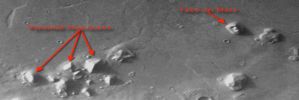
z-The_Face_on_Mars.jpgThe Face on Mars126 visiteIn the AD 1976, many Astronomers were astounded by a (Viking Orbiter) satellite image resembling a Face on the Surface of Mars. What really is that “Face”? Read on to learn more about the face on Mars.
We have already discussed in the past the term "pareidolia". It causes people to see patterns (such as faces and other familiar images) in everyday objects. Many people think that the “Face” on Mars is merely a case of Pareidolia. However, some people believe that the Face exists as a structure created by intelligent design.
But: what exactly do we see when looking at the images of Mars? Mountains? Ancient ruins like the Sphinx or the Pyramids? It seems that everyone has an opinion. And what started this obsession with the face on Mars? In 1976, the Mars Orbiter Viking 1, took a series of pictures of the Martian Region known as Cydonia Mensae. The pictures showed several mountains over a large area. In addition to the hills, and one, in particular, looked like a face. NASA thought it would gain publicity by promoting it to the public. As a consequence, people believed that aliens built this structure on Mars. Located in the Northern Hemisphere of Mars, Cydonia’s Geological Formations suggest the existence of standing water, lakes or even an ocean here for an extended period.
There are several "Mesa-like" structures and smaller flat-topped mountains in the Region. Planetary Researchers believe that parts of these Northern Lowland Plains were once the bed of an ocean or many, and extremely large lakes. Incidentally, they were covered by many layers of various materials (such as, maybe, lava), airborne particles (such as Volcanic Ashes or Atmospheric Particulate), or even Sedimentary Deposits whose depth was of many hundreds of meters. After a long period, erosion removed (some of) these layers. This is just a theory. You may like it or not, but that is it. And it has not been either confirmed or denied. So...
But what about the "Face"? The Martians (accepting the idea that the feature is NOT natural!) thought that another Civilization, in a given period of Time, would have seen and photographed a "Face"? The Mountaintop looks like a three-kilometer-long Face. Why? Because, many Scientists said, the "Terrain features and the angle of shadows led to the creation of the Face". All of the Mars Researchers at the time believed it was an optical illusion. In addition, the HRSC camera captured the Face on Orbit 3253, and the images were published in September 2006. Based on the new photos, the Mountain in question no longer contained a "Face". The angle and lighting removed the “Face” from the image. As a matter of fact, the Mountain now resembles the other Mountains in the area.
This High-Resolution (HR) Images from the Mars Orbiter Camera located on the Mars Global Surveyor Spacecraft showed the famous “Face on Mars” in detail, clearly "demonstarting" that it was a "Natural Geological Formation".
Suspicions of Aliens? The internet has various articles full of ideas and speculation with regards to the Face on Mars. However, it seems everyone wants to believe that Ancient Cvilizations (BUT NOT NECESSARILY INDIGENOUS OF MARS!) once inhabited the Red Planet. Some pictures taken from other man-made satellites seem to suggest the existance of "Pyramidal Structures" near the Face. Furthermore, they think the PyramidS exist nearly (and only) 5 km away from the Face. Dr. John Brandenburg, who worked for NASA, has been speaking about this for years. Brandenburg has worked on Space Plasma Technologies, Nuclear Fusion, and advanced Space Propulsion (and so we think that he's not exactly an "idiot" or just an "incompetent").
“We have found, in a nutshell, that Mars used to seem Earth-like, in the past, and became, eventually, the home not only to life, but a Humanoid Civilization, and that Civilization was apparently destroyed by a Nuclear (?) attack from Space. We have to send our (human) Astronauts there to find out what exactly happened. Did the people on Mars know who did this to them? And how can we make sure that this doesn’t (or won't) happen to us as well?”
Think about this, Ladies and Gentlemen...MareKromium
(9 voti)
|
|

Lens_Flare_1.jpgColorful Lens Flare?134 visiteLa causa principale della formazione dei flare è rappresentata dalla posizione della luce che tende a generare queste aberrazioni quando la sorgente luminosa si trova davanti o lateralmente alla fotocamera. In queste condizioni i raggi parassitari hanno più probabilità di subire fenomeni di rifrazione, rimbalzando tra le lenti interne all'obiettivo e causando questo difetto ottico.
La luce comunque non è l'unica variabile da tenere presente visto che anche la tipologia di obiettivo ha una certa rilevanza, in generale possiamo dire che più la struttura delle lente è complicata, maggiori probabilità si hanno di veder comparire dei flare, la spiegazione è data dal fatto che più lenti sono presenti internamente all'obiettivo e più possibilità si hanno di avere fenomeni di rifrazione. Quindi possiamo dire che gli obiettivi zoom e quelli stabilizzati sono più soggetti a questo difetto rispetto ad una focale fissa.
Ma bisogna anche tenere presente l'angolo di campo di una determinata lente, perché maggiore sarà questa variabile e più probabilità ci saranno di avere delle infiltrazioni di luce parassitaria. Quindi tenendo conto di questo fattore, si può affermare che le ottiche grandangolari sono più sensibili ai flare rispetto ai teleobiettivi.
Ma qual'é una delle caratteristiche fondamentali delle Lens Flare? E' che appare trasparente ed un "alone a spigoli" (in questo caso un "Effetto Primatico") NON deriva dalla Lens Flare. Per cui, se una (presunta) Lens Flare è accompagnata (circondata) da un Effetto Prismatico, allora NON è una Lens Flare. O l'una, o l'altro. Entrambi, otticamente, non è possibile. Perché? Perché da un'aberrazione (la Lens Flare) non deriva una sorgente autonoma poligonale o a spigoli (Effetto Prismatico).
p.s.: questa foto della Grande Muraglia è stata palesemente ritoccata (oltre ad essere fuori fuoco)MareKromium
(9 voti)
|
|

Lens_Flare_2.jpgColorful "Lens Flare"?104 visiteI flare (chiamati anche Lens-flare o Flare-effect) sono dei difetti ottici che si verificano in determinate condizioni di luce fotografando o filmando una scena. La presenza di flare in un'immagine può portare a una grande perdita di contrasto con un conseguente appiattimento della gamma cromatica, questo fenomeno viene chiamato Flare a velo, oppure può far comparire dei bagliori o delle piccole aberrazioni cromatiche in diversi punti della composizione, queste imperfezioni vengono anche chiamate Ghost fotografici e differiscono tra loro per forma o colore.MareKromium
(9 voti)
|
|

Possible_Dead_Pixel-2.jpgShine, shine, Little Light... (2)96 visitenessun commentoMareKromium
(9 voti)
|
|
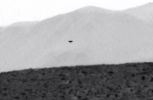
Possible_UFO-1.jpgInteresting,,, (NOT an image defect)106 visitenessun commentoMareKromium
(9 voti)
|
|

Possible_UFO-3.jpgInteresting... (possible image defect)95 visitenessun commentoMareKromium
(9 voti)
|
|
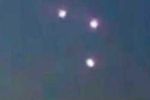
UFO-Pomezia.jpgThree or one? - Pomezia (Italy)160 visiteMareKromium
(9 voti)
|
|

The_Pyramid_and_the_Castle-2-Processed_and_colorized_Frame.jpgThe "Pyramids" and the "Fort" (Absolute Natural Colors; credits for the additional process. and color.: Dr Paolo C. Fienga/Lunar Explorer Italia/Italian Planetary Foundation)116 visitenessun commentoMareKromium
(9 voti)
|
|
| 3218 immagini su 269 pagina(e) |
 |
|
|
|
|
19 | |
|
|
|
|





