| Piú votate |

AAA-NeptuneandTriton-CJH.gifNeptune and Triton in natural colors - from Voyager 261 visiteNon si possono fare commenti ad immagini suggestive come questa: Vi lasciamo con la Vostra Fantasia ed Immaginazione, per provare a sentire che cosa questa "corsa infinita" del Voyager 2 Vi suggerisce...
(11 voti)
|
|

AAA-Uranus&Co..jpgThe Uranus' "Family"85 visitenessun commento
(11 voti)
|
|

ZZ-ZZ-ZZ-ZZ-ZZ-ZZ-ZZ-MFAGONE028.jpgThe "True Colors" of Mars (18)371 visiteProprio nel Rayleigh scattering risiede la risposta alle domande che ci siamo posti all’inizio.
Nell’attraversare l’atmosfera, la maggior parte della radiazione di maggior lunghezza d’onda prosegue la sua traiettoria rettilinea. La luce rossa, arancione e gialla viene influenzata solo in minima parte dalla presenza dell’aria. Al contrario, la luce blu è diffusa in tutte le direzioni. In qualunque direzione si osservi, parte di questa luce giunge ai nostri occhi. Il cielo, pertanto, appare blu.
Vicino all’orizzonte il cielo è di un azzurro più chiaro perché la luce, per raggiungerci da questa direzione, deve attraversare più aria e viene diffusa maggiormente; pertanto siamo raggiunti da una minor quantità di luce blu.
Le nuvole e la nebbia ci appaiono bianche perché consistono di particelle più grandi delle lunghezze d’onda della radiazione visibile, e diffondono tutti i colori allo stesso modo. Tuttavia, in particolari condizioni, è possibile che in aria si trovino in sospensione particelle più piccole.
Alcune montagne sono famose per le loro foschie blu (ad es. a Les Vosges in Francia). In questo caso gli aerosol di terpene rilasciati dalla vegetazione reagiscono con l’ozono dell’atmosfera formando particelle di circa 200 nm adatte a diffondere la luce blu.
A volte, l’incendio di una foresta o un’eruzione vulcanica possono riempire l’atmosfera con particelle delle dimensioni di 500-800 nm. Queste particelle sono pertanto in grado di diffondere la luce rossa, provocando un effetto opposto a quello usuale. In questo caso è la luce rossa ad essere diffusa via dal raggio incidente e questo provoca, in alcuni casi, una colorazione blu della Luna. Questo è un effetto che accade assai di rado e nella lingua inglese è preso ad esempio di evento raro (once in a blue moon, una volta ogni luna blu; l’analogo del nostro “una volta ogni morte di papa”).
(11 voti)
|
|

M-020-1.jpgThe dark profile of M 20 - The "Trifid Nebula"77 visite"...Drama is Life with the dull bits left out..."
Alfred Hitchcock (1899-1980)
(11 voti)
|
|

ARP 220.jpgARP 22075 visite"...No tears in the writer, no tears in the reader. No surprise in the writer, no surprise in the reader..."
Robert Frost (1874 - 1963) - "Education by Poetry", feb. 1931
(11 voti)
|
|

VB-AS-APOLLO 16 AS 16-121-19407.jpgAS 16-121-19407 - The "Lobachevsky Anomaly"177 visiteUno dei fotogrammi più famosi - sebbene a bassa risoluzione e ad alta compressione - di questa Missione "dimenticata": siamo sul Far-Side della Luna e, sotto il CSM Casper ed a quasi 300 Km di distanza, troviamo il Grande Cratere Lobachevsky e la sua "anomalia" (comuque appena visibile - ma già interessantissima!) in questa versione compressa del frame 19407).
Vi rinviamo, per un maggior dettaglio su questa intrigante questione, ad una serie di frames Clementine pubblicati nella Sezione "The Moon after Apollo 17".
(11 voti)
|
|
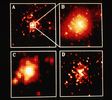
Doradus Nebula.jpgStar "nursery" in Doradus Nebula58 visite"...Oh vanagloria dell'umane posse,
Com' poco verde sulla cima dura!..."
(Dante Alighieri - Purg. 11, 91-92)
(11 voti)
|
|

M-031-91.jpgThe "strange nucleus" of M 3163 visite"...Curios simulant et Bacchanalia vivunt..."
(Giovenale)
"...Imitano (l'austerità) dei Curii, ma vivono nei Baccanali..."
(detto dei politici i quali, pubblicamente, simulano austerità e solennità di comportamento - come il loro ruolo richiederebbe -, mentre in realtà sono solo dei cialtroni che vivono, grazie alla posizione che hanno raggiunto, in una "Festa Perenne", e cioè spassandosela alle spalle del popolo)
(11 voti)
|
|

Hyperion-N00040356.jpgHyperion (19)60 visiteConto alla rovescia per il passaggio ravvicinatissimo di Cassini accanto ad Hyperion: ora siamo a circa 9000 Km di distanza dalla sua superficie...
(11 voti)
|
|

WMAP-big.jpgToday, Tomorrow, Forever...60 visiteDa "NASA - Picture of the Day" del 25 Settembre 2005:"Analyses of a new HR map of microwave light emitted only 380.000 years after the Big Bang, appear to define our Universe more precisely than ever before. The eagerly awaited results announced last year from the orbiting Wilkinson Microwave Anisotropy Probe (WMAP) resolve several long-standing disagreements in cosmology rooted in less precise data. Specifically, present analyses of above WMAP all-sky image indicate that the universe is 13,7 billion years old (accurate to 1%), composed of 73%dark energy, 23% cold dark matter, and only 4% atoms, is currently expanding at the rate of 71 km/sec/Mpc (accurate to 5%), underwent episodes of rapid expansion called inflation and will expand forever. Astronomers will likely research the foundations and implications of these results for years to come".
(11 voti)
|
|

IC-1396.jpgIC 1396 - Emission Nebula (full field)79 visite"...You will know the Truth, and the Truth will make you free..."
John - 8:32
(11 voti)
|
|

Saturn-PIA03559.jpgSaturn's clouds in 3D60 visiteSaturn's clouds and hazes at three different levels in the atmosphere are depicted in the image on the right, as observed by the visual infrared mapping spectrometer on the Cassini spacecraft.
In the image, red represents the deepest clouds yet found on Saturn. They are at an altitude where pressure is nearly double Earth's sea-level air pressure. The spectrometer saw these clouds using a 5.1 micron wavelength. Brightness levels in the original image were inverted to show cloud as bright features. Green is an image taken simultaneously at 1.6 micron wavelength, showing upper-level clouds near and above the altitude where atmospheric pressure equals Earth's sea-level air pressure, a pressure expressed as 1 bar. Blue is an image taken at 2.05 micron, a wavelength which is limited to showing only higher cloud level due to absorption of light by the hydrogen gas comprising the bulk of Saturn's atmosphere. Blue indicated clouds of an altitude where atmospheric pressure is only about 70 percent of Earth's sea-level air pressure. Thus, the aqua-colored feature over the equator is high-altitude haze residing 10 kilometers (6 miles) altitude above the typical zonal features seen in reflected sunlight over the planet (green).
The image on the left shows only the upperatmosphere above the 1-bar level, and is the view seen in reflected sunlight as observed by cameras not capable of seeing the thermal radiation of Saturn. Red in this image was taken at 2.79 micron, a wavelength that absorbs ammonia. The greenish appearance of the south pole indicates that ammonia gas is enhanced there.
As opposed to the uniform bands of hazes and clouds seen over the planet at pressures near and less than 1 bar, clouds at the 2-bar level (red, in right-hand image) are distinct, and come in a variety of shapes and sizes.
(11 voti)
|
|
| 25332 immagini su 2111 pagina(e) |
 |
|
|
|
|
92 | |
|
|
|
|





