| Piú votate |

ZZ-ZZ-ZZ-ZZ-2N143512256EFF7600P1744L0M1.jpgWater next to the outcrop?!?809 visiteGuardate che cosa indica la freccia e poi immaginate pure quello che volete: c'è chi continua a vedere acqua (o qualcosa di simile) che affiora, di quando in quando, fra le rocce e le sabbie di Marte, e c'è chi ritiene che Marte sia comunque troppo freddo sulla sua superficie perchè un tale fenomeno possa realmente avvenire ed essere riscontrato. Le immagini, da Tipuna Rock in avanti, ci sono; le ipotesi, al pari dei pro e dei contro, esistono.
Ma i dubbi, comunque, rimangono.
(12 voti)
|
|

M-086-2.jpgM 84, M 86, M87 and M 88: the "Markarian Chain of Galaxies"67 visite"...Qualcuno avrà sicuramente da eccepire: già me li immagino i nostri cari amici filosofi, pronti a questionare su ogni parola e su ogni virgola, anche quella non apposta... Ma la Verità, alla fine, è e rimane una solamente: in questo splendido - eppure terribile, a volte, campo della nostra Scienza - l'interpretazione di un falso è comunque una falsa interpretazione..."
P.C. Floegers - "In the Paradox"
(12 voti)
|
|

Miranda-PIA02217.jpgMiranda68 visiteCaption NASA originale:"Mosaic of HR images of Miranda. One wide-angle and eight narrow-angle camera images of Miranda were combined in this view. The controlled mosaic was transformed to an orthographic view centered on the South Pole. The trapezoidal region (about 200 Km on a side) occurs near the South Pole and is located near the center of the mosaic. The trapezoid's outer boundary and its internal patterns of ridges and band of contrasting albedo display numerous sharp corners".
(12 voti)
|
|

NGC-1427A_-_HST.jpgNGC 1427A - HST74 visite"Honores iniuriaeque vulgi in promiscuo habendae: nec his dolendum, nec illis gaudendum"
(Tacito)
"I plausi e le offese che arrivano dalle masse devono valutarsi in maniera simile: (poichè) delle seconde, non ci si deve offendere; (e) dei primi, non bisogna gioire"
(12 voti)
|
|

ZZ-PIA00450.jpgThe Sun from 4 Billion Miles - Voyager 272 visiteCaption NASA originale:"This image of the Sun was taken by the Voyager 1 on Feb. 14, 1990, when it was approximately 32° above the plane of the ecliptic and at a slant-range distance of approximately 4BM. It is the first - and may be the only - time that we will ever see our Solar System from such a vantage point. This image is a portion of a wide-angle image containing the Sun and the region of space where the Earth and Venus were at the time. The wide-angle was taken with the camera's darkest filter (a methane absorption band) and the shortest possible exposure (5/1000 sec.) to avoid saturating the camera's vidicon tube with scattered sunlight. The Sun is not large in the sky as seen from Voyager's perspective at the edge of the Solar System but is still 8M times brighter than the brightest star in Earth's sky: Sirius.
The result of the brightness is a bright burned out image with multiple reflections from the optics in the camera. The "rays" around the Sun are just a diffraction effect".
(12 voti)
|
|

P-Mariner9-71-2-PIA02983.jpgMars from Mariner 9: a "Shield Volcano"201 visite(...o appena superiori) a quelli conseguiti dal Mariner 9. Tre decenni e mezzo - a nostro parere - del tutto sprecati. E non dimentichiamo i "colori": le Sonde Mariner e Viking ci hanno mandato svariate immagini in colori "veri" (cioè "così come li vedrebbero i nostri occhi se fossimo là"); oggi, grazie allo "sviluppo tecnologico", non c'è una foto di Marte che sia in "colori veri". Sono tutte quante in colori "approssimativamente" veri, e nessuno - NESSUNO! - ha ancora ben capito non solo che cosa significhi esattamente questa approssimazione, ma neppure quanto essa sia attendibile e verosimile...
Caption NASA originale:"A Martian "Shield Volcano" - approx.ly 25 miles across at the crater - photographed consecutively by Mariner 9 with the wide-angle and telephoto lenses. The summit crater and groves down the flank probably were produced by subsidence flowing subsurface movement of magma".
(12 voti)
|
|

O-Mariner9-71-PIA03100_modest.jpgMars from Mariner 9: Olympus Mons standing above the Martian Dust Storm (HR)124 visiteCaption NASA originale:"In pictures taken early in the Mariner 9 Mission, this region, shows a dark mountain standing above the Martian dust storm. This HR photograph shows that the area contains a complex crater, called Olympus Mons (Nix Olympica or Snows of Olympus), nearly 64 Km (40 miles) in diameter. The multiple crater form with scalloped margins, is characteristic of calderas - volcanic collapse depressions on Earth. In the Mariner 6 and 7 flights in 1969, an outer ring, 1600 Km (1.000 miles) in diameter, was seen. It is hidden by the dust in the oblique picture. Earth-based radar observations show that this is a high region on Mars and is usually covered by a white cloud when observed telescopically. This picture was taken on November 27, 1971".
Come potete vedere benissimo in questo frame - sebbene i contorni dell'immagine non sìano perfetti - la tecnica fotografica adottata per scattare fotografie della superficie di Marte da un'orbita stabile era già molto avanzata 34 anni fa. Oggi, grazie alle Sonde Mars Global Surveyor; 2001 - Mars Odyssey; Mars Express etc. riusciamo ad ottenere risultati fotografici sostanzialmente analoghi...
(12 voti)
|
|

O-Mariner9-71-PIA02999_modest.jpgMars from Mariner 9: Ascraeus Lacus above the Martian Dust Storm133 visiteCaption NASA originale:"Oblique view of the crater complex near Ascraeus Lacus in the Tharsis region of Mars taken by Mariner 9. It is the northernmost of the prominent dark spots observed by Mariner during its approach to the Planet. The spot consists of several intersecting shallow crater-like depressions.
The main crater is approximately 21 Km (13 miles) across, the whole complex about 40 Km (25 miles) across.
The crater probably is in a relatively high area of the Martian surface, which accounts for its being visible above the dust storm.
The faint circular features outside the crater are probably atmospheric disturbances".
(12 voti)
|
|

Monoceros R-2.jpgMonoceros R290 visite"...In omni adversitate fortunae, infelicissimum est genus infortunii fuisse felicem..."
(Boezio)
"...Nei rovesci della sorte, i più sventurati sono coloro che, un tempo, furono felici..."
(12 voti)
|
|

AA-Neptune-HST-PIA01284.jpgNeptune in "Primary Colors" - HST65 visiteCaption NASA originale:"These 2 NASA HST images provide views of weather on opposite hemispheres of Neptune. Taken Aug. 13, 1996, with Hubble's Wide Field Planetary Camera 2, these composite images blend information from different wavelengths to bring out features of Neptune's blustery weather. The predominant blue color of the planet is a result of the absorption of red and infrared light by Neptune's methane atmosphere. Clouds elevated above most of the methane absorption appear white, while the very highest clouds tend to be yellow-red as seen in the bright feature at the top of the right-hand image. Neptune's powerful equatorial jet - where winds blow at nearly 900 mph! - is centered on the dark blue belt just south of Neptune's equator. Farther south, the green belt indicates a region where the atmosphere absorbs blue light".
(12 voti)
|
|
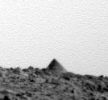
SOL390-3-Pyramid-2N160995620EFFA300P1821R0M1.jpgThere's a "Small Pyramid" up there! (Surface ANOMALY)120 visiteNoi Vi offriamo solo il dettaglio dell'immagine e quindi lasciamo a Voi, se vorrete, il compito di elaborare (e non sarà facile!) questo frame e poi maturare idee, opinioni o - magari - dei convincimenti veri e propri.
Da parte nostra, dopo aver visionato con cura e cautela questi 5 frames, possiamo dire solo una cosa: la "sporgenza" in questione è davvero TROPPO squadrata (stavolta) per poter essere subito catalogata come "struttura naturale".
E' comunque vero che non abbiamo in mano neppure elementi decisivi per poter dire che si tratta di un manufatto o, come dice il Dr Hoagland, di una struttura "artificiale"...
Una Ricerca, se fatta secondo "manuale", non deve portare a conclusioni affrettate le quali, in un simile contesto, potrebbero essere indice sia di trascuratezza, sia di incompetenza vera e propria. Tuttavia, IN ogni e PER ogni Ricerca, occorre un'ipotesi di partenza da cui muoversi e su cui lavorare: la nostra ipotesi, in questo caso, è che la "sporgenza" NON è un'opera della Natura!!!
(12 voti)
|
|
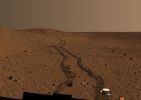
SOL318-325-Husband_Hill-PIA07334_br2-03.jpgColumbia Hills: "Husband Hill's Region" - full 360° panorama (4 - Approximate True Colors; credits: NASA/JPL-Caltech)86 visiteVogliamo parlare adesso del Cielo di Marte? Certo suggestivo, ma se ci/Vi interessa la Verità, "questo cielo Marziano" è davvero ridicolo ed improponibile.
Vi è sufficiente andare a guardare il frame - anch'esso in "almost true colors" (come questo!!!) - ripreso da Opportunity mentre si aggirava intorno allo Scudo Termico (tanto per restare in tempi recenti) per vedere delle ENORMI - ed INGIUSTIFICABILI! - DIFFERENZE.
La nostra opinione - dato che i misteri ci affascinano, ma non è mai una buona idea vederne/trovarne troppi... - è che i Cieli di Marte, tranne rarissimi frames, sono TUTTI FALSI e vengono "incollati" sui panorami una volta che la foto è "pronta per la pubblicazione".
E come vengono fatti?
In laboratorio, naturalmente, probabilmente usando qualche semplice software che tutti potremmo avere già installato sul nostro pc.
Insomma: fra il vero cielo di Marte e quello di questo frame (come di tantissimi altri) - a nostro parere - non c'è nessuna parentela!...
(12 voti)
|
|
| 25332 immagini su 2111 pagina(e) |
 |
|
|
|
|
73 | |
|
|
|
|





