| |
| Piú votate |

Saturn-N00063521-03.jpgIncredible "Meteor" (?) strikes the upper layers of Saturn's atmosphere (detail mgnf-3)82 visiteNessun ulteriore commento.
(12 voti)
|
|

BH-Black_Hole-3.jpgThe space around a Black Hole72 visite"...Verus Amor, nullum novit habere modum..."
(Properzio)
"...Il vero Amore - per sua stessa definizione e Natura - non conosce misura alcuna..."
(12 voti)
|
|

ZZ-ZZ-ZZ-T-SilverAnomaly-Spirit_Legacy_L256-A392R1.jpgThe "Silver Anomaly" or the "Real Heat-Shield"! (extra detail mgnf)282 visiteDa questo extra detail mgnf non ricaviamo - ovviamente - la Verità, ma certo abbiamo un frammento in più di informazioni. Quali?
Ad esempio sappiamo che l'oggetto che abbiamo noi stessi battezzato come "Silver Anomaly" ha una tessitura metallica (facile: questo lo si vedeva già bene), un'albedo altissima (idem), una forma "cupolare" (e questo è già un mistero) e, soprattutto, NON appare ricoperto di polvere arancione.
Quest'ultimo è, ovviamente, il dato più importante poichè significa due cose:
1) la "Silver Anomaly" è "lì", dove la vediamo ora, da poco tempo e
2) la "Silver Anomaly" non condivide la medesima natura (anche in termini cromatici) del paesaggio che la circonda.
Dunque: la Silver Anomaly non pare essere indigena di questa zona di Gusev Crater (e, qualora lo fosse, allora che dire se si trattasse di un qualcosa che sta or ora "affiorando"? Perchè la NASA non ha mai speso una sola parola per commentare questo frame?).
Se Voi avete altre riflessioni da fare, scriveteci!
(12 voti)
|
|
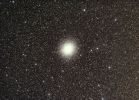
Omega Centauri.jpgOmega Centauri109 visite"La nostra Vita
è sul Confine:
dove scorrono
Ferrovie Solitarie
sopra Frontiere di Sabbia,
e dove la Terra
è Madre
dei nostri Pensieri
cresciuti
come ombre
fiabesche
in umide
Selve Sibilline.
La nostra Vita
è un Verso:
un Finale accogliente
al dissolversi
di una Poesia
semplicemente
Umana"
Gianluigi Barca
(12 voti)
|
|

NGC-4696.jpgNGC 469693 visiteIn many cosmic environments, when material falls toward a Black Hole energy is produced as some of the matter is blasted back out in jets. In fact, such Black Hole "Engines" appear to be the most efficient in the Universe, at least on a galactic scale. This composite image illustrates one example of an elliptical galaxy with an efficient Black Hole Engine, NGC 4696. The large galaxy is the brightest member of the Centaurus galaxy cluster, some 150 MLY away. Exploring NGC 4696 in X-Rays (red) astronomers can measure the rate at which infalling matter fuels the supermassive Black Hole and compare it to the energy output in the jets to produce giant radio emitting bubbles. The bubbles, shown here in blue, are about 10.000 LY across. The results confirm that the process is much more efficient than producing energy through nuclear reactions - not to mention using fossil fuels. Astronomers also suggest that as the Black Hole pumps out energy and heats the surrounding gas, star formation is ultimately shut off, limiting the size of large galaxies like NGC 4696.
(12 voti)
|
|

Sun Halo-2.jpgBright Sun, Dark Sky62 visiteCaption originale:"Have you ever seen a halo around the Sun? This fairly common sight occurs when high thin clouds containing millions of tiny ice crystals cover much of the sky. Each ice crystal acts like a miniature lens. Because most of the crystals have a similar elongated hexagonal shape, light entering one crystal face and exiting through the opposing face refracts 22 degrees, which corresponds to the radius of the Sun Halo. A similar Moon Halo may be visible during the night. The picture was taken in Gunlock, Utah, USA. A flock of birds was caught by chance in the foreground. Exactly how ice-crystals form in clouds remains under investigation".
Nota: si tratta di un'immagine molto bella, senza alcun dubbio, ma una piccola annotazione va fatta. Vedete il colore del cielo attorno al Sole? Vi sembra naturale? No, ovviamente: non è affatto naturale.
Esso è molto scuro, di colore incerto (grigio), molto simile al cielo di Marte (come si vede nei frames NASA). Ma perchè questo "strano cielo" anche sulla Terra? Diciamo che si tratta di una combinazione di fattori (su tutti il - probabile - filtro/colore usato e la circostanza per cui, scattando foto come questa e quindi sovraesponendo il Sole, automaticamente si rende più scuro tutto il resto del paesaggio).
Morale: se non si vedessero degli uccelli in transito, questa bella immagine potrebbe tranquillamente rappresentare un tramonto (o un'alba) su Marte.
La nostra deduzione è che il fatto di credere a quello che si vede in una fotografia (terrestre, marziana o lunare) e commentarlo, sta diventando sempre più una questione di "Fede" e non - purtroppo - di effettiva oggettività.
(12 voti)
|
|

NGC-2237_and_NGC-2244-03.jpgNGC 2237 - The "Rosette Nebula", and Globular Star Cluster NGC 224466 visite"...Ho visto sedere il povero e l'affamato alla mensa del ricco, ed essere sfamati. Ho potuto osservarli, mentre mangiavano, e bevevano, e si saziavano: ho potuto fare questo.
Ma nè il povero, nè l'affamato, anche se ricevettero cibo a sazietà, mentre erano seduti alla mensa del ricco, li ho visti - realmente - grati e felici..."
"...Le uniche gioie altrui che possiamo dire di condividere realmente, sono quelle che noi già possediamo o che non ci interessa possedere..."
P.C. Floegers - "Fragments"
(12 voti)
|
|
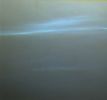
SOU-SOL039-3.jpgPre-dawn clouds (3) - Sol 39103 visiteCaption NASA originale:"This true color image shows the eastern sky, 30 degrees above the horizon at 05:13 MLT on Sol 39. The bright streaks are probably ice clouds which have formed during the night. In the true colour image, the clouds appear to be blue compared to the background. This is a real effect. Unlike the red dust, the clouds are almost invisible at infrared wavelengths.
The clouds are also moving. In order to create this image, the individual, single color, data frames have had to be shifted with respect to each other. The motion indicates that the clouds are moving from the north-east to the South-West".
ATTENZIONE: questa immagine non è altro che il medesimo frame, da noi rubricato come "Pre-Dawn Clouds (1)", capovolto e con filtro/colore modificato, passando dal Rosso/Rosa/Arancio al Verde/Azzurro! Ebbene, grazie all'attenzione che poniamo nell'analisi dei frames, questa volta la NASA può solo nascondersi: li abbiamo beccati! E, se ancora non foste convinti, andate a vedere il frame che segue il quale altro non è se non la sovrapposizione dei frames (1) e (3). La NASA avrà anche i mezzi, ma sta MENTENDO SPUDORATAMENTE DA (almeno) 40 ANNI! E sapete queal'è la cosa che più ci meraviglia? Ma come abbiamo fatto a non accorgerci prima di una simile mistificazione?
Che pena, cari Amici, che pena...
(12 voti)
|
|
Big Dipper-1.jpgBig Dipper61 visite"...Solem e Mundo tollere videntur qui Amicitiam e Vita tollunt..."
(Cicerone)
"...Coloro che vogliono bandire l'Amicizia dalla Vita sono le stesse persone che vorrebbero cancellare il Sole dal Giorno..."
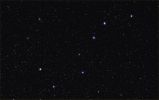
Caption originale:"A well-known asterism in Northern Skies, The Big Dipper is easy to recognize even when viewed upside down. Part of the larger constellation of Ursa Major, the bright dipper stars above are named Dubhe, Merak, Phecda, Megrez, Alioth, Mizar/Alcor and Alkaid.
Of course, stars in any given constellation are unlikely to be physically related. But surprisingly, most of the Big Dipper stars do seem to be headed in the same direction as they plough through space, a property they share with other stars spread out over an even larger area across the sky. Their measured common motion suggests that they all belong to a loose, nearby star cluster, thought to be on average only about 75 LY away and up to 30 LY across. The cluster is more properly known as the Ursa Major Moving Group".
(12 voti)
|
|
CG-4.jpgCometary Globule (CG) - 470 visite"...Esistono molte forme di Consapevolezza. Ci sono dei momenti, in cui si è più sensibili, in cui il proprio intuito è più vasto e profondo. Uno dei poteri dell’Arte è rendere più grande e profonda, in modi diversi, la Consapevolezza di una persona, che si tratti di Consapevolezza Estetica, Morale o Mistica. Questa è una funzione anche della Scienza e della Filosofia: favorire forme di Consapevolezza intellettuale più ampie e profonde. Una persona ha degli stati d’animo, o degli umori, nei quali la Consapevolezza sembra espandersi e farsi più comprensiva, accogliente, generosa, sensibile e anche particolareggiata, mentre in altre occasioni sembra restringersi. L’educazione andrebbe considerata come educazione alla Consapevolezza, e non solo come l’insegnamento delle varie professioni.
Ogni contatto umano ha il potenziale di cambiare la Consapevolezza, perché ci s’imbatte in una concezione ed una costruzione del mondo diverse dalla propria..."
Oliver Sacks
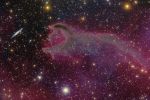
Caption originale:"The odd looking "creature" in the center of the above photo is a gas cloud known as a cometary globule. This globule, however, has ruptured. Cometary globules are typically characterized by dusty heads and elongated tails. These features cause cometary globules to have visual similarities to comets, but in reality they are very much different. Globules are frequently the birthplaces of stars, and many show very young stars in their heads. The reason for the rupture in the head of this object is not completely known. The galaxy to the left of center is huge, very far in the distance, and only placed near CG4 by chance superposition".
(12 voti)
|
|

Comets-Comet_Pojmanski-2.jpgThe "Pojmanski" Comet62 visiteE' passata inosservata, lontana dalla nostra Terra, ed è stata ben lungi dall'essere spettacolare come lo fu, qualche anno fa, la meravigliosa Hale-Bopp.
Certo, la cometina Pojmanski non aveva - forse - i numeri giusti per entrare nell'Albo delle (cosiddette) Grandi Comete, ma certo è che i media (TUTTI!) se ne sono guardati bene dal pubblicizzarla. E la NASA? Leggerete Voi stessi le scarne note prodotte al riguardo nel "NASA - Picture of the Day" del giorno 6 Marzo 2006. Noi, nel nostro piccolo, dato che ci meravigliamo per niente, siamo andati in cerca di fotografie di questa cometa ed abbiamo "scoperto" una straordinaria somiglianza fra C/2006 A1 (la Pojmanski Comet appunto) e la C/2004 Q2 (meglio nota come Machholz Comet). Uguale tipologia - o classe visuale - di appartenenza (nucleo sferico e chioma filiforme) e, soprattutto, uguale colore (ergo uguale - o comunque molto simile - composizione chimica). Deduzione logica: si tratta di "Sister-Comets". Domanda: ci sono altre "sorelle" in arrivo?!?
Have you ever seen a comet? Comets bright enough to be visible to the unaided eye appear only every few years. Right now, however, a new comet has brightened unexpectedly and is visible as a faint streak to the unaided northern observer in the eastern morning sky just before sunrise. Binoculars may help. Comet Pojmanski, officially designated C/2006 A1 and discovered only in January, now sports a turquoise tail several times longer than the full moon. Comet Pojmanski's ion tail is due to gas particles expelled by the comet being pushed away from the Sun by the solar wind, the same wind that ionizes gas in the tail causing its blue tint. Pictured above as it appeared only last week, Comet Pojmanski has now begun to fade as its orbit around the Sun takes it further from the Earth.
(12 voti)
|
|

Voyagers-Heliosphere6b.JPGWhere are the "Pioneers"?88 visitePioneer 10 will continue into interstellar space, heading generally for the red star Aldebaran, which forms the eye of Taurus. Aldebaran is about 68 LY away and it will take Pioneer over 2 MY to reach it.
The Mission of Pioneer 11 has ended: the last communication from
Pioneer 11 was received in November 1995, shortly before the Earth's motion carried it out of view of the spacecraft antenna. The spacecraft is headed toward the constellation of Aquila, Northwest of the constellation of Sagittarius. Pioneer 11 will pass near one of the stars of Sagittarius in about 4 MY.
PIONEER SPACECRAFT CONDITIONS: very cold with most temperature readings at the bottom of their scale. Bus voltage about 26 volts (nominal is 28). Uplink received from DSS 14 at -131.7 dbm. Two commands received, both confirmed as executed. Geiger Tube Telescope Instrument on, and data received.
Project Phoenix has been observing Pioneer 10 at Arecibo in Puerto Rico through the auspices of the SETI Institute. The signal from Pioneer 10 was also picked up at Arecibo on 2 March 2002.
The last telemetered data from the University of Iowa cosmic ray instrument were as follows: 2 March 2002 (39 minutes of clean data) (r = 79.83 AU) 27 April 2002 (33 minutes of clean data) (r = 80.22 AU)
At GMT 17:27:30, Saturday, 4/28/01, the signal from Pioneer 10 was received at station 63 in Madrid, the first time since August 5/6 of 2000. So it appears that Pioneer 10 has life, albeit in another mode - i.e., only in a two-way coherent mode. We have been listening for the Pioneer 10 signal in a one-way downlink non-coherent transmission mode since last summer with no success. We therefore conclude that in order [for Pioneer 10] to talk to us, we need to talk to it. This means from now on, we need two-way round-trip light time (RTLT) passes to allow the Deep Space Network (DSN) to send up a strong stable signal to lock up with a coherent downlink signal.
(12 voti)
|
|
| 25332 immagini su 2111 pagina(e) |
 |
|
|
|
|
68 | |
|
|
|
|
|
|





