| Piú votate |

Image058.gifA "New Door" on Tethys...360 visite...Ho isolato il particolare indicando con una freccia il GDU (Gravity Disk Unit). Il nome viene dal fatto che la sfera "nascente" dal GDU di solito si sposta ad una certa altezza dalla superficie, accompagnata da una specie di vortice pseudoconico semitrasparente, simile ad un fenomeno atmosferico di tipo ciclonico. Nell'animazione (ripresa da due distinte immagini Cassini) si vede abbastanza bene, a patto di guardare con attenzione per un paio di minuti.
Noterete come la sfera, inizialmente un po' più in alto della punta della freccia sulla destra, sembri spostarsi poi verso sinistra fino a toccare il piccolo cratere sopra la punta della freccia. Nella 3D si vede come il vortice si sia spostato con la sfera, in quanto noterai come l'immagine RED sia distanziata di molto da quella BLUE, indice certo di movimento relativo.
Vista la risoluzione della foto (il mio cellulare fotografa meglio) non posso certo pretendere di trarne conclusioni scientifiche precise, ma il fenomeno non mi è affatto nuovo, anzi a dire la verità l'ho riscontrato decine di volte anche nelle foto di Marte (e non solo).
Che i GDU siano delle specie di "porte" mi pare ormai abbastanza chiaro. Resta l'incertezza su cosa ci sia dall'altra parte...

(13 voti)
|
|

OO-APOLLO 11 - TV IMAGE.jpg"Hello to the World!" (TV - Live from the Moon)136 visiteArmstrong "saluta" il Mondo, il Mondo "salutava" Armstrong: l'Uomo era arrivato sulla Luna.
Pochi anni dopo, tutta questa epopea (forse una delle più grandi nella Storia dell'Umanità), veniva svillaneggiata e derisa grazie alla smania di notorietà dell'Ing. Kaysing e, forse, grazie anche alla necessità di "coprire il copribile".
"...Meglio far credere all'Umanità che non ci siamo mai stati, piuttosto che dire all'Umanità quello che ci abbiamo trovato..."
(13 voti)
|
|

RY-Tau_gemini_f.jpgRY Tauri61 visite"...Lear si ribellava senza risparmiarsi contro l'arbitrio fatto Legge di coloro che esercitavano il diritto del più forte, per ritirarsi, deluso e sconcertato, quando gli stessi uomini al cui fianco si era posto per cercarne il riscatto, diventavano i nuovi tiranni contro cui combattere...
E così, la voglia di Verità e di Onestà un pò alla volta lo allontanarono da quegli uomini stupidi e violenti, avvicinandolo sempre più a quel piccolo punto luminoso il cui fascino, in fondo, stava nell'enorme distanza che lo separava da quel mondo falso e violento al quale lui non voleva più appartenere.
Una Stella lontana, a cui chiedere asilo per non assistere allo scempio che l'uomo stava compiendo di se stesso.
Un luogo dove poter vivere in armonia con il Creato e con Dio.
Viaggiò tra i Sistemi Solari con questa speranza, ma comprese troppo tardi che l'isola che cercava era già dentro di lui..."
G. Spina - "Una Sera attorno al Fuoco"
(13 voti)
|
|
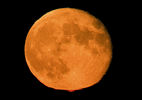
ZZ-ZZ-ZZ-ZZ-ZZ-LunarRedFlash_seip_f.jpgA "red flash" on the Moon140 visiteDa "NASA - Picture of the Day", del 22 Settembre 2005:"This remarkable telescopic image highlights the deep orange cast of a waning gibbous Moon seen very close to the eastern horizon on September 19. In fact, today's equinox at 22:23 UT marks the beginning of Fall in the Northern Hemisphere and makes this view from Stuttgart, Germany an almost Autumn Moon. While the long sight-line through the atmosphere filters and reddens the moonlight, it also bends different colors of light through slightly different angles, producing noticeable red (bottom) and green (top) lunar rims. Also captured here floating just below the Moon is a thin, red mirage (inset) - in this case, an atmospherically magnified and distorted image of the red rim. Of course, this tantalizing lunar 'red flash' is related to the more commonly seen 'green flash' of the Sun".
(13 voti)
|
|

Jupiter-HR.jpgJupiter's North Pole (HR)61 visiteDa "NASA - Picture of the Day" dell'11-09-2005:"Gas giant Jupiter is the Solar System's largest world with about 320 times the mass of Earth. Famous for its Great Red Spot, Jupiter is also known for its regular, equatorial cloud bands, also visible in very modest sized telescopes.
The dark belts and light-colored zones of Jupiter's cloud bands are organized by the Planet's girdling winds which reach speeds of up to 500 Km/hour. On toward the Jovian poles though, the cloud structures become more mottled and convoluted until, as in this Cassini spacecraft mosaic of Jupiter, the Planet's Polar Region begins to look something like a brain. This striking equator-to-pole change in cloud patterns is not presently understood, but may be due in part to the effect of Jupiter's rapid rotation or to convection vortices generated at high latitudes by the massive Planet's internal heat loss.
Cassini took this dramatically detailed view of Jupiter in December 2000, during its flyby enroute to Saturn".
(13 voti)
|
|

Gusev Crater.jpgGusev Crater: an artistic interpretation136 visite"...The landing site and the Columbia Hills are within Gusev Crater, a bowl about 150 Km (about 95 miles) in diameter. It was selected for the Spirit mission because the shape of the terrain suggests the crater once held a lake. Volcanic deposits appear to have covered any sign of ancient lakebed geology out on the plain, but scientists say the hills expose older layers that have been lifted and tipped by a meteorite impact or other event...".
"Spirit has climbed to the hilltop and looked over the other side, but NASA did not do this just to say we can do it. The Mars rovers are addressing fundamental questions about Martian history and planetary environments," said NASA's Mars Exploration Program Director Doug McCuistion.
The crest of "Husband Hill" offers Spirit's views of possible routes into a basin to the south with apparently layered outcrops. Shortly after Spirit landed, it observed a cluster of seven hills about 3 kilometers (2 miles) east of its landing site. NASA proposed naming the range "Columbia Hills" in tribute to the last crew of Space Shuttle Columbia. The tallest of the hills commemorates Rick Husband, Columbia's commander.
(13 voti)
|
|

Rhea-PV-PIA07566.jpgRhea, from about 239.000 Km59 visiteOriginal caption:"Like the rest of Rhea's surface, the Southern Polar Region of this Saturn moon has been extensively re-worked by cratering over the eons. This close-up shows that most sizeable craters have smaller, younger impact sites within them. Near the left lies an intriguing gash (---> taglio lungo e profondo, ivi sinonimo di "chasm" o "cleft").
The largest well-defined crater visible here is an oval-shaped impact toward the upper right. The crater is 115 by 91 Km (such as 71 by 57 miles) in size. Cassini acquired this view during a distant flyby of Rhea on July 14, 2005.
The image was taken in visible light with the Cassini spacecraft narrow-angle camera at a distance of approx. 239.000 Km (such as 149.000 miles) from Rhea and at a Sun-Rhea-spacecraft angle of 56°. The image was obtained using a filter sensitive to wavelengths of infrared light centered at 930 nnmts. The image scale is about 1 Km per pixel".
(13 voti)
|
|

B-apollo 16-n-as16-m-008.jpgAPOLLO 16 AS 16-M-R03-0008 - ANOMALY (detail mgnf)- ORIGINAL UNCOMPRESSED166 visiteFinalmente siamo venuti in possesso dell'Original Uncompressed Frame che aveva suscitato l'attenzione e l'interesse non solo nostro, ma anche di tanti Lettori. Ebbene, il rilievo anomalo presente all'interno del cratere sembra proprio essere un rilievo naturale: nessuna Anomalia, in senso tecnico. Però, se guardate con attenzione il frame, dopo averlo portato in full-size, non potrete non rimanere affascinati da questa meravigliosa e suggestiva visione ravvicinata della Luna e di uno dei suoi innumerevoli ammassi di crateri (o "crater-clusters").
E poi, per gli Osservatori più esperti ed attenti, una piccola segnalazione: all'interno di uno dei crateri si vede, operando con un semplice software per l'elaborazione delle immagini, una piccola (ed inspiegabile) scintilla - dimensioni: 16 pixels - che NON sembra essere un photo-artifact.
Buona caccia!!!
(13 voti)
|
|

mars-dust-devil-large-bg.jpgMartian Dust Devil115 visiteAh, Martian Summer! Finally, the days are long, just like on dear old Earth. And daytime highs rocket all the way up to a balmy 20°C (68°F) from the Summer nighttime low of -90°C (-130°F), meaning you and your fellow astronauts can warm up your machinery earlier to get a good start on mining operations.
But those warm daytime temperatures also bring alive the Martian devils. Dust devils, that is.
You were caught in one just yesterday - and a devilishly terrifying experience it was! This was no little Arizona desert whirlwind, only a few tens of meters high and a few meters across and past you in seconds.
No, what hit you yesterday was a monster column towering kilometers high and hundreds of meters wide, 10 times larger than any tornado on Earth. Red-brown sand and dust whipping around faster than 30 meters per second (70 miles per hour) dropped visibility to zero, scouring your faceplate, driving dust into every fold and wrinkle of your spacesuit.
For 15 minutes you huddled and endured the buffeting. The scariest part was the incessant crackling and flashing of miniature lightning bolts nipping at you and your rover, and the loud static on your radio that prevented you from calling for help.
Could this really happen?
(13 voti)
|
|

M-016-94.jpgM 16 - Pillar Detail145 visite"...Mi sorprendo sempre quando mi accorgo che i ragazzini che stanno studiando qualche frammento scomposto della nostra Storia, guardano al Medio Evo e poi, con leggerezza e quasi con sollievo, parlano di "Secoli Bui": sorrido e vorrei offrir loro una candela, da tenere sempre con sè, pronti ad usarla durante il loro cammino, ma a che servirebbe?
Capirebbero quello che cerco di dire loro?
Essi sono solo viandanti, sperduti ed ormai quasi completamente ciechi, i quali non riescono a rendersi conto che la lontana oscurità di cui parlano è solo il riverbero di quella in cui loro stessi, sebbene rassicurati dalle suadenti voci di vicine ed ingannevoli sirene, stanno vagando..."
P.C. Floegers - "Conversations"
(13 voti)
|
|

Fomalhaut-HST.jpgA ring of debris around Fomalhaut - HST115 visite"...Fra i diversi Strumenti per il Controllo di Massa di cui abbiamo parlato ce n'è uno che merita particolare attenzione e che si chiama "Deviatore".
Il suo funzionamento è semplicissimo; il rendimento, enorme.
L'uso del Deviatore viene precognizzato dal Trattato di T.W. Veerwaandt sul "Controllo degli Organismi Senzienti e degli Elementi Devianti" e già in quella fonte si prevede l'impiego, come Meccanismi Diffusori, della Televisione (primariamente) e della Letteratura Secondaria o Terziaria - detta anche "Letteratura Vile" - in misura minore.
Si tratta, detto in maniera davvero semplicissima, di far parlare e di far interagire con le Masse degli individui (che chiameremo "Testimonial") i quali non hanno, rispettivamente, nulla da dire nè da trasmettere.
Il Deviatore ha il compito primario di distogliere l'attenzione delle Masse dalla focalizzazione dei loro interessi su talune problematiche di primario interesse Sociale, Culturale e Scientifico..."
P.C. Floegers - "Mind Numbing Methods"
(13 voti)
|
|

NGC-1316-00.jpgNGC 1316 and the giant "radio lobes" of Fornax A87 visiteCaption NASA originale:"Together, the 'radio lobes' span over 1 MLY, but what caused them? In the center is a large but peculiar elliptical galaxy dubbed NGC 1316. Detailed inspection of the NGC 1316 system indicates that it began absorbing a small neighboring galaxy about 100 MY ago. Gas from the galactic collision has fallen inward toward the massive central black hole, with friction heating the gas up to 10 million degrees. For reasons not yet understood, two oppositely pointed fast moving jets of particles then developed, eventually smashing into the ambient material on either side of the giant elliptical galaxy. The result is a huge reservoir of hot gas that emits radio waves, observed as the orange (false-color) radio lobes in the above image. The radio image is superposed on an optical survey image of the same part of the sky. Strange patterns in the radio lobes likely indicate slight changes in the directions of the jets".
(13 voti)
|
|
| 25332 immagini su 2111 pagina(e) |
 |
|
|
|
|
56 | |
|
|
|
|





