| |
| Piú votate |
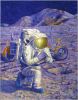
ALANBEAN-PRAYER.jpgLunar Prayer175 visitenessun commento
(15 voti)
|
|
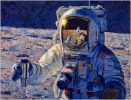
ALANBEAN-CORETUBE.jpgCore-Tube112 visiteDalla Galleria Pittorica dell'Astronauta Alan Laverne Bean: un Omaggio alla Luna ed a quei pochi che ebbero il coraggio, la fortuna ed il privilegio di camminarci sopra.
Ma lasciamo che sia "Alan" a raccontarci questa storia: la "Sua Storia"...
"...When my book, "Apollo, An Eyewitness Account", was published in October of 1998, I felt an overall sense of satisfaction. I was, in fact, preserving some of my special memories of the Apollo Program. This was the reason I resigned from NASA to become an artist.
I was moving right along but I noticed my goals for the future were even more ambitious. I wanted to paint the Moon more beautifully than I had done so far, as colorful as it could be painted, and still look like the Moon to me, a worthy but elusive goal.
I stopped painting commissions and began painting several series of studies to explore and develop new color techniques and combinations. This intense and dedicated effort consumed me for the better part of a year with the resulting changes first coming to full fruition in this painting.
Sometimes when I look at this painting I wonder if the changes were all that much. I question if anyone other than me can see them or even care? I don't know. Was it worth the time? I hope so...".
(15 voti)
|
|

HH-0049_-_SST.jpgHH 49/5080 visite"...Multa ferunt anni venientes commoda secum;
Multa recedentes adimunt..."
(Orazio)
"...Gli anni che arrivano (e cioè il futuro che diviene presente) portano con sè tante cose belle; ma molte ne portano via, allorchè declinano (e cioè quando il presente, diviene passato)..."
(15 voti)
|
|

V-838_Mon-02.jpgV838 Monocerotis, the Milky Way and Us...69 visite"...The Proletarian State must bring up thousands of excellent "mechanics of culture", "engineers of the soul"...
Maxim Gorky (1868-1936) - from his speech at the Writers' Congress (1934)
"...In free society, Art is not a weapon, and Artists are not "engineers of the soul"..."
J.F. Kennedy (1917-1963) - from his speech in Amherst College (1963)
(15 voti)
|
|

HH-0111.jpgHH 11159 visite"...Nelle moderne rappresentazioni della Guerra (e parlo della cosiddetta Letteratura Giornalistica e della Cinematografia, in particolare) mi pare di cogliere il tentativo di mostrare, con quanto maggior realismo possibile, il costante ed atroce confronto tra gli istinti bestiali dell'uomo e quelli che sono, invece, i suoi "Angeli della Coscienza": ad esempio la Moralità, il senso di Sacrificio e, certamente, l'Amore.
Questa tecnica di raffigurazione della Guerra, a mio parere, potrebbe essere interessante e simbolicamente accattivante poichè riduce ogni conflitto alla sua vera essenza: Uomo contro Uomo e, all'interno di ogni Uomo, la Bestialità contro la Ragione.
Eppure, dopo aver letto un articolo sulla Somalia, o l'Iraq, o la Bosnia, e dopo aver visto un film sul Viet Nam o sulla II Guerra Mondiale, nulla mi toglie dalla testa che questa sorta di introspezione venga fatta, in fondo ed in larga misura, solo per esigenze "di cassetta"..."
P.C. Floegers - "Conversations"
(15 voti)
|
|

0-Saturn and Friends.jpgSaturn and His Moons203 visiteThe dozens of moons orbiting Saturn vary drastically in shape, size, age and origin. Some of these moons have rocky surfaces, while others are porous, icy bodies. Many have craters, ridges and valleys and some show evidence of tectonic activity. Some appear to have formed billions of years ago, while others appear to be pieces of a bigger, fragmented body. The most interesting one is Titan, the biggest of them all. Larger than Earth's Moon, Titan even has its own thick atmosphere - the only natural satellite in the Solar System with such a luxury. During its 4-year mission in this immense region, the Cassini spacecraft will extensively photograph many of these moons and collect data that will increase our understanding of their composition.
To date, 34 moons have been officially named. In alphabetic order, they are: Albiorix, Atlas, Calypso, Dione , Enceladus, Epimetheus, Erriapo, Helene, Hyperion, Iapetus, Ijiraq, Janus, Kiviuq, Methone, Mimas, Mundilfari, Narvi, Paaliaq, Pallene, Pan, Pandora, Phoebe, Polydeuces, Prometheus, Rhea, Siarnaq, Skadi, Suttung, Tarvos, Telesto, Tethys, Thrym, Titan and Ymir.
(15 voti)
|
|

ZZ-ZZ-ZZ-ZZ-ZZ-ZZ-ZZ-MFAGONE029.jpgThe "True Colors" of Mars (19)331 visiteSe fossimo sulla Luna, a causa dell’assenza di atmosfera (e della diffusione ad essa connessa), il cielo apparirebbe nero e il Sole sarebbe bianco. Sulla Terra, invece, in conseguenza del Rayleigh scattering, parte della componente blu è rimossa dai raggi diretti del Sole che pertanto ci appare giallo. Questo effetto è amplificato al tramonto, quando il Sole è vicino all’orizzonte. I raggi solari diretti attraversano uno strato maggiore di atmosfera e vengono maggiormente impoveriti della componente blu. Il Sole, dunque, diventa sempre più rosso man mano che il tramonto procede.
Le immagini inviateci dalle sonde Viking nel 1977 e Pathfinder nel 1997 hanno mostrato che il cielo visto da Marte appare rosso. Questo è dovuto alla polvere ricca di ossido di ferro (che appare rosso), sollevata durante le bufere che si verificano di tanto in tanto sul pianeta rosso (come viene appunto soprannominato Marte). Il colore del cielo marziano dipende dunque dalle condizioni atmosferiche. Esso è blu in assenza di bufere recenti, ma risulta comunque più scuro di quello terrestre a causa della minore quantità di atmosfera.
(15 voti)
|
|
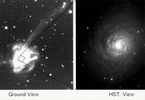
NGC-7252-1.jpgNGC 7252 - Spiral Galaxy61 visiteE forse è questo il mio Destino,
Pallida Luce di Stella, troppo lontana,
Mi confesso a te e tu, teneramente,
Scintilli e mi guardi senza parlare...
Pallida Luce di Stella, Amica mia,
Le scelte sono parte dell’Esistenza,
Come i dilemmi e le ansietà,
Ma nel Dolore, lo sai, noi siamo soli...
E se questo fosse il mio Destino
Pallida Luce di Stella, Amica mia,
Mi ritroverò a piangere, nella Notte,
E, per sempre solo, ascolterò il mio Niente...
Pallida Luce di Stella, ascoltami,
Che sarà di me e del mio cuore?
Che sarà di questo passaggio fugace?
Che sarà di noi e dei nostri sogni?
Non hai parole, lo so, ma io ti guardo
E guardandoti ti chiedo, Amica mia,
Pallida Luce di una Stella lontana,
Sorridi per un istante e amami,
Scintilla una volta ancora e guardami,
Sussurrami una preghiera e guidami....
P.C. Floegers - "Poesie"
(15 voti)
|
|

M-031-3.jpgThe "active nucleus" of M 3194 visite"...Dum vitant stulti vitia, in contraria currunt..."
(Orazio)
"...Gli sciocchi, cercando di sfuggire ad un'ossessione (vitium), incorrono nel suo opposto..."
(15 voti)
|
|

Image050-Ukert-4.jpgUkert: the "pseudo-triangular" Lunar Crater788 visitenessun commento
(15 voti)
|
|
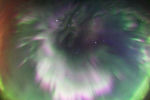
Aurora_Borealis-Coronal_Aurora-sep11aurora_moussette_f.jpgNorthern Lights over Canada65 visiteSo far, the Aurora Borealis - or "Northern Lights" - have made some remarkable visits to September's Skies. The reason, of course, is the not-so-quiet Sun. In particular, a large solar active region now crossing the Sun's disk has produced multiple, intense flares and a large Coronal Mass Ejection (CME) that triggered wide spread auroral activity just last weekend. This colorful example of spectacular curtains of aurora was captured with a fish-eye lens in skies over Quebec, Canada, on September 11, 2005.
Also featured is the planet Mars, the brightest object above and left center. Seen near Mars (just below and to the right) is the tightly knit Pleiades star cluster.
Although they can appear to be quite close, the Northern Lights actually originate at extreme altitudes, 100 Km or so above the Earth's surface.
(15 voti)
|
|

ZZ-ZZ-ZZ-ZZ-ZZ-LunarGreenFlash_laveder_f.jpgA "green flash" over the Moon129 visiteDa "NASA - Picture of the Day" del 26 Agosto 2005:"July's Full Moon looks strangely darkened and distorted in this remarkable telescopic view. The image is one of a series recorded when the Moon was very near the horizon. The long sight-line through a turbulent atmosphere gives rise to the tantalizing optical effects, including the thin "mirage" shape that seems to float just above the Moon's upper edge. Also seen (more easily in the inset), along the Moon's upper edge is a noticeable green rim. Substantial atmospheric refraction produces this prism-like effect -- related to the more commonly witnessed green flash of the setting Sun. Careful inspection of the full image reveals a corresponding red rim along the lower edge, another intriguing signature of atmospheric refraction".
(15 voti)
|
|
| 25332 immagini su 2111 pagina(e) |
 |
|
|
|
|
36 | |
|
|
|
|
|
|





