| Piú votate |

SOL1559-2P264763301EFFAY00P2272R1M1.jpgHorizon... - Sol 1559 (MULTISPECTRUM; credits: Lunexit)63 visitenessun commentoMareKromium 
(15 voti)
|
|
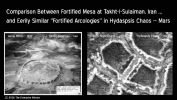
Mars&Iran-6.jpgMars and Iran: where "nothing" becomes "something"! (7)636 visitenessun commento
(15 voti)
|
|
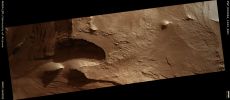
Psp_009684_1695_red.jpgExposure of Light-Toned Layering along Wallrock in Coprates Chasma (possible True Colors; credits: Lunar Explorer Italia)56 visiteMars Local Time: 15:32 (middle afternoon)
Coord. (centered): 10,2° South Lat. and 290,8° East Long.
Spacecraft altitude: 260,8 Km (such as about 163,0 miles)
Original image scale range: 26,1 cm/pixel (with 1 x 1 binning) so objects ~78 cm across are resolved
Map projected scale: 25 cm/pixel
Map projection: EQUIRECTANGULAR
Emission Angle: 2,5°
Phase Angle: 59,7°
Solar Incidence Angle: 62° (meaning that the Sun is about 28° above the Local Horizon)
Solar Longitude: 115,1° (Northern Summer)
Credits: NASA/JPL/University of Arizona
Additional process. and coloring: Lunar Explorer ItaliaMareKromium
(3 voti)
|
|
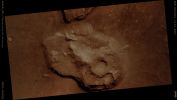
Psp_009497_2210_red.jpgEroded Mesa in Western Cydonia Region (possible True Colors; credits: Lunar Explorer Italia)57 visiteMars Local Time: 15:25 (early afternoon)
Coord. (centered): 40,7° North Lat. and 351,0° East Long.
Spacecraft altitude: 307,8 Km (such as about 192,4 miles)
Original image scale range: 30,8 cm/pixel (with 1 x 1 binning) so objects ~92 cm across are resolved
Map projected scale: 25 cm/pixel
Map projection: EQUIRECTANGULAR
Emission Angle: 14,8°
Phase Angle: 31,0°
Solar Incidence Angle: 46° (meaning that the Sun is about 44° above the Local Horizon)
Solar Longitude: 108,5° (Northern Summer)
Credits: NASA/JPL/University of Arizona
Additional process. and coloring: Lunar Explorer ItaliaMareKromium
(3 voti)
|
|

Psp_009478_1770_red.jpgCratered Cones in Zephyria Planum (False Colors; credits: Lunar Explorer Italia)56 visiteMars Local Time: 15:21 (early afternoon)
Coord. (centered): 3,1° South Lat. and 152,3° East Long.
Spacecraft altitude: 286,5 Km (such as about 179,0 miles)
Original image scale range: 28,7 cm/pixel (with 1 x 1 binning) so objects ~86 cm across are resolved
Map projected scale: 25 cm/pixel
Map projection: EQUIRECTANGULAR
Emission Angle: 20,4°
Phase Angle: 72,7°
Solar Incidence Angle: 56° (meaning that the Sun is about 34° above the Local Horizon)
Solar Longitude: 107,8° (Northern Summer)
Credits: NASA/JPL/University of Arizona
Additional process. and coloring: Lunar Explorer ItaliaMareKromium
(3 voti)
|
|

ZZ-ZZ-Horizon-2P227744645EFFAS4JP2629L4Mblueskies.jpgMartian Sky over Gusev (natural colors - elab. Keith Laney)81 visitenessun commentoMareKromium
(16 voti)
|
|

ZZ-ColorMars-04.JPGMars from Orbit, as a "Human" would see it...by Don Davis (5)98 visiteThis color treatment is the result of a collaboration between THEMIS team members at Cornell University and space artist Don Davis, who is an expert on true-color renderings of planetary and astronomical objects. Davis began with calibrated and co-registered THEMIS VIS multi-band radiance files produced by the Cornell group. Using as a guide true-color imaging from spacecraft and his own personal experience at Mt. Wilson and other observatories, he performed a manual color balance to display the spectral capabilities of the THEMIS imager within the context of other Mars observations. He also did some manual smoothing along with other image processing to minimize the effects of residual scattered light in the images. This image shows the bright deposit remaining on the floor of Pollack Crater.
(18 voti)
|
|

ZZ-ColorMars-00.jpgMars from Orbit, as a "Human" would see it...by Don Davis (1)80 visiteUna serie di quattro bellissimi frames "dipinti a mano" - letteralmente - del bravo Ricercatore/Artista Americano Don Davis il quale, a quanto pare, fa "consulenza" alla NASA sulla materia della "colorizzazione" dei frames. Si, avete letto bene: un pittoree fotografo (un artista, insomma) fa da Consulente alla NASA per quanto attiene le modalità più realistiche di colorizzazione delle immagini.
Tra le dichiarazioni che ha rilasciato, ci piace sottolineare questa (anche perchè, in fondo, sposa bene il punto di vista cromato-filosofico di Lunar Explorer Italia):"...la maniera migliore per colorare Marte - in maniera tale da farlo vedere così come un occhio umano lo vedrebbe - deriva dall'osservazione diretta di Marte: sia dalla Terra, sia - anche e soprattutto - mediante le fotografie ottenute in "natural colors" dall'Hubble Space Telescope...Se Marte appare, in alcune zone, color arancio, in altre verdastro e grigio ed in altre ancora blu o bianco, perchè colorare tutto di giallo ocra o di rosso?...".
Don Davis: un Artista ed un Uomo intelligente, come ce ne sono pochi. Ad ogni modo, dopo aver preso atto dello splendido lavoro fatto per la NASA (Missione Odyssey), suggeriamo ai Fenomeni dell'ESA di contattarlo ed ingaggiarlo come consulente per la colorizzazione dei loro "disegnini"...
(15 voti)
|
|

ZZ-ZZ-Towers on the Moon-9.jpgThe "Towers" of the Moon: Alien artifacts, Myth or Bogus? (7)419 visiteFalsificare, alterare, cancellare...In una parola "nascondere".
Sono attività mostruose, in sè contrarie allo Spirito sul quale si dovrebbe fondare la Storia e la Cultura del Genere Umano. Ma nel momento in cui esse vengono eseguite - come da immagine in oggetto - in maniera così stupida, malfatta, rozza e dozzinale, che cosa se ne può dedurre?
Forse che coloro i quali vogliono 'controllare e nascondere', in fondo, sono solo un gruppo di idioti?
O anche questa evidente rozzezza esecutiva è uno strumento ideato per deviare l'attenzione da ciò che conta davvero?
Avete delle opinioni al riguardo che vorreste condividere?
Scriveteci!...
(17 voti)
|
|

Fantasy APOD.jpgThe Universe is "on sight"!85 visiteDa "NASA - Picture of the Day" del 16 Giugno 2006:"The first APOD appeared 11 years ago today, on 1995, June 16. Although garnering only 14 page views on that day, we are proud to estimate that APOD has now served over 400 million space-related images over the last 11 years. That early beginning, along with a nearly unchanging format, has allowed APOD to be a consistent and familiar site on a web frequently filled with change. Many people don't know, though, that APOD is now translated daily into many major languages. We again thank our readers and NASA for their continued support, but ask that any potentially congratulatory e-mail go to the folks who created the great pictures - many times with considerable effort - that APOD has been fortunate enough to feature over the past year. Many can be contacted by following links found in the credit line under the image. Some of these images are featured in the above spectacular collage of a fantasy sky above Mars submitted by an enthusiastic APOD reader skilled in digital image manipulation. How many APOD images can you identify?".
(12 voti)
|
|

N-CALLISTO.jpgNothing is impossible: the Cathedral of Reims and the Canyons of Callistus769 visiteEd ecco un lavoro similare a quello che abbiamo appena analizzato (e cioè un confronto tra immagini di paesaggi terrestri e paesaggi alieni) il quale, però, venne svolto - sempre sotto l'ègida del Prof. Hoagland - nel 1996.
In questo frame si mette a confronto la Cattedrale di Reims (FRA) – si tratta di un'immagine ripresa da un’altezza di circa 550 metri – con delle curiose strutture colonnari (simili a delle guglie o, se volete, a dei grattacieli) visibili sulla superficie della Luna Gioviana Callisto (frame ottenuto dalla Sonda Galileo da circa 8000 Km di distanza – slant distance non nota).
Vedete? Nulla di nuovo sotto il Sole di "Enterprise Mission"...
(31 voti)
|
|

Titan-Regions-Ganesa_Macula_Region-PIA09176.jpgGanesa Macula62 visiteCaption NASA:"This radar image of Titan shows Ganesa Macula, interpreted as a cryovolcano (ice volcano), and its surroundings. Cryovolcanism is thought to have been an important process on Titan and may still be happening today.
This mosaic was made from images obtained by the Cassini radar mapper on two flybys. The lower part of the image was from the flyby on Oct. 26, 2005, while the upper part was from the Jan. 13, 2007, flyby.
Ganesa macula is the dark circular feature seen on the lower left of the mosaic.
Bright rounded features, interpreted as cryovolcanic flows, are seen towards the top and the right of the mosaic.
This image mosaic was taken in synthetic aperture mode. The resolution of the images is approx. 350 mt (1150 feet). North is toward the top. The image mosaic is about 570 Km (about 354 miles) wide and 390 Km (about 240 miles) high".
(14 voti)
|
|
| 25332 immagini su 2111 pagina(e) |
 |
|
|
|
|
|
2107 | |
|
|
|





