| Piú votate |

SOL2179-MF-LXTT.jpgThe Soft and Colourful Sands near Spirit Winter-Haven - Sol 2179 (Image-Mosaic - Enhanced Natural Colors; credits for the additional process. and color.: Dr Marco Faccin - Lunexit Team)61 visitenessun commentoMareKromium 
(7 voti)
|
|
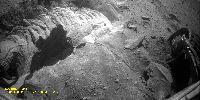
SOL2156-EB.gifMartian Sandtrap Workout! (GIF-Movie; credits: Elisabetta Bonora)61 visitenessun commentoMareKromium
(7 voti)
|
|
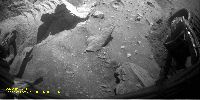
SOL2150-2154-EB.gifThe "Magic (and yet still buried!) Wheel" goes up and down... - Sol 2150-2154 (GIF-Movie; credits: Elisabetta Bonora)63 visitenessun commentoMareKromium
(7 voti)
|
|

ALANBEAN-MANKINDROCK.jpgMankind Rock105 visiteThis is Gene Cernan as he was near the end of the third moonwalk of Apollo 17. He and astronaut-geologist Jack Schmitt had completed most of their work and were just gathering final equipment and samples, putting them aboard the lunar module. At this point, Gene turned toward the television camera and said, "Jack has picked up a very significant rock, composed of many fragments of many sizes and many shapes, probably from all parts of the Moon, probably billions of years old, but a rock of all sizes and shapes and even colors that had grown together to become a cohesive rock, outlasting the nature of space, sort of living together in a very coherent, very peaceful manner. We'd like to share a piece of this rock with many of the countries throughout the world. We hope that this will be a symbol of what our feelings are." Then they continued their preparations for leaving the Moon.
Gene knew he would be the last man on the Moon for quite a long time. As he closed his checklist and prepared for his ascent up the ladder, he said, "As we leave the Moon at Taurus-Littrow, we leave it as we came and, God willing, we shall return with peace and hope for all mankind." Gene Cernan, last man on the Moon, 5:34 a.m. GMT, December 14, 1972.
I felt this was such a fitting and proper occasion in the history of manned lunar exploration that I created two nearly identical paintings of this moment.
(18 voti)
|
|
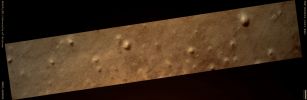
Psp_009659_2425_red.jpgTerrain in Vastitas Borealis (possible True Colors; credits: Lunar Explorer Italia)56 visiteMars Local Time: 15:08 (early afternoon)
Coord. (centered): 62,4° North Lat. and 241,9° East Long.
Spacecraft altitude: 309,5 Km (such as about 193,4 miles)
Original image scale range: 61,9 cm/pixel (with 1 x 1 binning) so objects ~1,86 mt across are resolved
Map projected scale: 50 cm/pixel
Map projection: EQUIRECTANGULAR
Emission Angle: 0,3°
Phase Angle: 50,8°
Solar Incidence Angle: 51° (meaning that the Sun is about 39° above the Local Horizon)
Solar Longitude: 114,3° (Northern Summer)
Credits: NASA/JPL/University of Arizona
Additional process. and coloring: Lunar Explorer ItaliaMareKromium
(4 voti)
|
|

SOL1413-2.jpgInteresting Outcrop - Sol 1413 (possible True Colors; credits: Dr G. Barca & Lunexit)57 visitenessun commentoMareKromium
(4 voti)
|
|
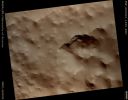
Psp_009435_1850_red.jpgLayered Outcrop and associated Boulder Tracks, North of Pavonis Mons (possible True Colors; credits: Lunar Explorer Italia)56 visiteMars Local Time: 15:25 (early afternoon)
Coord. (centered): 5,1° North Lat. and 246,7° East Long.
Spacecraft altitude: 266,0 Km (such as about 166,3 miles)
Original image scale range: 26,6 cm/pixel (with 1 x 1 binning) so objects ~80 cm across are resolved
Map projected scale: 25 cm/pixel
Map projection: EQUIRECTANGULAR
Emission Angle: 2,2°
Phase Angle: 54,6°
Solar Incidence Angle: 53° (meaning that the Sun is about 37° above the Local Horizon)
Solar Longitude: 106,3° (Northern Summer)
Credits: NASA/JPL/University of Arizona
Additional process. and coloring: Lunar Explorer ItaliaMareKromium
(4 voti)
|
|
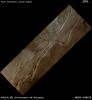
Psp_009406_2600_red.jpgExposed Rupes Tenuis of the Southern Margin of Hyperborea Lingula56 visiteMars Local Time: 14:42 (early afternoon)
Coord. (centered): 79,9° North Lat. and 302,1° East Long.
Spacecraft altitude: 320,6 Km (such as about 200,3 miles)
Original image scale range: 32,1 cm/pixel (with 1 x 1 binning) so objects ~64,1 cm across are resolved
Map projected scale: 25 cm/pixel
Map projection: EQUIRECTANGULAR
Emission Angle: 8,0°
Phase Angle: 51,8°
Solar Incidence Angle: 58° (meaning that the Sun is about 32° above the Local Horizon)
Solar Longitude: 105,3° (Northern Summer)
Credits: NASA/JPL/University of Arizona
Additional process. and coloring: Lunar Explorer ItaliaMareKromium
(4 voti)
|
|
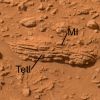
SOL298-Tetl_Rock-01-RA-01-Tetl-A298R1.jpg"Tetl Rock" - Sol 298 (Aalmost True Colors; credits: NASA/JPL-Caltech)95 visiteImmagine ravvicinata e spettacolarmente dettagliata della roccia stratiforme conosciuta come Tetl. Non ci sembra di rilevare alcun tipo di anomalia in questa immagine; l'unica cosa che ci sembra poco credibile, nonostante la NASA abbia rubricato questo frame come eseguito in "almost true colors", è proprio nel particolare colore di fondo assunto dalla superficie Marziana.
L'arancione è molto luminoso e l'immagine, nonostante il livello di particolari visibili risulti alquanto elevato, sembra - in qualche modo - leggermente "velata". Non vi è traccia di "berries".
(18 voti)
|
|

UnknownLunarEvent-010-ADT-MF-LXT_c.jpgUnknown Lunar Event (credits: Alessandro Della Torre; additional process.: Alessandro Della Torre)1097 visite...a GRANDE RICHIESTA...MareKromium
(10 voti)
|
|
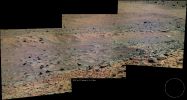
SOL1377-1-EB-LXTT.jpgVisual Survey - Sol 1377 (an Image-Mosaic in False Colors by Elisabetta Bonora - Lunexit Team)81 visitenessun commentoMareKromium
(5 voti)
|
|
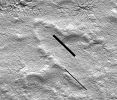
ESP_014282_0930_RED_abrowse-03.jpgSpiders (EDM n.2 - credits: Dr G. Barca)65 visite...Si, a questo punto è certo: si trattava di un image-artifact. Senza dubbi. Grandi complimenti al nostro sempre puntualissimo Dr Barca per la pazienza avuta!MareKromium
(5 voti)
|
|
| 25332 immagini su 2111 pagina(e) |
 |
|
|
|
|
2102 | |
|
|
|
|





