| Piú votate |

Enceladus-PIA07459.jpgEnceladus in infrared61 visiteCaption NASA originale:"This infrared color image of Enceladus was obtained by the Cassini visual infrared mapping spectrometer on March 9, 2005, when the Cassini spacecraft was 9.145 Km away from Enceladus.
Enceladus shows substantial differences in composition or, more likely, particle size on its surface. Redder areas correspond to larger grain sizes, and appear to be correlated with craters and ridged regions. The surface of Enceladus is nearly pure water ice; no other components have been identified yet. The middle of the image is located at the equator near a longitude of 210°.
The image is about 100 Km square and it shows the ratio of reflected light at 1,34 and 1,52 microns, wavelengths that are not visible to the human eye". 
(8 voti)
|
|

Blooming_Colours.jpgBlooming Colours (by Ermes Sansottera)245 visite"...Parla forse il Cielo? Eppure, nonostante il Suo Silenzio, le Stagioni seguono il loro corso e le Creature continuano a nascere, a vivere, e a morire..."
(Confucio)MareKromium
(22 voti)
|
|

SOL1375-EB-LXTT.jpgInfraRed Mars - Sol 1375 (credits: NASA and Elisabetta Bonora - Lunexit Team for the add. process. and colorization)88 visitenessun commentoMareKromium
(6 voti)
|
|
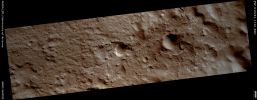
PSP_010281_1510_RED_abrowse-00.jpgSedimentary Layers in Columbus Crater (ctx frame - possible True Colors; credits: Lunar Explorer Italia)56 visiteThis image covers a portion of the North-Eastern Inner Wall of Columbus Crater, located in the Southern Hemisphere of Mars and is approx. 100 Km (about 60 miles) in diameter.
Layered sedimentary rocks are found on the Crater Walls and Floor, and may have been deposited by water or by wind. These rocks have subsequently been eroded to expose their successive layers in cross-section.
The near-infrared spectrometer CRISM has revealed that these layers contain various hydrated minerals.
Mars Local Time: 15:42 (middle afternoon)
Coord. (centered): 28,6° South Lat. and 194,3° East Long.
Spacecraft altitude: 256,0 Km (such as about 160,0 miles)
Original image scale range: 25,6 cm/pixel (with 1 x 1 binning) so objects ~77 cm across are resolved
Map projected scale: 25 cm/pixel
Map projection: EQUIRECTANGULAR
Emission Angle: 0,5°
Phase Angle: 70,9°
Solar Incidence Angle: 70° (meaning that the Sun is about 20° above the Local Horizon)
Solar Longitude: 137,3° (Northern Summer)
Credits: NASA/JPL/University of Arizona
Additional process. and coloring: Lunar Explorer ItaliaMareKromium
(6 voti)
|
|

Huygens-Down-05.jpgHuygens' Descent to Titan: 70 Km from the Surface (credits: R. Pascal)55 visiteAt an altitude of about 70 Km above the Surface, Huygens is inside the layer of complex organic condensate haze. Below that layer, the view becomes clearer. MareKromium
(6 voti)
|
|
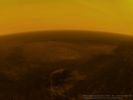
Huygens-Down-08.jpgHuygens' Descent to Titan: 25 Km from the Surface (credits: R. Pascal)67 visiteThe altitude, where Huygens' view of the Surface became distinctly clearer, was surprisingly low with respect to the atmosphere model.
Only about 10% of the Sunlight that is present at the Outer Atmosphere of Titan reaches the surface at the end.
Nota Lunexit: ed è proprio per il suddetto motivo che questa (comunque bellissima) sequenza di immagini è, a nostro parere, completamente errata dal punto di vista della luminosità dell'ambiente.MareKromium
(6 voti)
|
|
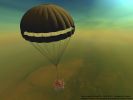
Huygens-Down-02.jpgHuygens' Descent to Titan: 100 Km from the Surface (credits: R. Pascal)56 visiteThe true color of Titan's Sky at this altitude is expected to be slighly less vivid than in this rendering, but should nevertheless come close to it. The transparency of the atmosphere would also be slightly lower to the naked eye. MareKromium
(6 voti)
|
|
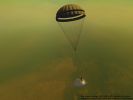
Huygens-Down-04.jpgHuygens' Descent to Titan: 85 Km from the Surface (credits: R. Pascal)55 visiteAltitude: about 85 Km and still nearly two hours of descent are separating Huygens from the Surface of Titan.MareKromium
(6 voti)
|
|
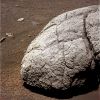
OPP-SOL251-00.jpgThe "Sleeping Bear" (a.k.a.: "Wopmay") - Sol 251 (possible True Colors; credits: Dr G. Barca)58 visitenessun commentoMareKromium
(6 voti)
|
|
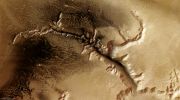
Echus_Chasma-398-260508-2204-6-co-01-H1.jpgEchus Chasma (False Colors)58 visiteThe High-Resolution Stereo Camera (HRSC) on board ESA’s Mars Express has returned images of Echus Chasma, one of the largest Water Source Regions on the Red Planet.
The data were acquired on September, 25, 2005.
The pictures are centred at about 1° North and 278° East and have a ground resolution of approx. 17 mt/pixel.
Echus Chasma is an approx. 100 Km long and 10 Km wide incision in the Lunae Planum High Plateau North of Valles Marineris, the ‘Grand Canyon’ of Mars. Echus Chasma is the Water Source Region of Kasei Valles, which extends thousands of Km to the North, and its southern-most part. The images of the Echus Chasma plateau show valleys that are about 10 km long and 1000 m deep. The main valley, Kasei Valles, is about 4 km in depth. The smaller valleys, also called sapping canyons, originate from the discharge of groundwater.
Echus Chasma is bounded to the West by the Echus Chasma Plateau, which lies about 4 Km above the Echus Chasma floor. MareKromium
(6 voti)
|
|
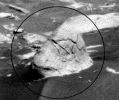
OPP-SOL900-1P208080387EFF74ZTP2289R2M1-B.jpgTwo of the Three Kings: the First King (detail mgnf) - Sol 90097 visitenessun commento
(6 voti)
|
|

ZZ-ColorMars-07-KL-H1201whiterockcolorwebth.jpgMars from Orbit, as a "Human" would see it...by Keith Laney (1)61 visiteUn omaggio di Lunar Explorer Italia al bravissimo Keith Laney (http://keithlaney.net/) il quale, già molto tempo prima di noi, aveva iniziato a colorizzare i frames orbitali NASA ottenendo - come si vede in queste quattro immagini (e come potrete ammirare nella Galleria predisposta sul suo Sito) - dei risultati splendidi, realistici e, probabilmente, alquanto accurati.
A nostro avviso il Lavoro di Keith è davvero bellissimo e meritevole della massima considerazione; una sola "pecca" (veniale, a nostro parere): allo scopo di offrire il "meglio del meglio" ai Lettori, il bravissimo Keith si è "dimenticato" della vaga ma persistente foschia che "appanna", leggermente, tutti i rilievi superficiali inquadrati dall'orbita. Le sue elaborazioni, infatti, sono sempre super-nitide, super-definite e con contrasti e colori perfetti.
Elaborazioni bellissime, quindi, ma che fanno assomigliare Marte, in qualche caso, ad una sorta di diorama più che ad un Mondo reale.
Comunque complimenti - detto di cuore - a Keith Laney: ottimo lavoro!MareKromium
(12 voti)
|
|
| 25332 immagini su 2111 pagina(e) |
 |
|
|
|
|
2100 | |
|
|
|
|





