| Piú votate |

SOL277-2N150960238EFF8982P0674R0M1.jpgTime is passing by... (1)66 visiteIl tempo, come dice il titolo di questa immagine, sta passando (siamo giunti al Sol 277) e Spirit rimane fermo a guardarsi attorno. Abbiamo già manifestato le nostre perplessità relative ad una ulteriore avanzata/ascesa del Rover su per le colline, ma anche un arresto così prolungato ci lascia alquanto spiazzati. Non c'è fretta, si dirà, e noi possiamo anche essere d'accordo.
Ma il Rover non può rimanere bloccato troppo a lungo (allora si che le sue forti, ma pur sempre delicate, giunture potrebbero - per così dire... - intorpidirsi ed iniziare a degradare, rovinandosi. Dunque la domanda rimane davanti a noi (come le insidie del futuro cammino di Spirit), senza risposta: da che parte si va?
(12 voti)
|
|

The Sun_s Corona.jpgThe "Corona"86 visiteIn sede di commento a questa immagine (amatoriale, ma non per questo meno bella) della corona solare - come visibile durante un'eclissi totale - una piccola curiosità: sapevate che alcune delle sfumature della corona sono visibili (anzi: percepibili) soltanto dall'occhio umano?
(12 voti)
|
|

APOLLO 15 AS 15-97-13145.jpgAS 15-97-13145 - Big crater, small crater...210 visiteUn cratere "maggiore" con al suo fianco (anzi: sul suo bordo) un cratere minore. Si tratta di un fenomeno assolutamente naturale che abbiamo avuto occasione di riscontrare anche su Marte e su alcune delle lune dei Giganti Gassosi.
Strano...ma vero!
(12 voti)
|
|

APOLLO 17 AS 17-147-22560.jpgAS 17-147-22560 - Another BIG boulder138 visiteIn questa immagine ed in quella successiva possiamo vedere una panoramica completa di uno dei tantissimi macigni (boulders) che gli Astronauti hanno "scoperto" nella zona di allunaggio ed in prossimità delle colline della Luna. Le forme di queste rocce sono davvero affascinanti...
(12 voti)
|
|
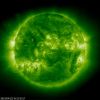
The Sun.jpgThe Sun62 visiteCaption NASA originale:"The ultraviolet light emitted by eleven times ionized iron at temperatures over 2 million degrees Farenheit was used to record the above picture of the Sun on September 22, 2001, the date of that year's autumnal equinox. The image was made by the EIT camera onboard the SOHO spacecraft, a space observatory which can continuously observe the Sun. Eleven times ionized iron is atomic iron with eleven of its electrons stripped away. Here the electrons are stripped by the frantic collisions with other atoms and electrons which occur at the extreme temperatures in the Solar Corona. Since electrons are negatively charged, the resulting ionized iron atom is highly positively charged. Astronomer's "shorthand" for eleven times ionized iron is written "Fe XII", the chemical symbol for iron followed by a Roman numeral 12 (Fe I is neutral iron)".
(12 voti)
|
|

APOLLO 17 AS 17 136-20863.jpgAS 17-136-20863 - The Sphere is gone...160 visiteOriginal caption del frame AS 17-136-20862:"LRV traverse from Station 1 to the SEP site. The LM is on the left, theY are still south of the SEP transmitter. Scan courtesy NASA Johnson".
In conclusione, la "pasta" di cui sono fatti molti Scienziati (anche di casa nostra...) gli impedisce - costituzionalmente - di fare una pubblica ammissione circa la loro incapacità di fornire spiegazioni relativamente ad alcuni fenomeni. Purtroppo la conoscenza, vera o presunta, fa - spesso - rima con l'arroganza del sapere.
Ed è (anche) per questo che Lunar Explorer è nata: perchè così come è vero che non si può sapere o pretendere di sapere tutto, è altresì vero che non si può ignorare tutto (e, quando occorre, negando l'evidenza).
Si tratta, ovviamente, di una querelle senza fine sulla quale ognuno ha il diritto di dire ciò che vuole. Le Vostre opinioni riguardo a questo specifico punto, saranno sempre benvenute!
(12 voti)
|
|

APOLLO 14 AS 14 65-9215.jpgAS 14-65-9214 - The LM's "BIG" Shadow123 visitenessun commento
(12 voti)
|
|

Saturn storms_-PIA06477_modest.jpgAn "oval" storm near Saturn's South Pole55 visiteCaption NASA originale:"The region near Saturn's south pole shows a great deal of fascinating detail in this view from Cassini. Near upper right, an oval-shaped storm is bordered to the north and south by bright streaks of cloud, and two dark storms hover in a brighter cloud lane near the center.
The image was taken with the Cassini spacecraft narrow angle camera on Aug. 7, 2004, at a distance of 8.4 million kilometers (5.2 million miles) from Saturn through a filter sensitive to wavelengths of infrared light. The image scale is 50 kilometers (31 miles) per pixel".
(12 voti)
|
|

ZA-Triton-PIA02247_modest.jpgFarewell Triton...54 visiteCaption NASA originale:"Voyager 2 obtained this parting shot of Triton, Neptune's largest satellite, shortly after closest approach to the moon and passage through its shadow on the morning of Aug. 25, 1989. The distance to Triton was 90.000 Km and the phase angle was 155°, so that only a thin crescent of Triton's south polar region can be seen. Because of the high phase angle, and perhaps because of scattering sunlight in Triton's hazy atmosphere, few surface features are also easily discernible". Un piccolo commento: non sembra anche a Voi di intuire una sottile somiglianza fra Tritone e Titano?...
(12 voti)
|
|

ZE-ENDMAP-detailed.jpgDetailed Map of Endurance Crater168 visiteCaption NASA originale:"This overview of "Endurance Crater" traces the path of the Mars Exploration Rover Opportunity from sol 94 (April 29, 2004) to sol 205 (August 21, 2004). The route charted to enter the crater was a bit circuitous, but well worth the extra care engineers took to ensure the rover's safety".
(12 voti)
|
|

Saturn_s F-Ring+Mimas-PIA06471_modest.jpgLonely Mimas...56 visiteCaption NASA originale:"Mimas swings around Saturn, seeming to gaze down at the planet's splendid rings. The outermost, narrow F ring is visible here and exhibits some clumpy structure near the bottom of the frame. The shadow of Saturn's southern hemisphere stretches almost entirely across the rings. Mimas is 398 Km (247 miles) wide.
The image was taken with the Cassini spacecraft narrow angle camera on August 15, 2004, at a distance of 8,8 MKM (5.5 million miles) from Saturn".
(12 voti)
|
|

Saturn in the darkness-N00015836.jpgSaturn (and Titan?) in the darkness56 visiteA volte, quando invitiamo i nostri Lettori ad immaginare, mentre guardano le "istantanee dell'Universo", di "essere lì", sospesi in una sorta di abisso senza confini visibili, circondati da oggetti maestosi ed impenetrabili, pensiamo al film "2001 - Odissea nello Spazio", quando Dave Bowman esce nello Spazio di Giove a bordo della sua navetta, per andare a vedere il Monolito da vicino. Questo frame, in qualche modo, ci ricorda quella sequenza e noi ve lo proponiamo...
(12 voti)
|
|
| 25332 immagini su 2111 pagina(e) |
 |
|
|
|
|
2087 | |
|
|
|
|





