| Piú votate |

APOLLO_17_AS_17-140-21497.jpgAS 17-140-21497 - Station 6 Panorama (Natural Colors; credits: Dr M. Faccin)113 visiteStation 6 Pan (North). Jack Schmitt, Tracy's Rock, talus sample site, East Massif, Bear Mountain. This picture is probably reproduced more often than any other taken during the Mission.MareKromium
(10 voti)
|
|

Hyperion-N00040280.jpgHyperion (8)56 visiteLa distanza si accorcia, anche se non di molto: siamo a circa 31.000 Km da Hyperion. Non molto da dire per quanto attiene questo frame il quale è molto simile al precedente.
(10 voti)
|
|

Hyperion-N00040201.jpgHyperion (3)60 visiteQuali altri processi possano aver condotto ad un simile risultato, però, è ancora un mistero e noi non pensiamo che sarà uno scherzo giungere alla Verità (con tutto il rispetto per le interessanti Teorie del Gruppo che si chiama "Thunderbolts")...
In questo frame, siamo a poco più di 100.000 Km da Hyperion.
(10 voti)
|
|

OPP-SOL463-1R169294697EFF55E3P1314R0M1.jpgOpportunity begins a VERY careful "rollout"56 visiteCaption NASA originale:"Opportunity rotated its wheels on Sol 463 for the first time since the Rover dug itself into a sand dune more than 2 weeks earlier. The wheels made about 2 and 1/2 rotations, as commanded, and the results were a good match for what was expected from tests on Earth. In the loose footing, the rover advanced 2,8 cm (about 1,1") forward, 4,8 mm (about 0,19") sideways and 4,6 mm (about 0,18") downward.
After further analysis of the results, the Rover Team will decide whether to repeat the same careful movement again on Sol 465. Meanwhile Opportunity's main tasks for Sol 464 were remote-sensing observations".
(10 voti)
|
|

SOL372-2P159392388ESFA2HPP2541R5M1.jpgSurface ANOMALY: this rock is VERY strange... (2)67 visiteCambia il filtro/colore usato dalla PanCam di Spirit per fotografare questa roccia, ma non cambiano le nostra impressioni ad essa relative. Si tratta di una roccia completamente inusuale la quale, se osservate con attenzione la frattura centrale che la divide in due, ci dà l'impressione di essere piuttosto fragile e sottile.
Purtroppo queste prime immagini non sono eccezionali in termini di qualità e quindi dobbiamo aspettare per formulare altre ipotesi, nella speranza che il Centro Controllo Missione rimanga incuriosito almeno quanto lo siamo noi...
(10 voti)
|
|
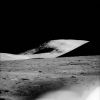
APOLLO 15 AS 15 84-11247.jpgAS 15-84-11247 - The western base of Mt Hadley363 visiteSpettacolare frame che riprende le pendici del versante occidentale del Monte Hadley: una "piccola montagna" (piallata, come la quasi totalità delle colline e dei monti della Luna) che ha comuque riservato - ci pare - agli Astronauti ed a noi un grande quantitativo di sorprese (oltre che una serie di scorci davvero splendidi).
(10 voti)
|
|

OPP-SOL208-1P146648952EFF35B8P2423L7M1.jpgEscher Rock and the "paved walls" of Endurance - Sol 208 (EDM)79 visitenessun commento
(10 voti)
|
|

APOLLO 13 AS 13-61-8741 ANOMALY.jpgAS 13-61-8741 - Moon from orbit287 visiteForse riusciremo anche a raggiungere, in tempi ragionevoli, le Stelle più vicine, ma se non metteremo "occhi umani" sulle nostre astronavi la vera "Evoluzione" (globale e non individuale: una vera Evoluzione della "Specie Umana") non sarà conseguita. E per raggiungere questa "Evoluzione" occorrerà, probabilmente, la creazione di una Nuova Consapevolezza (oltre che di una Nuova Scienza).
Una Nuova Consapevolezza che ci possa permettere, a dispetto di quanto da tempo (o da sempre?!?) asseriscono tanti "scienziati" (forse saggi, ma certo vecchi, vuoti ed appagati), di riuscire ad immaginare, almeno,...
(10 voti)
|
|

APOLLO 12 AS 12-46-6825.jpgAS 12-46-6825 - The "Mound", from a VERY short distance (4)257 visiteUn "qualcosa" che viene (forse) ripreso in altri due fotogrammi sui quali stiamo ancora tentando di lavorare ed investigare e che, in un prossimo futuro, verranno comunque messi in visione sul nostro Sito.
Qualche Ricercatore (Americano) più "immaginifico" di noi ha detto, parlando di queste immagini e dei (presunti) ritrovamenti effettuati in prossimità della "collinetta", che la "collinetta" stessa potrebbe essere un "tumulo funerario". Onestamente l'idea a noi non sembra proprio folle però, almeno...
(10 voti)
|
|

NGC-2169.jpgNGC 2169 - Open Star Cluster61 visite"...What matters finally is not the World's judgement of oneself, but one's judgement of the World. Any writer who lacks this final arrogance will not survive very long..."
Gore Vidal - "The Nation"
(13 voti)
|
|

Coronal Loops-TRACE.jpgCoronal loops73 visiteDa "NASA - Picture of the Day" del 14 Agosto 2005:"Why is the Corona of the Sun so hot? Extending above the photosphere or visible surface of the Sun, the faint, tenuous Solar Corona can't be easily seen from Earth, but it is measured to be hundreds of times hotter than the photosphere itself. Astronomers have long sought the source of the Corona's heat in magnetic fields which loft monstrous loops of solar plasma above the photosphere. Detailed observations of coronal loops from the orbiting TRACE satellite are pointing more closely to the unidentified energy source. Recorded in extreme ultraviolet light, this and other TRACE images indicate that significant heating occurs low in the corona, near the bases of the loops as they emerge from and return to the solar surface. This tantalizing TRACE image shows clusters of the majestic, hot coronal loops which span 30 or more times the diameter of planet Earth".
(13 voti)
|
|

OPP-SOL035-Pilbara_Rock-11-SM-04-PreRat-B093R1.jpgPilbara Rock, on the way to Endurance Crater (1) - Sol 35124 visiteCaption NASA originale:"This approximate true-color image taken by the PanCam on the Mars Exploration Rover Opportunity show the rock called Pilbara that is located in the small Fram Crater (vedi Sez. "Walking on Mars..."). The rock appears to be dotted with the same "blueberries" - or spherules - found inside Eagle Crater. Opportunity drilled into this rock with its RAT (such as the so-called "Rock Abrasion Tool"). After analyzing the hole with the Rover's scientific instruments, scientists concluded that Pilbara has a similar chemical make-up, and thus watery past, to rocks studied at Eagle Crater. This image was taken with the PanCam's 480-, 530- and 600-nnmts filters".
(13 voti)
|
|
| 25332 immagini su 2111 pagina(e) |
 |
|
|
|
|
2028 | |
|
|
|
|





