| Piú votate |

Asteroids-Spirit-041007163903.jpgThe path to immortality: an asteroid named "Spirit"60 visiteEd ora qualche dato NASA ufficiale relativamente ai due asteroidi: Spirit dovrebbe avere un diametro compreso fra i 4 ed i 9 Km mentre il diametro di Opportunity oscillerebbe fra i 3 ed i 7. Sia Spirit che Opportunity sono fisicamente posizionati ad una distanza intermedia fra Marte e Giove, all'interno di un piccolo Gruppo di asteroidi conosciuto come "Hilda" ed entrambi impiegano poco meno di 8 anni per compiere un'intera orbita attorno al Sole. Nessuno dei due corpi celesti si muove su una traiettoria tale da poterlo condurre ad incrociare l'orbita di altri Pianeti e nè Spirit, nè Opportunity, inoltre (ed in base ai dati in nostro possesso), dovrebbero mai risentire in maniera critica e decisiva dell'immensa influenza gravitazionale di Giove. Ed infine una curiosità: il Gruppo di asteroidi "Hilda" si caratterizza per avere un periodo di "risonanza orbitale", rispetto a Giove, di 3 a 2 (solo un modo difficile per dire che, per ogni 2 orbite complete di Giove attorno al Sole, il Gruppo "Hilda" ne compie 3).
(17 voti)
|
|
Planetary Disks.jpgPlanetary Dust Disks97 visite"...And specks of gold, like fine sand,
Add vague stars, to their mystical eyes..."
Charles Baudelaire
(17 voti)
|
|

IDA&DACTYL-PIA00333.jpgIda and Dactyl in "natural colors"71 visiteThis color picture is made from images taken by the imaging system on the Galileo spacecraft about 14 minutes before its closest approach to asteroid 243 Ida on August 28, 1993. The range from the spacecraft was about 10,500 kilometers (6,500 miles). The images used are from the sequence in which Ida's moon was originally discovered; the moon is visible to the right of the asteroid. This picture is made from images through the 4100-angstrom (violet), 7560 A (infrared) and 9680 A (infrared) filters. The color is 'enhanced' in the sense that the CCD camera is sensitive to near infrared wavelengths of light beyond human vision; a 'natural' color picture of this asteroid would appear mostly gray. Shadings in the image indicate changes in illumination angle on the many steep slopes of this irregular body as well as subtle color variations due to differences in the physical state and composition of the soil (regolith).
(17 voti)
|
|

APOLLO 11 AS 11-36-5303.jpgAS 11-36-5303 - Leaving Planet "Earth" (6)340 visiteLa curva dell'orizzonte adesso si stringe sempre di più e la distanza da "casa" si fa sempre più grande: Apollo 11 ha abbandonato l'orbita terrestre e si sta dirigendo verso la Luna!
(17 voti)
|
|
APOLLO 11 AS 11-36-5299.jpgAS 11-36-5299 - Leaving Planet "Earth" (4)353 visitenessun commento
(17 voti)
|
|

M-009-1.jpgM 9 - Globular Star Cluster68 visite"...Live as children of light - for the fruit of the light is found in all that is good and right and true..."
(Ephesians 5:8-9)
(17 voti)
|
|

Io-Emakong patera-PIA02598_modest.jpgThe "Emakong" Patera (HR)66 visiteCaption NASA originale:"Clues about how lava spreads great distances on Jupiter's volcanic moon Io come from HR views taken by NASA's Galileo spacecraft of a lava channel flowing out of Emakong Patera near Io's equator.
The lava channel is dark and runs to the right from the dark patera, or large depression, at the left of this mosaic. The 1999 images showed a dark channel though which molten material once fed a broad, bright lava flow that extended for hundreds of Km".
(17 voti)
|
|

Io-Eruption on Tvashtar Catena-PIA02584_modest.jpgIo: eruption in Tvashtar Catena87 visiteThis pair of images taken by NASA's Galileo spacecraft captures a dynamic eruption at Tvashtar Catena, a chain of volcanic bowls on Jupiter's moon Io. They show a change in the location of hot lava over a period of a few months in 1999 and early 2000.
The image on the left uses data obtained on Nov. 26 and July 3, 1999, at resolutions of 183 meters (600 feet) and 1.3 kilometers (0.8 miles) per pixel, respectively. The red and yellow lava flow itself is an illustration based upon imaging data. The image on the right is a composite using a five-color observation made on Feb. 22, 2000, at 315 meters (1030 feet) per pixel.
These are among the most fortuitous observations made by Galileo because this style of volcanism is too unpredictable and short-lived to plan to photograph.
Short-lived bursts of volcanic activity on Io had been previously detected from Earth-based observations, but interpreting the style of volcanic activity from those lower-resolution views was highly speculative. These Galileo observations confirm hypotheses that the initial, intense thermal output comes from active lava fountains. Galileo's high-resolution observations of volcanic activity on Io have also confirmed other hypotheses based on earlier, low-resolution data. These include interpretations of slowly spreading lava flows at Prometheus and Amirani and an active lava lake at Pele. These tests of earlier hypotheses increase scientists' confidence in interpreting volcanic activity seen in low-resolution remote sensing data of Earth as well as Io. However, these data are still of insufficient resolution to adequately test the more quantitative models that have been applied to volcanic eruptions on Earth and Io.
These images also show other geologic features on Io, such as the scalloped margins of the plateau to the northeast of the active lavas. These margins appear to have formed by sapping, a process usually associated with springs of water. Liquid sulfur dioxide might be the fluid responsible for sapping on Io. A better understanding of sapping on Io will influence how scientists interpret similar features on Mars(where the viability of carbon dioxide or water as the sapping fluid remains controversial).
(17 voti)
|
|

M-006-2.jpgM 6, M7, M 20, M 21, M 22, M28, M 54, M 61, M 70 and the Center of the Galaxy78 visite"...In Autunno, allorchè il vento che pare annunciare la più fredda stagione si leva, i rami degli alberi vengono smossi e le foglie, dopo aver silenziosamente frusciato, si staccano e cadono. Ora io mi chiedo: vi è uno scopo in tutto questo? Una lezione? Un messaggio?...Le foglie, quando abbandonano il loro ramo, cadendo, ci dicono qualcosa?..."
(Anonimo)
(17 voti)
|
|

ANTARES & PIPE NEBULA.jpgAntares and the Pipe Nebula145 visite"...C'è un senso di incertezza in questo Cielo; un senso di estrema provvisorietà. Forse è il suo colore o la sua trama, forse il contrasto con la sabbia o forse è la sua stessa bellezza che mi fa dubitare. Forse i Tempi sono davvero maturi, a dispetto della nostra umana pochezza, in questi Tempi Oscuri...Credo che anche Dio sia stanco, ora. Credo che sia giunto il Tempo per una Nuova Guida, chissà...Ma una cosa è certa: qualcosa sta per cambiare".
Kareem Abdel Aziz el Mansour - "The Harbinger"
(17 voti)
|
|

A-THE SUN-SOHO.jpgThe Sun, stars and planets from Soho160 visite...che si vede con grande chiarezza nell'immagine più grande, circa ad ore 01:00 del disco solare.
Ricordate quanto scrivemmo, nella Sezione dedicata a Mercurio, a proposito di un enigmatico "corpo celeste" il quale orbiterebbe intorno al Sole lungo un'orbita ancora più interna rispetto a quella dello stesso Mercurio? Ecco, l'immagine da alcuni Studiosi ritenuta come una prova fondamentale dell'esistenza di "qualcosa" nelle immediate vicinanze del Sole (il Decimo Pianeta) è proprio quella che Vi abbiamo offerto nel frame precedente.
(17 voti)
|
|
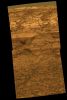
OPP-SOL173-B_P2401_L257-B173R1_br2.jpgInside Endurance Crater: Rat-Holes and Sky - Sol 163 (Almost True Colors; credits: NASA/JPL-Caltech)93 visiteVista di Endurance Crater dall'interno. Immagine ripresa dal Rover Opportunity durante il suo 173mo giorno di permanenza su Marte. Tralasciando il fatto che la Missione ha già conseguito un successo straordinario, invitiamo l'Osservatore a notare, ancora una volta, le forme delle pietre piatte che lastricano le pareti di Endurance Crater e che sembrano, in alcuni punti, costruire un mosaico. Si osservi questa immagine in stretta relazione con la successiva (identica, ma elaborata in "Falsi Colori").
(17 voti)
|
|
| 25332 immagini su 2111 pagina(e) |
 |
|
|
|
|
2025 | |
|
|
|
|





