| Piú votate |

Craters-Unnamed_Craters_with_Sedimentary_Rock_Outcrops-PIA07127-00.jpgSedimentary Rocks (Original NASA/MGS/MSSS b/w Frame)74 visiteCaption NASA originale:"Burial and Exhumation of Impact Craters, and their destruction by erosion, are common and repeated themes all over the Surface of Mars. Many Craters in Western Arabia Terra exhibit light-toned, Layered Outcrops of ancient Sedimentary Rock. Like the Sedimentary Rocks explored further to the South in Meridiani Planum by the Opportunity Mars Exploration Rover (MER-B), these "Intracrater Sedimentary Rocks" may have been deposited in water. This MGS-MOC image shows an example of light-toned Sedimentary Rocks outcropping in an Unnamed Crater that is much farther North than most of the similar examples in Western Arabia Terra. This one is located near 36,6° North Lat. and 1,4° West Long. and shows several old Impact Craters in various states of erosion and exhumation from beneath and within the Sedimentary Rock Materials. The image covers an area of approx. 3 Km".
(7 voti)
|
|

OPP-SOL361-1N160236395EFF4100P1617R0M1.jpgIs this "Argo"? - Sol 36165 visiteImmagine ottenuta durante il Sol 361 del Rover Opportunity: siamo ad una distanza di circa 35/40 metri da un affioramento roccioso (ci sembra una versione in miniatura dei "pavimenti rocciosi" di Endurance) che occhieggia dalla fiancata di un avvallamento che potrebbe ragionevolmente essere il Cratere Argo, verso il quale il Rover si sta dirigendo.
Update del giorno 26 Febbraio 2005: il piccolo cratere di cui riusciamo a distinguere le modestissimi "pareti" rocciose è effettivamente Argo (come da Mappa "Opportunity Traverse up to Sol 404", pubblicata nella Sezione "Mars Opportunity Anomalies and Maps").
(7 voti)
|
|

SOL366-2N158863590EFFA2F3P0645R0M1.jpgAnother "rocky landscape"58 visitenessun commento
(7 voti)
|
|

Japetus-temp.1-PIA07006_modest.jpgJapetus Temperature Variation Map59 visiteCaption NASA originale:"This plot shows how daytime temp.s at low latitudes on the Dark Material on Japetus vary with time of day from about 130 Kelvin (-226 F) at noon to about 70 Kelvin (-334 F) at sunset. The observations are compared to a "forecast" model (green line) which predicts temperatures based on an assumed value of a parameter called the "thermal inertia. Rock or solid ice has a high thermal inertia (approx. 2.000.000 as measured in the obscure units used for thermal inertia), meaning that it is good at storing heat and cools down or heats up relatively slowly. On Japetus, in contrast, temperatures drop precipitously in the afternoon as the Sun sinks towards the horizon and a very small value of the thermal inertia (30.000 units) is needed in the model to match the data. This means that Japetus's surface is extremely bad at storing heat and is thus extremely fluffy, probably due to the pulverizing effect of billions of years of meteorite impacts (...)".
(7 voti)
|
|

APOLLO 12 AS 12-46-6806.jpgAS 12-46-6806 - Alan Bean carrying the ALSEP135 visiteAl is carrying the ALSEP package out from the LM. As can be seen in a detail, he is walking flat-footed, in part because the mass of the ALSEP packages is nearly the same as the combined mass of him and his suit and backpack and, in part, because the carrybar is flexing and would be difficult to control if he tried to use a loping stride. Note that he is holding the carrybar in his hands, with his arms hanging down in front of him. Other LMPs discovered that it was easier to carry and control the packages by holding their arms up in front of them and getting the carrybar in the elbow crooks. Note the flag and the S-Band antenna to the left of the LM.
(7 voti)
|
|

Martian_Eclipse-moc2_msss_3shadow100-00.jpgMOC Views of Martian Solar Eclipses (Original NASA/MGS/MSSS b/w Frame)105 visiteThe shadow of the martian moon, Phobos, has been captured in many recent wide angle camera views of the red planet obtained by the Mars Global Surveyor (MGS) Mars Orbiter Camera (MOC). Designed to monitor changes in weather and surface conditions, the wide angle cameras are also proving to be a good way to spot the frequent solar eclipses caused by the passage of Phobos between Mars and the Sun.This picture shows three samples of MOC's global image swaths, each in this case with a shadow of Phobos visible (arrow). The first scene (left) was taken on September 1, 1999 and shows the shadow of Phobos cast upon southern Elysium Planitia. The large crater with dark markings on its floor at the lower right corner is Herschel Basin. The second scene shows the shadow of Phobos cast upon northern Lunae Planum on September 8, 1999. Kasei Valles dominates the upper right and the deep chasms of Valles Marineris dominate the lower third of the September 8 image. The picture on the right shows the shadow of Phobos near the giant volcano, Olympus Mons (upper left), on September 25, 1999. Three other major volcanoes are visible from lower-center (Arsia Mons) and right-center (Pavonis Mons) to upper-middle-right (Ascraeus Mons).
(7 voti)
|
|

Saturn-N00021000.jpgSaturn and his Rings58 visitenessun commento
(7 voti)
|
|

AI-Saturn-Streak in the Sky-N00018041.jpgA new "Bright Streak" in the Sky of Saturn87 visiteUna nuova "striscia luminosa" (bright streak) nel Cielo di Saturno, ripresa il giorno 14 Settembre 2004. Che dire? Secondo noi - anche se accettassimo acriticamente la teoria che spiega alcune (comunque brevi e piuttosto deboli) striature di luce che, spesso, appaiono nelle immagini scattate guardando verso lo spazio come "raggi cosmici" - questa specifica "striscia" sembra qualcosa di molto particolare. Qualcosa che non può essere semplicemente ricondotto all'emissione luminosa di una micro-particella che schizza nello spazio a velocità relativistica.
Secondo noi, questa striscia (come anche altre, riprese dalla superficie di Marte) è causata da qualcosa di diverso.
Cosa?
E se lo sapessimo...
(7 voti)
|
|
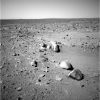
SOL103-2N135513002EFF29DGP1898L0M1.jpgViews of Gusev Crater: proximities of Missoula Crater (1)134 visitenessun commento
(7 voti)
|
|
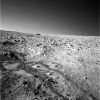
SOL164-POSSIBLECLOUDS-2N140937480EFF6938P1914L0M1.jpgClouds over Gusev Crater?117 visiteL'apparizione di nuvole nell'Area di Meridiani Planum è un evento abbastanza frequente. Altrettanto non può dirsi per l'Area Gusaev Crater. In effetti, sin dall'avvio della Missione del Rover Spirit, le fotografie inviate a Terra non ci hanno mai mostrato nulla che somigliasse ad una nuvola. In questo frame, tuttavia, abbiamo l'impressione (guardando l'immagine a schermo pieno) che si possano intuire delle sottolissime nubi stratiformi, a Sn dell'Osservatore e, forse, a ridosso dell'orizzonte. Forse.
(7 voti)
|
|
SOL153-FORT-2P139962911EFF6500P2366R1M1.jpgThe "Martian Mound": a very unusual rock formation (2)126 visitenessun commento
(7 voti)
|
|

The Rings from approx. 30.000 Km.jpgThe Rings from app.x 30.000 Km58 visitenessun commento
(7 voti)
|
|
| 25332 immagini su 2111 pagina(e) |
 |
|
|
|
|
2023 | |
|
|
|
|





