| Piú votate |

OPP-SOL116-01.jpgEndurance Crater - Sol 116 (HD - Approx. True Colors; credits: NASA/JPL-Caltech)327 visiteNoi non sappiamo quale possa essere il reale impatto visivo di un paesaggio del genere su un occhio umano ma, a ben vedere, la sensazione che ricaviamo dalle immagini che ci arrivano (anche quando sono "elaborate"...) è quella di un Pianeta che "aspetta".
E' vero, sembra un deserto, brullo ed inospitale, eppure c'è qualcosa, dietro le sabbie arancioni, che invita alla scoperta.
Ma forse è solo la nostra immaginazione...
(19 voti)
|
|
Io-PIA01071.jpgAs Time Goes By...On Io! (2)59 visitenessun commento
(15 voti)
|
|
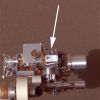
SOL009-MI-05-ml-1-mi-B019R1.jpgThe "Microscopic Imager" - Sol 9 (Approximate True Colors; credits: NASA/JPL-Caltech)157 visiteCaption NASA originale:"The Microscopic Imager (circular device in center) is in clear view above the surface at Meridiani Planum, Mars, in this approximate true-color image taken by the panoramic camera on the Mars Exploration Rover Opportunity. The image was taken on the 9th Sol of the Rover's journey.
The microscopic imager is located on the Rover's instrument deployment device, or arm. The arrow is pointing to the lens of the instrument. Note the dust cover, which flips out to the left of the lens, is open. This approximated color image was created using the camera's violet and infrared filters as blue and red".
(15 voti)
|
|

NGC-1499-00.jpgNGC 1499 - The "California Nebula"99 visite"...Vivere come ci pare e piace non costa nulla, poichè il prezzo di questa scelta lo paghiamo con qualcosa che non esiste: la Felicità..."
(dal film "C'eravamo tanto amati")
(15 voti)
|
|

Fornax in X-ray.jpgFornax Star Cluster in X-ray (false colors)138 visite"...Il Tempo è un Abisso, profondo come una Notte infinita..."
(dal film "Nosferatu" di W. Herzog)
(15 voti)
|
|

AA-Uranus and Neptune.jpgUranus, Neptune and their Moons together!!!125 visiteUn'immagine davvero meravigliosa ottenuta dalla 2MASS Southern Facility il giorno 7 Giugno 1998. Come gentilmente richiesto dalla 2MASS, riconosciamo i loro diritti sull'immagine e riportiamo integralmente la seguente "caption":
"Atlas Image [or Atlas Image mosaic] obtained as part of the Two Micron All Sky Survey (2MASS), a joint project of the University of Massachusetts and the Infrared Processing and Analysis Center/California Institute of Technology, funded by the National Aeronautics and Space Administration and the National Science Foundation"
(15 voti)
|
|

Phobos-Phobos_Monolith-03.jpgThe "Phobos' Monolith" (EDM n.2)1264 visiteUn'ultima curiosità: dopo aver visto e studiato le "Anomalie" di Marte dobbiamo dire che anche Phobos non è da meno. Guardate attentamente quest'immagine e cercate di rispondere ad una semplice domanda: cos'è quella colonna a pianta triangolare che si staglia, perfettamente verticale, sulla superficie del Satellite? Noi abbiamo pensato al Monolito di "2001: Odissea nello Spazio" ma la verità è che si tratta di un altro mistero che, forse, resterà tale.
(52 voti)
|
|

SOL054-THE RAT-2N131157636ESF1129P1939L0M1.jpgThe Rat (1)1825 visiteUn esempio di come nasce (e muore) una "scoperta".
Accanto al masso posizionato al centro dell'immagine, in posizione leggermente arretrata, alla sua Sn (Dx dell'Osservatore), c'è un'altra roccia che presenta una crepa frontale. E c'è qualcosa che fuoriesce dalla crepa.
Abbiamo operato, come sempre, svariate elaborazioni fotografiche e, in prima battuta, ci siamo convinti che la protuberanza scura fosse una specie di "topo".
(33 voti)
|
|

ALPHA CENTAURI.jpgAlpha Centauri - European Southern Obs.174 visite"...Ho visto una Stella sorgere, dalle profondità del Mare, ed ergersi, luminosa, sino alla sommità del Cielo. Una Nuova Stella che splende su di noi, che ci guarda, ci osserva, ci scruta. Una Nuova Stella che illuminerà nuovi Percorsi, Pensieri, Passioni, Opere ed Omissioni.
Ho visto una Stella sorgere, dalle profondità del Mare, e perdersi, nei crepacci dell'Infinito. Grande la Luce emessa e l'Energia, breve il Tempo concessole.
Povera Stella..."
P.C. Floegers - "Usque Ad Sidera"
(22 voti)
|
|

SOL330-Spirit-A_DeckPan-A402R1_br2.jpgSpirit's "Self-Portrait" - Sol 330 (Approximate True Colors; credits: NASA/JPL-Caltech)66 visiteCaption NASA originale:"NASA's Mars Exploration Rover Spirit used its panoramic camera to take the images combined into this mosaic view of the rover. The downward-looking view omits the mast on which the camera is mounted. It shows dust accumulation on Spirit's solar panels. The images were taken through the camera's 600-, 530- and 480-nanometer filters during Spirit's 329th and 330th Martian Days, or Sols".
Due immagini simili e due "volti" di Marte completamente diversi da tutti i punti di vista: dal colore, alle condizioni atmosferiche generali. Se i pannelli solari di Opportunity, infatti, sono (sia pure solo relativamente, come dicono alla NASA) puliti, quelli di Spirit sembrano ormai completamente ricoperti di polvere. Dunque alla NASA ci stanno "anticipando" che i Soles di Spirit sono "contati"?
Guardate le immagini e decidete Voi...
(11 voti)
|
|

ZP-Layered Outcrops-PIA06936_modest.jpgLayered Outcrops in Gusaev Crater143 visite"The Exploration Rover Spirit collected data on morphology, composition and mineralogy of a rock nicknamed Tetl using the microscopic imager, the alpha particle X-ray spectrometer and the Moessbauer spectrometer before moving on. Scientists are discussing a suggestion that this rock outcrop and others on the "West Spur" of the "Columbia Hills" in Gusaev Crater may contain evidence of graded bedding, in which alternate layers of sediment are either coarser or finer depending on the turbulence of the processes that deposited them. Such layers could be deposited by water circulating in rivers or lakes, volcanic ash settling on the surface, wind carrying fine-grained sediments, or a combination of these processes. This view is a mosaic of images that Spirit took with its microscopic imager on the rover's 272nd and 273rd martian days (Oct. 7 and 8, 2004). It has been enhanced to bring out details in the shadows without washing out sunlit areas. The section of rock shown here is approximately 17 cm (6,7") wide".
(11 voti)
|
|
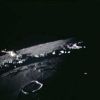
APOLLO 15 AS 15-91-12403.jpgAS 15-91-12403 - Check the left side!!!436 visiteE chiudiamo questa rapida carrellata di fotografie orbitali con un frame che, sebbene sfuocato, ci mostra con sufficiente chiarezza qualcosa che potrebbe aprire nuove discussioni sui "close encounters" delle Navicelle Apollo con "oggetti" dalla natura indecifrabile. Guardate sulla Vostra Sn: c'è un oggetto color oro, di forma allungata, che si "stacca", letteralmente, dalla superficie della Luna (nel senso che NON fa parte di essa) e che sembra trovarsi ad una certa altezza rispetto alla medesima. Oltre il margine superiore Sn dell'oggetto (una specie di fusoliera, dalla forma non perfettamente lineare) e ben oltre il limite dell'orizzonte lunare, si vede uno Star-like Object. C'è chi pensa che esso sia parte della struttura dorata che ha colpito la nostra attenzione ma, onestamente, non siamo in possesso di elementi decisivi al riguardo. Si badi che l'UFO (?) potrebbe pure essere una componente esterna dell'Apollo 15 che ci appare sfuocata poichè la foto venne scattata da una distanza troppo ravvicinata.
(11 voti)
|
|
| 25332 immagini su 2111 pagina(e) |
 |
|
|
|
|
2018 | |
|
|
|
|





