| Piú votate |
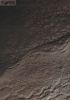
ESP_025680_1350-PCF-LXTT-01.jpgUnnamed Crater with "Pedestal" in Terra Cimmeria (EDM - Absolute Natural Colors; credits for the additional process. and color.: Dr Paolo C. Fienga - Lunexit Team)85 visiteMars Local Time: 15:08 (Early Afternoon)
Coord. (centered): 44,814° South Lat. and 264,976° East Long.
Spacecraft altitude: 247,7 Km (such as about 154,8 miles)
Original image scale range: 49,6 cm/pixel (with 2 x 2 binning) so objects ~ 1 mt and 49 cm across are resolved (with 4 x 4 binning)
Map projected scale: 50 cm/pixel
Map projection: EQUIRECTANGULAR
Emission Angle: 0,3°
Sun - Mars - MRO (or "Phase") Angle: 79,1°
Solar Incidence Angle: 79° (meaning that the Sun is about 11° above the Local Horizon)
Solar Longitude: 58,6° (Northern Spring/Southern Fall)
Credits: NASA/JPL/University of ArizonaMareKromium
(4 voti)
|
|
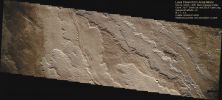
Volcanic_Features-Lava_Flows-Arsia_Mons-20080411a-PCF-LXTT.jpgLava Flows from Arsia Mons (Enhanced and Saturated Absolute Natural Colors; credits for the additional process. and color.: Dr Paolo C. Fienga - Lunexit Team)189 visitenessun commentoMareKromium
(4 voti)
|
|

Vastitas_Borealis-M0306518.jpgThick Cloud-Front over Vastitas Borealis239 visiteLongitude of image center: 23,58° West
Latitude of image center: 71,21° North
Scaled pixel width: 268,79 meters
Scaled image width: 130,93 Km
Scaled image height: 114,11 Km
Solar Longitude (Ls): 181,47°
Local True Solar Time: 14,20 decimal hours
Emission Angle: 3,73°
Incidence Angle: 74,99°
Phase Angle: 72,60°
North Azimuth: 97,66°
Sun Azimuth: 312,21°
Spacecraft Altitude: 430,36 Km
Slant Distance: 431,17 KmMareKromium
(4 voti)
|
|

Jupiter-Red_Spot-BJ.jpgJupiter's Great Red Spot from Voyager 1 (Credit: NASA, JPL; Digital processing: Dr Björn Jónsson - IAAA)114 visiteCaption NASA:"It is a hurricane twice the size of the Earth. It has been raging at least as long as telescopes could see it, and shows no signs of slowing. It is Jupiter's Great Red Spot, the largest swirling storm system in the Solar System.
Like most astronomical phenomena, the Great Red Spot was neither predicted nor immediately understood after its discovery. Still today, details of how and why the Great Red Spot changes its shape, size, and color remain mysterious. A better understanding of the weather on Jupiter may help contribute to the better understanding of weather here on Earth.
The above image is a recently completed digital enhancement of an image of Jupiter taken in 1979 by the Voyager 1 Spacecraft as it zoomed by the Solar System's largest planet.
At about 117 AU from Earth, Voyager 1 is currently the most distant human made object in the Universe and expected to leave the entire Solar Heliosheath any time now".MareKromium
(4 voti)
|
|

Volcanic_Features-Lava_Flows-AM-20080128a-PCF-LXTT.jpgLava Flows from Arsia Mons (Enhanced Natural Colors; credits: Dr Paolo C. Fienga - Lunexit Team)238 visitenessun commentoMareKromium
(4 voti)
|
|
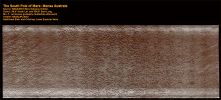
South_Pole-Mensa_Australe-PCF-LXTT.jpgFeatures of Mensa Australe (Absolute Natural Colors; credits for the additional process. and color.: Dr Paolo C. Fienga - Lunexit Team)94 visitenessun commentoMareKromium
(4 voti)
|
|
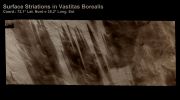
Surface_Striations-Vastitas_Borealis_Region.jpgSurface Striations in Vastitas Borealis (Absolute Natural Colors; credits for the additional process. and color.: Dr Paolo C. Fienga - Lunexit Team)124 visitenessun commentoMareKromium
(4 voti)
|
|

Japetus-PIA12657.jpgLight and Darkness on Japetus (possible Natural Colors; credits for the additional process. and color.: Dr Paolo C. Fienga - Lunexit Team)61 visiteCaption NASA:"Light and Dark Terrain covers the Surface of Saturn's moon Japetus; Lit Terrain seen here is on the area between the Saturn-facing Side and Trailing Hemisphere of Japetus. North is up and rotated 4° to the right.
The image was taken in Visible Light with the Cassini Spacecraft narrow-angle camera on Dec. 1, 2009. The view was obtained at a distance of approx. 1,4 MKM (about 870.000 miles) from Japetus and at a Sun-Japetus-Spacecraft, or Phase, Angle of 100°.
Image scale is roughly 8 Km (approx. 5 miles) per pixel".MareKromium
(4 voti)
|
|

Jupiter_and_Europa.jpgFather and Son (by Roberto Tremolada)74 visitenessun commentoMareKromium
(4 voti)
|
|
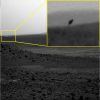
SOL1856-2P291139381EFFB0KGP2353R2M2-3.jpgJust an Image-Artifact? - Sol 1856 (ctx frame - credits: Dr G. Barca)92 visiteDall'occhio sempre attento del nostro Dr Barca, un nuovo enigma: il corpuscolo di colore scuro che vediamo sulla Sx del frame, è un "corpo reale" o un image-artifact?
Le Vostre opinioni, come sempre, saranno apprezzate!MareKromium
(4 voti)
|
|
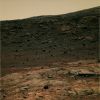
SOL701-GB-LXT~1.jpgGusev Panorama - Sol 701 (possible True Colors; credits: Dr G. Barca & Lunar Explorer Italia)58 visitenessun commentoMareKromium
(4 voti)
|
|
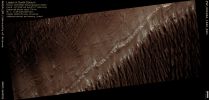
PSP_006984_1840_RED_abrowse~0.jpgLayers in Gordii Dorsum (MULTISPECTRUM; credits: Lunexit)60 visiteThis image shows distinctive differences in the texture of the ground surface in an area of Mars called Gordii Dorsum.
The upper right part of the image contains many subparallel ridges. These ridges are geological features called yardangs (long irregular ridges carved by wind erosion). The lower half of the image is smoother and contains a few small knobs and ridges. This area of Mars contains extensive outcroppings of layered sedimentary rocks that may have formed by the accumulation of sand and dust either blown in by the wind, transported by water, or some combination of processes such as these.
The distinctive surface textures may be due to differences in the rock structure and formation process. Mapping differences in the surface textures such as these may help to reveal how these rocks formed and advance our understanding of the geologic history of Mars.MareKromium
(4 voti)
|
|
| 25332 immagini su 2111 pagina(e) |
 |
|
|
|
|
2011 | |
|
|
|
|





