| Piú votate |
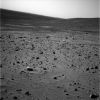
SOL366-2N158863419EFFA2F3P0645R0M1.jpgAnother "rocky landscape"56 visitenessun commento
(8 voti)
|
|
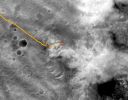
ZM-SOL324_travMOC-A332R1.jpgSpirit's Route in Black and White216 visiteCaption NASA originale:"The Mars Orbital Camera on NASA's Mars Global Surveyor spacecraft took this image of the topography traversed by NASA's Mars Exploration Rover Spirit in months prior to the rover's 318th Sol (Dec. 4, 2004). The yellow line traces the rover's path up to and across the "West Spur" of the Columbia Hills".
(8 voti)
|
|

M-074-1.jpgM 74 - Spiral Galaxy80 visite"...Molti uomini vivono le loro Vite con noncuranza e leggerezza, come se - in fondo - fosse del tutto ovvio che la Morte sia solo un momento di passaggio; una virgola o, al massimo, un punto e virgola, ma mai - sicuramente MAI! - un "punto e basta".
Io osservo coloro che vivono in questo modo e, a dire il vero, non so se invidiarli o compatirli..."
P.C. Floegers - "Conversations"
(8 voti)
|
|

ZZ-Z-Temp at EndCrat-15-WC-04-miniTES-B127R1_br.jpgThe temperatures of Endurance Crater205 visitePer questo tipo di immagini ci sembra importante proporVi la caption NASA originale: "The colored dots in this image mosaic denote thermal data in features that make up the impact crater known as "Endurance." The data was taken by the miniature thermal emission spectrometer instrument on NASA's MER Opportunity. The information has been overlaid onto a view of the crater from the rover's NavCam. Blue denotes cooler temperatures of about 220 deg. Kelvin (-63.67 deg. Fahrenheit or -53.15° C) and red denotes warmer temperatures of about 280 deg. Kelvin (44.33 deg. Fahrenheit or 6.85° C)". Questi dati, a causa della loro intrinseca incoerenza e contraddittorietà, ci lasciano davvero senza parole. Ne parleremo ancora.
(8 voti)
|
|

DACTYL-PIA00298.jpgAsteroid Dactyl63 visiteWithin seconds of its closest approach to the asteroid 243 Ida on August 28, 1993, the Galileo spacecraft's Solid State Imaging camera caught this glimpse of Ida's previously unknown moon orbiting the asteroid. One frame of a 15-image set designed to capture a view of Ida at the highest possible resolution landed by chance with its edge right on the little moon. The range from the spacecraft was about 2.400 Km and each picture element spans about 24 meters (80 feet) on the surface of the moon. Only a small sliver of the sunlit crescent is visible at the edge of the frame (which was shifted inward toward the center in this frame). Dactyl is approximately egg-shaped, measuring about 1.2 x 1.4 x 1.6 Km (0.75 x 0.87 x 1 mile). At the time this image was shuttered, Ida was about 90 Km (56 miles) away from the moon, outside this frame to the left and slightly below center. The smoothly curving shape of the dark edge of Ida's moon can be seen on the left. The moon's observed darkside was just barely detectable.
(8 voti)
|
|

ZA-Map1-09-mg-02-moc-A020R1_br.jpgMars Map 1 - Spirit/Bonneville Crater Area379 visiteE' tramite questa mappa che ci è stato possibile localizzare lo Scudo Termico della Sonda Spirit (precipitato sul bordo del Cratere Bonneville) e giungere alla conclusione (meramente preliminare, ma - allo stato - accettabile) che l'Anomalia da noi chiamata "Silver Sphere" deve essere qualcosa di diverso dai rottami spaziali che sembravano essere i maggiori indiziati. Che cosa? Solo la NASA potrebbe rispondere...Ma non risponde!
(8 voti)
|
|

Callisto-full disk-PIA03456_modest.jpgCallisto from Galileo95 visiteCaption NASA originale:"Bright scars on a darker surface testify to a long history of impacts on Jupiter's moon Callisto in this image of Callisto from NASA's Galileo spacecraft.
The picture, taken in May 2001, is the only complete global color image of Callisto obtained by Galileo, which has been orbiting Jupiter since December 1995. Of Jupiter's four largest moons, Callisto orbits farthest from the giant planet.
Callisto's surface is uniformly cratered but is not uniform in color or brightness. Scientists believe the brighter areas are mainly ice and the darker areas are highly eroded, ice-poor material".
(8 voti)
|
|

AC-Anomaly-Saturn_s Sky.jpgA bright light in the Space of Saturn: Saturn overexposed (2)108 visiteQuesta immagine, ricevuta il giorno 13 Agosto 2004, appare identica a quella ricevuta il giorno 4 Agosto 2004. In teoria, dovrebbe essere Saturno (o il suo anello "E") "altamente sovraesposto". In pratica noi possiamo dire, con onestà, che la sovraesposizione di un corpo luminoso come Saturno dovrebbe dare esiti visivi completamente diversi da quelli che Vi mostriamo in questo frame.
Di che si tratta? Forse del Sole. Forse un'altra sorgente luminosa, molto più vicina. Noi non lo sappiamo, ma abbiamo chiesto lumi alla NASA.
(8 voti)
|
|

M-075-1.jpgM 75 (NGC 6864) - Globular Star Cluster95 visite"...Sera parsimonia in fundo est..."
(Seneca)
"...L'accortezza tardiva giace sul fondo (non serve a nulla)..."
(ciò che rimane, una volta che si è perso tutto, è sempre il meno ed il peggio)
(8 voti)
|
|
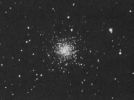
M-072-1.jpgM 72 (NGC 6981) - Globular Star Cluster84 visite"...Ars deluditur arte..."
(Catone)
"...Un talento (minore) può ben soccombere innanzi ad un altro talento (maggiore)..."
(8 voti)
|
|
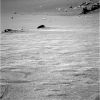
OPP-SOL170-1P143275462EFF3243P2398L7M1.jpgThe "Muddy Slope", inside Endurance Crater - Sol 170161 visitenessun commento
(8 voti)
|
|
SOL116-2N136676763EFF3800P1826L0M1.jpgViews of Gusaev Crater (3)92 visitenessun commento
(8 voti)
|
|
| 25332 immagini su 2111 pagina(e) |
 |
|
|
|
|
2009 | |
|
|
|
|





