| Piú votate |

Titan-Regions-Adiri_Region-IMG002645.jpgAdiri Region77 visiteCaption NASA:"Bright mid-latitude clouds near the bottom of this view hint at the ongoing cycling of Methane on Titan. These cloud streaks are near the same latitude as similar clouds observed above different longitudes on Titan.
The view is centered on Titan's Trailing Hemisphere, over the 1.700 Km (such as about 1050 mile) wide bright Region known as "Adiri".
North on Titan is up and rotated 15° to the right.
This view was created by combining multiple images taken using a combination of spectral filters sensitive to wavelengths of infrared light centered at 939 and 742 nanometers
The images were taken with the Cassini spacecraft wide-angle camera on May 13, 2007 at a distance of approx. 104.000 Km (about 65.000 miles) from Titan. Image scale is roughly 12 Km (about 8 miles) per pixel. Due to scattering of light by Titan's hazy atmosphere, the sizes of surface features that can be resolved are a few times larger than the actual pixel scale".MareKromium
(5 voti)
|
|
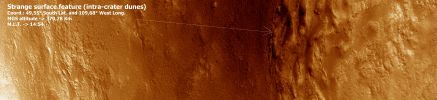
Craters-Unnamed_Crater_with_Intra-crater_Dunes-M0700566-00.jpgIntra-Crater Dunes (CTX Frame - Extremely Enhanced and Saturated Natural Colors; credits for the additional process. and color.: Dr Paolo C. Fienga - Lunexit Team)61 visitenessun commento
(5 voti)
|
|

APOLLO 11 AS 11-37-5480HR.jpgAS 11-37-5480 (HR)84 visite
(5 voti)
|
|
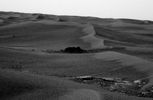
OPP-SOL658-1P186596150ESF64KCP2584L6M1.jpgDunes... - Sol 65858 visiteUn bellissimo frame "a scartamento ridotto" che ci mostra come alcune dune - decisamente simili, nella forma, alle dune terrestri - rendano un pò più "mosso" il paesaggio che caratterizza l'area della depressione nota come Erebus Crater. Parliamo di "depressione" (e non di cratere) non perchè disconosciamo la natura di questo rilievo ma, semplicemente, poichè Erebus è poco profondo (e poco visibile dalla superficie).
Il motivo è che si tratta di un cratere - presumibilmente - molto antico e quasi del tutto sepolto; inoltre, il rilievo caratteristico che consente l'immediata identificazione di un cratere - e cioè le pareti - nel caso di Erebus è difficilissimo da scorgere.
Certo è che le immagini ricevute nell'ultimo mese non sono state affatto eccezionali al riguardo.
Erebus, in ogni caso, appartiene alla classe dei "buried craters" e, da quanto abbiamo potuto vedere, esso non appare neppure un lontano parente (almeno esteriormente) del passato Endurance e/o del futuro Victoria Crater.
(5 voti)
|
|

Dione-N00041251.jpgExtremely high "albedo" on some of Dione's surface features (2)57 visitevedi il commento svolto per il frame precedente
(5 voti)
|
|

Enceladus-N00037062.jpgEnceladus fly-by (18) - from approx. 11.000 Km60 visiteOra, a circa 11.000 Km di distanza dalla superficie, incominciamo a vedere che i bordi (limbs) di tutti i canali e crepacci che ricoprono la quasi totalità di Encelado, presentano curiosi rilievi la cui albedo sembra molto elevata.
Da questa, ancora gradissima, distanza, sembra che ai bordi e sui fianchi dei canyons di Encelado vi sia qualcosa di simile a quanto abbiamo già visto su Marte (sebbene, nel caso del Pianeta Rosso, Regione di Melas Chasma, eravamo a soli 370 Km di altitudine!).
Forse ci sono delle "cascate di ghiaccio" anche su Encelado?
(5 voti)
|
|

Tempel1-q.jpg13 MKM from Comet Tempel 161 visiteDa "NASA - Picture of the Day" del 29 Giugno 2005:"The Deep Impact spacecraft continues to close on Comet Tempel 1, a comet roughly the size of Manhattan. Early on July 3 (EDT), the Deep Impact spacecraft will separate in to 2 individual robotic spaceships, one called Flyby and the other called Impactor. During the next 24 hours, both Flyby and Impactor will fire rockets and undergo complex maneuvers in preparation for Impactor's planned collision with Comet Tempel 1. On July 4 (1:52 am EDT) if everything goes as scheduled, the 370-Kg Impactor will strike Tempel 1's surface at over 14.000 Km p.h.. Impactor will attempt to photograph the oncoming comet right up to the time of collision, while Flyby photographs the result from nearby. The above image was taken on 19 June from about 13 MKM out and used to help identify the central nucleus of the comet inside the diffuse coma. Telescopes around the Earth, including the HST, will also be closely watching the distant silent space bullet".
(5 voti)
|
|

SOL152-plymouth-A155R1.jpgPlymouth Rock and the erased horizon - Sol 15255 visiteL'immagine di questo boulder, chiamato 'Plymouth Rock', potrebbe anche essere graziosa e suggestiva, piena di spunti sulla natura del boulder e sul come esso possa essere finito proprio dove si trova adesso. Ed infatti i commenti NASA - che alleghiamo - parlano proprio di questi temi. Peccato che nessuno abbia notato che le colline che appaiono alla Vostra Sx, sullo sfondo, sono state (letteralmente) 'abrase' a colpi di aerografo (digitale, ma pur sempre aerografo). In fondo è dai dettagli più minuti che si vede l'effettiva qualità di un lavoro! Non siete d'accordo?!?
Caption NASA originale:"MER Spirit took this PanCam image during Spirit's 152nd Sol, on June 7, 2004. The rock, named "Plymouth", is approx. 90 cm (35") across and 50 cm (20") tall. Spirit did not spend any time studying Plymouth Rock, but Rover controllers used it as a guide to maneuver Spirit closer to the Columbia Hills. Like most of the rocks found at the Gusev crater location, Plymouth is most likely a basalt. The tiny vesicles pitting the rock's surface further indicate its volcanic origin".
Nota: dato che questa immagine sembra aver "indignato" qualche sapiente esperto di fotografia e di Scienza in generale, suggeriamo ai Lettori - onde evitare l'insorgenza di nuovi (sebbene sempre capziosi) malintesi - di fare un lavoro semplicissimo che si chiama "visual comparison". A coloro che sostengono che i rilievi lontani DEVONO SCOMPARIRE per forza, perchè la camera del MER è focalizzata sui rilievi prossimi, possiamo solo dire che esistono (e sono ovviamente pubblicate anche qui, su queste pagine) decine di foto analoghe a questa laddove tutti i rilievi sono a fuoco, sia i "prossimi", sia i "lontani" (sebbene leggermente velati a causa della O.A.).
Noi non sappiamo se questa foto è stata alterata per errore o intenzionalmente; noi possiamo solo evidenziare l'avvenuta (e palese) alterazione. Punto.
Il resto sono congetture.
(5 voti)
|
|

Hyperion-N00035375.jpgHyperion, from about 176.000 Km (2)60 visite...celesti i quali, con i loro campi gravitazionali di diversa intensità e dimensione, ne hanno alterato il moto e la traiettoria originali rendendo altresì la sua rotazione, ai nostri occhi, così enormemente complessa ed inusuale, da giungere a farci congetturare un'intrinseca disomogeneità della medesima.
Un'intrinseca disomogeneità che, tuttavia, nelle logiche dell'Universo, non è altro che una delle infinite forme attraverso le quali si può manifestare quel fenomeno chiamato "movimento".
La corsa di Iperione è terminata, quindi, nel momento in cui l'abbraccio gravitazionale di Saturno si è reso troppo forte da poter resistere e così, dal vagare senza mèta attraverso il Sistema Solare, siamo infine giunti all'orbita lineare, attorno a Saturno.
Certo, la 'cattura' di Iperione da parte del Gigante Anellato non è valsa a modificare la sua 'disomogenea' rotazione ma, secondo Voi, questo fatto cambia qualcosa nei Grandi Equlibri e Disequilibri che governano il moto dei Pianeti e delle loro Lune?
(5 voti)
|
|
SOL441-2N165519995EFFA928P0695L0M1.jpgSame rocks, different angles (2)56 visitenessun commento
(5 voti)
|
|
SOL441-2N165519907EFFA928P0695L0M1.jpgSame rocks, different angles (1)59 visitenessun commento
(5 voti)
|
|

Uranus-uppatm-PIA01488.jpgHaze in the upper atmosphere of Uranus64 visiteCaption NASA originale:"This is a computer enhancement of a Voyager 2 image, that emphasizes the high-level haze in Uranus' upper atmosphere. Notice how the clouds are obscured by the overlying atmosphere".
(5 voti)
|
|
| 25332 immagini su 2111 pagina(e) |
 |
|
|
|
|
1998 | |
|
|
|
|





