| |
| Piú votate |
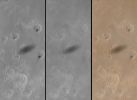
Martian_Eclipse-moc2_msss_3shadow100-01.jpgMOC Views of Martian Solar Eclipses (Original NASA/MGS/MSSS - Natural Color Frame)131 visiteThis picture shows wide angle red (left), blue (middle) and color composite (right) views of the shadow of Phobos (elliptical feature at center of each frame) as it was cast upon western Xanthe Terra on August 26, 1999, at about 2 p.m. local time on Mars. The image covers an area about 250 Km (155 miles) across and is illuminated from the left. The meandering Nanedi Valles is visible in the lower right corner of the scene. Note the dark spots on three crater floors - these appear dark in the red camera image (left) but are barely distingished in the blue image (middle), while the shadow is dark in both images. The spots on the crater floors are probably small fields of dark sand dunes.
(10 voti)
|
|
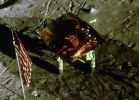
APOLLO 14 AS 14 66-9324-HD Detail Mgnf.jpgAS 14-66-9324 - A basket full of gold?!? (ORIGINAL-HD-detail mgnf)239 visiteUn'immagine davvero interessante e completamente inesplicabile, finalmente nella sua versione originale ed uncompressed: il cestello su ruote che doveva contenere i campioni di rocce Lunari e quant'altro gli astronauti avessero reperito sulla superficie della Luna che fosse risultato interessante e meritevole di essere riportato a Terra, è stato riempito. Già, ma con che cosa? Nonostante la eccezionale qualità del frame originale (di cui qui Vi proponiamo solo un dettaglio) non siamo comunque sicuri di aver capito che cosa sia quel materiale color oro che riempie il cestino. Sulla base di quanto eravamo riusciti a risolvere dell'immagine compressa avevamo ipotizzato che si trattasse di attrezzi speciali degli astronauti, oppure di pezzi di ricambio del LM o, forse, di rottami. Ora, dopo aver analizzato il frame originale, abbiamo ristretto le ipotesi a due. Secondo noi, infatti, sul carrello può essere stata appoggiata:
1) una lamina di metallo la quale, a giudicare dai riflessi, potrebbe essere...
(10 voti)
|
|

ZZ-O-Landscape-PIA06850_modest.jpgA beautiful Martian Panorama95 visiteDominating the left side of this image, to the east, is the high point of the "West Spur" region of the "Columbia Hills," where Spirit has been exploring rock outcrops since June. On the right side, northwest of the rover's present location, are Spirit's tracks leading up the slope. Dark areas show wheel tracks created when Spirit slipped a bit while negotiating the outcrops. Beyond that, sand dunes on the floor of Gusaev Crater can be seen.
(10 voti)
|
|
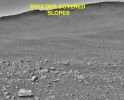
ZP-SPIRIT-JUNE02-03-JR-03-boulders-A147R1.jpgThe Columbia Hills261 visiteLa destinazione del Rover Spirit - dopo le peregrinazioni sulla pianura del landing e dopo la visita al Cratere Bonneville - agli "occhi" della PanCam.
Siamo nel Giugno 2004.
(10 voti)
|
|
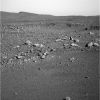
SOL045-2P130373552EFF0900P2412R1M1.jpgSpirit: Martian landscapes (b/w - elab. NASA)100 visitenessun commento
(10 voti)
|
|

Dione from Voyager 1.jpgDione from Voyager 1114 visiteUna splendida immagine in "colori naturali" ma con i contrasti leggermente amplificati (amplificati---->enhanced), in maniera tale da favorire la visione dei piccoli dettagli della superficie.
(10 voti)
|
|

SUPERNOVAE.jpgVarious Distant Supernovae - HST81 visite"...Solo, solo, me solo.
Solo, solo in mezzo ad un mare immenso!..."
Samuel Taylor Coleridge
(10 voti)
|
|
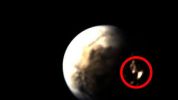
Proxima_Centauri_B_-_2.jpgProxima Centauri "b" - Alien City Lights or Super-volcanic Activity? (2)142 visiteE', a mio umile avviso, un Fenomeno di Super-vulcanismo che accade su scala (di fatto) planetaria. Guardate BENE! E guardate bene le foto di "Io"...MareKromium
(5 voti)
|
|

Z-03.jpgDoes it look "familiar" this thing to you? Yes it does: already seen!128 visiteImpossibile non notare l'estrema somiglianza tra questo fenomeno, ripreso dalla Terra, ed il frame AS 15-83-11218. Le ipotesi, a questo punto, sono solo due: o entrambi i frames sono falsi, oppure entrambi sono genuini. Scrivete. Decidete Voi. Ogni opinione sarà Apprezzata! Un immenso Grazie al Dr Gualtiero La Fratta per aver rinvenuto, in un libro del 1979, alcune "perle" che saranno qui di seguito pubblicate. Il resto NON è "Materia/Questione di Fede". E' solo Materia/Questione di "Occhio" ed "Oggettività". Ed Esperienza.MareKromium
(5 voti)
|
|
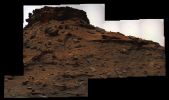
SOL1433.jpgDeep inside Gale Crater - Sol 1433 (Credits: Dr Marco Faccin and Elisabetta Bonora)133 visiteSimply wonderful.MareKromium
(5 voti)
|
|

009-1-Ceres-PIA19884-PCF-LXTT-IPF-1.jpgWhite Unnamed Crater on 1-Ceres (Absolute Natural Colors; credits for the additional process. and color.: Dr Paolo C. Fienga/Lunar Explorer Italia/Italian Planetary Foundation)67 visiteToday's APOD is an Extra Detail Magnification (or "EDM", for short) of yesterday's Contextual (or "CTX", for short) Frame, taken by the NASA - Dawn Spacecraft that shows us a small White Crater (---> also informally known as "White Spot") that is located in the Northern Hemisphere of the Dwarf Planet named 1-Ceres.
Now, we ask you one (extremely complicated, in fact) question that you, however, should try to answer: why, on 1-Ceres, the huge and deep Impact Craters do not show "White Material" inside them, while, on the other hand, the small and shallow ones (Impact Craters) do? Probably because, but we, as IPF, cannot be sure of this (just like everyone else), the White Material, in the end, does not belong to/comes from the Sub-Surface of 1-Ceres (as we thought, at the beginning), but it belongs to/comes from the Impactors. And you, what do you think?...If you want to share your opinion, please, write us at alphacentauri@intercom.it
The picture was taken from an altitude of approx. 915 miles (such as about 1472,5461 Km) from the Surface, with a resolution of roughly 450 feet (such as about 137,16 meters) per pixel, was taken on August 21, 2015.
This image (which is a crop taken from an Original NASA - Dawn Spacecraft's b/w and NON Map-Projected frame published on the NASA - Planetary Photojournal with the ID n. PIA 19884 - Dawn HAMO Image 8) has been additionally processed, extra-magnified to aid the visibility of the details, contrast enhanced and sharpened, Gamma corrected and then colorized (according to an educated guess carried out by Dr Paolo C. Fienga-LXTT-IPF) in Absolute Natural Colors (such as the colors that a normal human eye would actually perceive if someone were onboard the NASA - Dawn Spacecraft and then looked ahead, towards the Surface of 1-Ceres), by using an original technique created - and, in time, dramatically improved - by the Lunar Explorer Italia Team.MareKromium
(5 voti)
|
|

Europa-Craters-Mannann_an_Crater-PIA01402-PCF-LXTT-IPF.jpgFeatures of Mannann'an Crater (Absolute Natural Colors; credits for the additional process. and color.: Dr Paolo C. Fienga/Lunar Explorer Italia/Italian Planetary Foundation)158 visiteThis composite view taken by the NASA - Galileo Spacecraft, shows a portion of the Rim and the Interior of the Impact Crater known as Mannann'an, which is located on Jupiter's moon, Europa. A high resolution image (20 meters per picture element) was combined with a lower resolution one (80 meters per picture element), to produce this composite picture. The color data here can be used to distinguish between Regions where the Ice located on the Surface of Europa is purer (---> cleaner) from other areas where the Ice itself, instead, is more contaminated (---> dirty; mixed with other elements); the reddish/brown Surface Material visible to the West (Left side - Sx) of the frame is thought to be "dirty" Ice, while the white/bluish areas visible inside the Crater should be made of "cleaner" Ice. The Rim of Mannann'an is (barely visible) on the left of the composite, approx. at the boundary between the area with the higher concentration of reddish/brown Surface Material and the area where the white Surface Material is dominant. The high resolution data show several small Surface Features inside this Impact Crater, including Concentric Fractures and a Spider-like set of Fractures near the right (East) edge of the image.
North is to the top of the picture and the Sun illuminates the scene from the East (right - Dx). The image, which is centered at 3° North Latitude and 240° West Longitude, covers an area of approximately 18 by 4 Km (such as about 11,12 by 2,48 miles). The finest details that can be discerned in this picture are about 40 meters (44 yards) across. The images were taken by the Solid State Imaging Camera onboard Galileo, when the Spacecraft flew by Europa on March 29th, 1998, at a distance of 1934 Km (such aapprox. 1201 miles) from its Surface.
This frame (which is an Original NASA - Galileo Spacecraft false colors image composite published on the NASA - Planetary Photojournal with the ID n. PIA 01402) has been additionally processed and then re-colorized, according to an educated guess carried out by Dr Paolo C. Fienga (LXTT-IPF), in Absolute Natural Colors (such as the colors that a human eye would actually perceive if someone were onboard the NASA - Galileo Spacecraft and then looked outside, towards the Surface of the Jovian moon Europa), by using an original technique created - and, in time, dramatically improved - by the Lunar Explorer Italia Team. Different colors, as well as different shades of the same color, mean, among others, the existence of different Elements present on the Surface of Europa, each having a different Albedo (---> Reflectivity) and Chemical Composition.MareKromium
(5 voti)
|
|
| 25332 immagini su 2111 pagina(e) |
 |
|
|
|
|
1995 | |
|
|
|
|
|
|





