| |
| Piú votate |

APOLLO 10 AS 10-28-3990 ANOMALY.jpgAS 10-28-3990 - Something's flying in front of the Apollo 10 (3)300 visite...irregolare, in movimento rapido (così appare dal filmato). Si potrebbe archiviare il filmato e le fotografie come un (ennesimo) caso di "Anomalia Spaziale" (UFO, rottame o chissà cosa), se non fosse per un particolare che ci ha davvero sorpresi.
Quale? Il passare VICINISSIMO di questo oggetto alla Navicella Spaziale. Un passaggio ravvicinato fra due oggetti in movimento nello spazio è un evento davvero degno di rilievo, specie considerandosi gli effetti catastrofici che un "impatto" nello spazio può determinare, anche quando l'urto avviene contro un corpo piccolissimo. Per fortuna l'impatto non c'è stato. Nel filmato, l'impressione che si ricava è che l'oggetto vagante non abbia movimenti controllati (diremmo che viaggia alla deriva intorno alla Luna) e che l'Apollo 10 non faccia nulla per tentare di evitarlo (forse perchè non si accorge in tempo del suo arrivare o forse perchè l'oggetto proviene proprio dalla Navicella). Questi sono i fatti e le ipotesi più plausibili. E la NASA? Silenzio.
(24 voti)
|
|
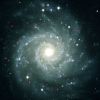
M 74~1.jpgUltraluminous X-Ray sources in M 74102 visiteDa "NASA - Picture of the Day" del 30.03.2005:"In visual appearance, M74 is a nearly perfect face-on spiral galaxy, about 30 million LY away toward the constellation Pisces. The red blotches seen in this composite view are ultraluminous x-ray sources (ULXs) mapped by the Chandra X-ray Observatory. The ULXs are so called because they actually do radiate 10 to 1.000 times more x-ray power than "ordinary" x-ray binary stars, which harbor a neutron star or stellar mass black hole. In fact, watching these ULXs change their x-ray brightness over periods of 2 hours or so, astronomers conclude that ULXs could well be intermediate mass black holes - black holes with masses 10.000 times or so greater than the Sun, but still much less than the million solar mass black holes which lurk in the centers of large spiral galaxies. How did these intermediate mass black holes get there? One intriguing suggestion is that they are left over from the cores of much smaller galaxies that are merging with spiral galaxy M74".
(12 voti)
|
|

Rings-PIA06588.jpgThe "rings" and a "string" of Moons...60 visiteCaption NASA originale:"Moons visible in this image: Mimas (398 Km, or 247 miles across) at right, Pandora (84 Km, or 52 miles across) near center and Janus (181 Km, or 113 miles across) in the lower left corner. Mimas' orbit inclination of 1,6° relative to Saturn's equator is enough to make it appear as if it orbits just beyond the F-Ring when viewed from this vantage point of 5° below the Rings. In fact, it is 34.000 Km (such as approx. 21.000 miles) more distant than Janus".
(12 voti)
|
|

AB-Ariel-V2-PIA00041_modest.jpgAriel (real colors)103 visiteUrano ha (circa) 20 Lune naturali, ma le sue Lune Maggiori sono soltanto 5: Ariel, Umbriel, Titania, Oberon e Miranda.
Si tratta, in tutti i casi, di corpi rocciosi, privi di atmosfera e sottoposti da ere ad un costante bombardamento meteorico. Certo, le caratteristiche superficiali di alcune di queste lune ci incuriosiscono, ma presumiamo che si tratti, in ogni caso, di mondi totalmente inospitali i quali, assai difficilmente, saranno teatro di future missioni e - magari - tentativi di atterraggio.
Anche se non si può mai dire...
In questa prima immagine, vediamo la Luna più conosciuta di Urano: Ariel. Si tratta di un vero e proprio "pianetino" il quale presenta delle caratteristiche superficiali che lo rendono, in parte, simile alla nostra Luna. Si possono vedere dei crateri da impatto (quasi tutti molto antichi), delle vaste distese prive di rilievi ("mari") e poi dei lunghi e profondi crepacci (in questo frame guardate in basso verso Dx) i quali si sono formati, probabilmente, durante il periodo in cui Ariel ha iniziato a raffreddarsi e, come si pensa, detto raffreddamento dovrebbe essere avvenuto in maniera decisamente rapida.
(12 voti)
|
|

Jupiter-V2-PIA00343_modest.jpgJupiter in full detail, by Voyager 262 visiteCaption NASA originale:"The colors have been enhanced to bring out detail. Zones of light-colored, ascending clouds alternate with bands of dark, descending clouds. The clouds travel around the planet in alternating eastward and westward belts at speeds of up to 540 Km p/h. Tremendous storms as big as Earthly continents surge around the planet. The Great Red Spot is an enormous anticyclonic storm that drifts along its belt, eventually circling the entire planet".
(12 voti)
|
|

Io-Tupan Patera-fullcolor-PIA02599_modest.jpgIo: Tupan Patera75 visiteWonderful colors in a volcanic crater named Tupan Patera on Jupiter's moon Io, as seen in this image from NASA's Galileo spacecraft, show varied results of lava interacting with sulfur-rich materials.
The colorfulness of the image is only slightly enhanced from what the human eye would see on the scene. The red in the image includes a small amount of infrared energy. Tupan Patera, named after a Brazilian thunder god, was seen as an active hot spot in earlier Galileo observations, but those low-resolution views did not show details of volcanic activity. This image taken in October 2001 at a resolution of 135 meters (443 feet) per picture element reveals the complex nature of the crater.
Tupan is now clearly shown to be a volcanic depression, about 75 kilometers (47 miles) across, surrounded by cliffs about 900 meters (3000 feet) tall. In the center is a large area that must be higher than the rest of the crater floor because it has not been covered by the dark lavas. Much of the area is coated with a diffuse red deposit that Galileo scientists believe has condensed from sulfur gas escaping from volcanic vents. The floor of Tupan is covered with a surreal pattern of dark black, green, red, and yellow materials. The black material is recent, still-warm lava. The yellow is presumed to be a mix of sulfurous compounds, and the green appears to form where red sulfur has interacted with the dark lavas. While Galileo scientists have found previous evidence for both molten sulfur and molten rock on Io, this image shows the best evidence to date of chemical reactions taking place between the two.
The intermingled patches of sulfur and lava are difficult to explain. The yellowish sulfur may be melting from within the crater walls over solidified but warm lava. The sulfur may boil away from the areas too hot for liquid sulfur to sit on, leaving patches where the dark lava is still visible.
North is to the top of the image and the Sun illuminates the surface from the upper right.
(12 voti)
|
|

Quasar 3c279.jpgGamma-ray Quasar 3c27963 visiteTempo.
In Astronomia sono usati 3 "Tempi Fondamentali", che è bene conoscere.
Il primo è il "Tempo Medio".
Esso esprime l'angolo orario del "sole medio" ma il sole, in questo caso, è solo un astro fittizio il cui spostamento apparente nell'eclittica avviene in modo uniforme. Esso, tuttavia, coincide con il vero Sole nel suo punto vernale, detto Gamma.
Il Tempo Medio può essere "locale", se si considera l'angolo orario del sole medio in un punto qualsiasi del globo.
(12 voti)
|
|

NEPTUNE2.jpgNeptune from Voyager 2159 visiteAnche Nettuno, al pari dei suoi 3 "Gemelli Gassosi", è dotato di un sistema di anelli, ma esso è molto più sottile rispetto a quelli posseduti dagli altri tre Giganti.
Nettuno, inoltre, al pari di Giove, possiede un "Occhio". Se Giove, infatti, è caratterizzato dalla sua "Macchia Rossa", Nettuno è caratterizzato, a sua volta, da una "Macchia Blu", in tutto e per tutto simile, comunque (e colore a parte), a quella del suo Gemello Gigante.
(24 voti)
|
|
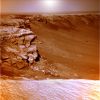
OPP-SOL1058-1N222113723EFF78BPP0655R0M1.jpgClear Winter Morning over Victoria (by Dr Paolo C. Fienga)131 visitenessun commento
(12 voti)
|
|

SOL149-The_Hills-PIA06045_modest.jpgThe Hills and the "Red Desert" - Sol 149 (Approx. True Colors; credits: NASA/JPL/Cornell)206 visiteCaption NASA:"This view from where NASA's Mars Exploration Rover Spirit stood on the Rover's 149th Martian Day, or Sol (such as June, 3, 2004), shows Terrain the MER has crossed since then. Spirit is currently headed East, traversing the flanks of the Hills en route to an overlook above a steep valley that is out of view from this perspective. Scientists hope to find more layered rocks that will tell a story of ancient water on Mars. Spirit has traveled 498 meters (more than one-quarter of a mile) and ascended 20 meters (66 feet) above the Plains since arriving at the "Columbia Hills" on sol 156 (June 11, 2004). It covered much of that distance driving on only five of its six wheels.
The images used to make this approximately true-color mosaic were taken with Spirit's panoramic camera from about 300 meters (984 feet) away from the base of the hills, using filters centered at wavelengths of 600, 530 and 480 nanometers".
(23 voti)
|
|

SOL067-ANOMALY-2P132305418ESF1700P2537L4M1.jpgThe Silver Sphere (1)775 visiteAnche questa serie di 3 scatti ci induce a pensare che ci troviamo dinanzi ad una vera e propria Anomalia di superficie. Nel 67mo giorno di permanenza su Marte, la Sonda Spirit, mentre marcia verso il cratere chiamato Bonneville (nome curioso: in slang anglo-francese può suonare sia come "Città Buona", sia come "Città delle Ossa"...), "vede" una sfera color argento posata in prossimità di un'area sabbiosa, e riprende alcuni fotogrammi (altri ne seguiranno, nei Sol successivi, ma da una distanza maggiore).
(23 voti)
|
|

ORIGINAL NASA APOLLO 12 - AS12-46-6795-2.jpgAPOLLO 12 AS 12-46-6795 (detail mgnf) - The Lunar "mound"2704 visiteQuando incontrai il Prof. Richard Hoagland (l'Uomo della Sfinge di Marte), gli chiesi di spiegarmi, in poche e semplici parole, il criterio principale da impiegare nella ricerca di strutture artificiali (o meglio: di possibile origine NON naturale) sulla Luna, su Marte o in qualsiasi altro posto del Sistema Solare. Mr Hoagland mi disse questo:"...Cerca le simmetrie. Non perchè in Natura non esistano, ma solo perchè in Natura esse sono - di regola - molto rare...". Detto e fatto: il Terrapieno Lunare (o Lunar Mound) sembra proprio essere una struttura, almeno da questo punto di vista, decisamente simmetrica e, quindi, di possibile origine NON naturale.
Gli Astronauti dell'Apollo 12 hanno dedicato decine di scatti, effettuati da tutte le angolazioni possibili, a questo "tumulo", ma senza riuscire a risolvere il suo mistero.
E' effettivamente una struttura artificiale (magari una "tomba")? O è solo un "outcrop", come quello che il Rover Spirit ha visitato e fotografato (da vicino) su Marte? Voi cosa dite?
(113 voti)
|
|
| 25332 immagini su 2111 pagina(e) |
 |
|
|
|
|
1967 | |
|
|
|
|
|
|





