| Piú votate |
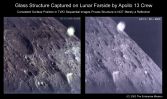
APOLLO 13 AS 13-60-8608-9 ENHANCED.jpgAS 13-60-8608 and 8609: a reflection or a "Lunar Dome"?1416 visiteQuesti due fotogrammi sono stati elaborati a cura di Steve Troy, Discepolo del Prof. Richard Hoagland - l'Uomo della "Sfinge di Marte" - e membro dell'Associazione conosciuta come "Enterprise Mission". Il lavoro svolto dal collega Troy (anche se noi non ne condividiamo alcuna delle conclusioni...) è davvero molto buono e su questo non vi sono dubbi.
Ma il punto focale, a nostro parere, sta sempre nell'assunzione di partenza: sulla Luna - dicono infatti Hoagland e Troy (e tantissimi altri insiame a loro) - ci sono delle "cupole" di cristallo e questi bagliori ne sono il riflesso.
Hoagland, Troy & Co., in altre parole, CONSIDERANO CERTA l'esistenza di queste indefinibili strutture e poi cercano le prove (che saranno sempre e comunque solo indirette, però) della loro esistenza.
Ora, con tutto il rispetto per il lavoro svolto da Hoagland e dai suoi Collaboratori e Discepoli, noi dobbiamo dire che questo approccio alla materia ci sembra sbagliato e contrario non solo alla logica, ma anche al buon senso.
(27 voti)
|
|

M-045-2.JPGM 45 - "The 7 Sisters" - Open Star Cluster in Pleiades (2)137 visite"...Cosa c'è? Ti vedo irrequieto...Hai visto qualcosa?"
"...Non saprei, ma mi è sembrato che qualcuno ci stesse spiando. Ho visto qualcosa muoversi, dietro le Pleiadi..."
P. C. Floegers - "Conversations"
(26 voti)
|
|
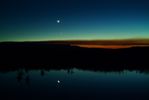
Inner_Worlds-jul8_westlake_f.jpgInner Worlds, in the Sunset...128 visiteDa "NASA - Picture of the Day" del 15 Luglio 2005:" Only Mars is missing from this reflective view of the major rocky bodies of the Inner Solar System. Captured on July 8th, the serene, twilight picture looks out over the Flat Tops Wilderness area from near Toponas, Colorado, USA and includes planets Mercury, Venus, Earth and Earth's large natural satellite, the Moon. The Moon is in a young crescent phase about 3° above bright planet Venus. Forest fires contribute to a layer of smoke in Earth's sky that almost hides planet Mercury, still visible very near the horizon.
Just a week earlier Venus and Mercury were joined by Saturn, forming a notable grouping in the West also enjoyed by skygazers across planet Earth".
(13 voti)
|
|

Image038-55-912527_3d2.jpgBlue Flares and the Invisible Crater: samples in 3D208 visiteQuello che invece gli Astronauti hanno fotografato (oltre ai propri piedi) sono alcuni campioni di “roccia” (i "samples", appunto) i quali vengono descritti come breccia+cristalli e di cui ho preparato una tavola tridimensionale per la gioia dei possessori di occhialini colorati. Se quella specie di teschio di Darth Vader che si vede in basso a Dx è effettivamente una roccia, allora deduciamo che deve essere una roccia di natura davvero MOLTO particolare...
(13 voti)
|
|

Comets-Borrelly_Comet-PIA03500_modest.jpgThe "Borrelly" Comet from Deep Space 161 visiteIn this highest resolution view of the icy, rocky nucleus of comet Borrelly, (about 45 meters or 150 feet per pixel) a variety of terrains and surface textures, mountains and fault structures, and darkened material are visible over the nucleus's surface. This was the final image of the nucleus of comet Borrelly, taken just 160 seconds before Deep Space1's closest approach to it. This image shows the 8-km (5-mile) long nucleus about 3417 kilometers (over 2,000 miles) away.
Smooth, rolling plains containing brighter regions are present in the middle of the nucleus and seem to be the source of dust jets seen in the coma. The rugged land found at both ends of the nucleus has many high ridges along the jagged line between day and night on the comet. This rough terrain contains very dark patches that appear to be elevated compared to surrounding areas. In some places the dark material accentuates grooves and apparent faults.
(13 voti)
|
|

Titania_s Limb-V2-PIA01978_modest.jpgTitania's limb (3)69 visiteIl bordo di Titania, semi-immerso nell'oscurità, costituisce un target molto suggestivo da ammirare ed inoltre, proprio grazie ai giochi di luce ed ombra che si formano, risulta leggermente più facile percepire - anche se, a volte, in maniera ingannevole - la "profondità" o il "rilievo" di alcuni dettagli superficiali. Guardate, infatti, il bordo superiore di Titania e noterete, ad ore 1 dell'immagine, una chiara protuberanza di forma "conica". Un dettaglio curioso e suggestivo, ancora una volta. Di che cosa si tratta? Forse di una "spire", simile a quelle che abbiamo visto sulla Luna . O forse qualcosa di completamente diverso...
(13 voti)
|
|

Volcanoes-Olympus_Mons_and_Tharsis_Region.jpgTharsis Region (Natural Colors; credits: NASA/MGS/MSSS)135 visite"Mars Global Surveyor's camera, MOC, provided this hemispheric view of the northern Tharsis region on June 1, 1998. This picture shows the giant volcano, Olympus Mons, and one of the Tharsis Montes volcanoes, Ascraeus Mons. Another volcano, Alba Patera, is lurking under the haze and clouds at the top of the image. Olympus Mons is about 550 Km wide. The terminator - such as the line that divides night and day - was located west of Olympus Mons (left part of the image). It is Winter in the northern hemisphere of Mars and the high latitudes (i.e.: north of Olympus Mons in this picture) exhibit clouds and haze. These clouds most likely contain water ice".
Non possiamo non notare l'enfasi che viene spesso posta, in sede di commento originale alle immagini, sul fatto che le nuvole Marziane "MOLTO PROBABILMENTE" (ossìa "QUASI CERTAMENTE") contengono ACQUA. E allora noi rivolgiamo alla NASA - ancora - la stessa domanda: ma siamo certi che su Marte non piove da qualche milione di anni?
Risposta? Silenzio totale.
(13 voti)
|
|

Martian_Mountains-MGS-00.jpgCharitum Montes (Natural Colors; credits: NASA/MGS/MSSS)205 visiteWhat causes the unusual white color on some Martian Mountains? The answer can be guessed by noticing that the bright areas disappear as springtime takes hold in the South of Mars: dry ice. Dry CO2 ice sublimates directly to gas from its frozen state. The frosty mountains, named "Charitum Montes", have been covered with CO2 ice over the Martian Winter. The serene scene pictured above is not a photograph, but rather a computationally constructed digital illusion resulting from the fusion of two color images from the Mars Orbital Camera and topographic data from the Mars Orbiter Laser Altimeter. Both instruments operate from the Mars Global Surveyor robot spacecraft currently orbiting Mars.
(13 voti)
|
|

Volcanoes-Unnamed_Volcano-PIA06841.jpgUnnamed Small Martian Volcano (EDM - Original NASA/MGS/MSSS b/w Frame)187 visite"...This Mars Global Surveyor (MGS) image shows a small Unnamed Volcano located South/West of the giant Volcano, Pavonis Mons, near 2,5° South Lat. and 109,4° West Long. Lava Flows can be seen to have emanated from the Summit Region, which today is an irregularly-shaped Collapse Pit, or Caldera. A blanket of Dust mantles this Volcano. Dust covers most Martian Volcanoes, none of which are young or active today. This picture covers an area about 3 Km across..."
(13 voti)
|
|

M-056-1.jpgM 56 (NGC 6779) - Globular Star Cluster104 visite"...Cum vitia prosunt, peccat qui recte facit..."
(P. Siro)
"...In un mondo in cui la Virtù è un Vizio, colui che agisce rettamente è, invero, un peccatore..."
(13 voti)
|
|

SOL068_Bonneville_360_L256-A129R1_br2.jpgBonneville Crater and Surroundings - Sol 68 (Almost True Colors; credits: NASA/JPL-Caltech)201 visiteSe osservate questa bellissima ripresa in "full size" riuscirete a vedere, in lontananza e quasi a ridosso dell'orizzonte visibile, leggermente a Dx del Cratere Bonneville (Sn dell'Osservatore), un punto color argento.
E' la Silver Sphere di cui abbiamo proprosto svariate immagini (in b/n) nella Sezione dedicata alle Anomalie incontrate da Spirit.
(13 voti)
|
|
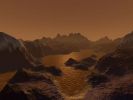
Titan-IMG000629-br500.jpgPools on Titan107 visiteUna piccolissima annotazione: quasi tutte le "Visioni Artistiche" di Titano sono caratterizzate da una sostanziale "luminosità" e "limpidezza" del paesaggio. A nostro modo di vedere - ed in accordo ai risultati che abbiamo ottenuto con un semplicissimo programma di simulazione - Titano, a differenza di quanto sino ad ora "artisticamente" ipotizzato, dovrebbe essere un mondo decisamente buio. E', inoltre, fortemente plausibile - anche se speriamo di sbagliarci - che la qualità delle immagini che verranno riprese e trasmesse dalla superficie del pianeta sia decisamente cattiva non solo per la scarsità di illuminazione, ma anche a causa della fitta nebbia che, a ben vedere, potrebbe essere presente anche sulla superficie di Titano (e non solo negli strati alti e medio-alti della sua spessa atmosfera).
(13 voti)
|
|
| 25332 immagini su 2111 pagina(e) |
 |
|
|
|
|
1966 | |
|
|
|
|





