| Piú votate |
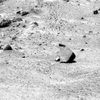
SOL530-2P173414974ESFACAQP2595L4M1.jpgFocus on the Martian Rocks (3) - Sol 53093 visitenessun commento
(1 voti)
|
|
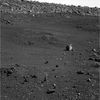
SOL524-2P172890954EFFAC00P2438L7M1.jpgA "lonely, big and unusually-shaped" Boulder - Sol 52455 visiteNon pensiamo che sia necessario fare troppi commenti per attrarre la Vostra attenzione sul boulder a forma di 'becco di rapace' che vediamo in questo frame, distante una ventina di metri dal Rover Spirit.
Una domanda, tuttavia, ci sembra opportuno porla, sia a Voi, sia a noi stessi: ma da quanto tempo questa stranissima roccia si trova in quel punto? La nostra risposta, osservando i dintorni del boulder ed il boulder stesso, è scontata: pochissimo tempo!
Ora, se questa 'congettura' è vera, adesso dobbiamo chiederci da dove è arrivato il 'Becco d'Aquila' che vediamo così bene...
(1 voti)
|
|
SOL524-2N172890564EFFAC00P0715R0M1.jpgPanorama - Sol 524 (3)79 visitenessun commento
(1 voti)
|
|

SOL516-2N172172915EFFABAKP0715R0M1.jpgMore anomalous rocks around Spirit (3) - Sol 51665 visitenessun commento
(1 voti)
|
|

SOL516-2N172172864EFFABAKP0715R0M1.jpgMore anomalous rocks around Spirit (2) - Sol 51681 visiteScusateci per la 'cerchiatura' in rosso, ma la piccola Singolarità che abbiamo notato è davvero difficile da indicare senza circoscrivere una porzione del paesaggio. Portate il frame sino a full-size e poi guardate nel cerchio rosso: c'è una specie di 'ponte' che unisce le due rocce? E' una struttura in formazione? Un difetto dell'immagine o una cancellatura venuta male?
Noi sappiamo e vediamo che c'è 'qualcosa' fra le due rocce.
Ma cosa?
(1 voti)
|
|

SOL515-2N172089437EFFAB70P0715R0M1.jpgRocky Panorama (2) - Sol 51557 visitenessun commento
(1 voti)
|
|

APOLLO 12 AS 12-46-6786.jpgAS 12-46-6786 - The RTG Package135 visiteCaption NASA originale:"At about 116:40:44 (MCT-->Mission Clock Time), Al is pivoting the RTG fuel cask into the horizontal position. The graphite-lined cask contains a plutonium fuel element and was designed to protect the element in the event of a launch abort and re-entry. Once he has the cask lowered, Al will use a special tool to remove the protective dome on the cask and then to remove the fuel element for placement in the RTG. Note that the SEQ bay doors are closed. The object just beyond Al is the Handtool Carrier which he took out of the SEQ bay after the RTG package".
(1 voti)
|
|
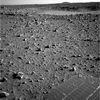
SOL112-2N136321062EFF3700P1846R0M1.jpgAnother small crater near Spirit? Sol 11256 visiteUn'immagine davvero suggestiva di un altro piccolo cratere che si trova ad una trentina di metri dal Rover.
Ma sarà poi davvero un cratere?...
(1 voti)
|
|

00-SMART1.jpgSMART-1 and the Moon85 visiteSMART-1's science payload, with a total mass of some 15 Kg, features many innovative instruments and advanced technologies. These are:
- AMIE, a miniaturised HR camera for Lunar Surface imaging;
- SIR, a Near-Infrared Point-Spectrometer for Lunar mineralogy investigation;
- D-CIXS, a very compact X-ray Spectrometer with a new type of detector and micro-collimator which will provide fluorescence spectroscopy and imagery of the Moon's surface elemental composition;
- XSM, an X-ray monitor to support D-CIXS by providing measurements of solar X-ray emission for calibration:
- KaTE, an experiment aimed at demonstrating deep-space telemetry and telecommand communications in the X and Ka-bands;
- RSIS, a Radio-Science Experiment relying on KaTE. It monitors the electric propulsion by means of tracking techniques. In lunar orbit it will, with AMIE, also study the Moon's libration.
(1 voti)
|
|

0-SMART-1.jpgSMART-1 and the Moon97 visiteThe solar electric primary propulsion on-board SMART-1 is a Stationary Plasma Hall-effect thruster, the PPS-1350 developed by SNECMA, France. Using Xenon gas as propellant and the power from the spacecraft's solar arrays, the thruster is capable of providing a thrust of something like 70 milliNewtons. Using the thrust of the electric propulsion system, SMART-1 progressively expanded its orbit, spiralling out from Earth and was caught by the Moon's gravitational field on 15 November 2004, nearly 14 months after launch. In order to enhance the capture opportunities and to save precious fuel, SMART-1 also made use of celestial mechanics, including Moon resonances and swing-bys. The spacecraft exploited the unstable regions of space where the gravity field of Earth and Moon compete and which are normally avoided by conventional trajectories. It passed through the L1 point of the Earth-Moon System which allowed for the spacecraft to be caught by the Moon's gravity.
(1 voti)
|
|

SOL494-2N170232305EFFAAFQP0103L0M1.jpgDetails of rocks and sand - Sol 494 (2)73 visitenessun commento
(1 voti)
|
|

VL-12-db-2-height-B019R1_br2.jpg"Pockets of Heat" near the Martian Surface180 visiteCaption NASA originale:"This graph shows that the atmospheric temperatures above the surface of Mars at Gusev Crater, fluctuate to a significant degree. The color red denotes warmer temperatures, while blue is cooler. The red and yellow waves of color represent thermals, or "pockets of heat", which rise and fall across the surface. Also these data were acquired by the Rover's Miniature Thermal Emission Spectrometer".
Nota: con questo interessantissimo grafico la NASA ci dimostra di aver verificato sperimentalmente l'esistenza di sacche di calore che 'danzano' sulla superficie di Marte. Peccato, però, che non vengano spese parole per tentare almeno di spiegare e giustificare questo fenomeno il quale, forse, potrebbe essere la chiave di volta nella comprensione di alcune fenomenologie Marziane (a nostro parere, comunque, la 'fonte' di queste sacche di calore potrebbe/dovrebbe essere il sottosuolo di Marte).
(1 voti)
|
|
| 25332 immagini su 2111 pagina(e) |
 |
|
|
|
|
1943 | |
|
|
|
|





