| Piú votate |

Craters-Unnamed_Crater-Vastitas_Borealis_Region-PIA08611.jpgUnnamed Crater in Vastitas Borealis (Original NASA/2001 Mars Odyssey b/w Frame)62 visiteImage information: VIS instrument;
Latitude: 69,1° North;
Longitude: 273,6° East;
Resolution: 20 mt/pixel.

(1 voti)
|
|

33-SulpiciusGallus.jpgSulpicius Gallus' Region74 visiteThis mosaic of three images, taken by the advanced Moon Imaging Experiment (AMIE) on board ESA's SMART-1 spacecraft, shows the area close to the Sulpicius Gallus crater on the Moon.
AMIE obtained this sequence on 18 March 2006, from a distance of 1200 kilometres from the surface, with a ground resolution ranging from 110 to 114 metres per pixel.
The area shown in the top image is centred at a latitude of 19.7º North and longitude 12.2º East; the image in the middle is centred at a latitude of 18.2º North and longitude 12.3º East; the bottom image is centred at a latitude of 16.7º North and longitude 12.5º East.
The prominent crater on the upper left area of this mosaic is called Sulpicius Gallus. It is a fairly fresh, bowl-shaped crater with a diameter of roughly 12 kilometres. The flat lava plains surrounding it belong to the Mare Serenitatis (the 'Sea of Serenity') on the north-eastern side of the Moon facing Earth. The mountains going diagonally through the middle part of the mosaic are called Montes Haemus. They are denoting the edge of the huge impact crater which formed the Mare Serenitatis.
The area around Sulpicius Crater is very interesting for lunar scientists – it is one of the most geologically and compositionally complex areas of the nearside of the Moon. The geologic history of this region has been shaped by impacts of different scales and epochs, by volcanism of variable style and composition with time, and by limited tectonics. Specific findings (Bell and Hawke, 1995) include the detection of relatively fresh highlands materials in the crater.
Good spectroscopic data (that is relative to the mineralogical composition) are available both from the Clementine mission and from ground-based observations, allowing to better constrain the geological evolution of our closest cosmic neighbour.
The area has been suggested to contain mixtures of glassy and black beads generated when large impacts melted part of the lunar surface. However, modelling the spectral properties of material similar to lunar material does not allow to unambiguously match the composition of the material to the measured data.
Colour observations of the AMIE camera will help in further clarifying these issues. So, the combination of high spatial resolution imaging and high spectral resolution spectroscopy from datasets from SMART-1, Clementine and ground based telescopes will finally allow to better model mineral mixtures on the Moon.
The crater Sulpicius Gallus is named after a Roman general, state man and orator. He is famous for having predicted an eclipse of the moon on the night before the battle of Pydna (168 BC). A man of great learning, in his later years he devoted himself to the study of astronomy.
(1 voti)
|
|

32-MareHumorum.jpgMare Humorum65 visiteThis mosaic of three images, taken by the advanced Moon Imaging Experiment (AMIE) on board ESA's SMART-1 spacecraft, shows Mare Humorum on the Moon.
AMIE obtained the top frame on 1 January 2006, from a distance of 1087 kilometres from the surface, with a ground resolution of 98 metres per pixel. The remaining two frames were taken on 13 January 2006, from a distance of about 1069 (centre) and 1050 kilometres (bottom) from the surface, with a ground resolution of 97 and 95 metres per pixel, respectively.
The area shown in the top image is centred at a latitude of 40.2º South and longitude 25.9º West; the centre image is centred at a latitude of 40.2º South and longitude 27.3º West; the bottom image is centred at a latitude of 40.2º South and longitude 28.8º West.
Mare Humorum, or 'Sea of Moisture', is a small circular mare on the lunar nearside, about 825 kilometres across. The mountains surrounding it mark the edge of an old impact basin which has been flooded and filled by mare lavas. These lavas also extend past the basin rim in several places. In the upper right are several such flows which extend northwest into southern Oceanus Procellarum.
Mare Humorum was not sampled by the Apollo program, so its precise age could not been determined yet. However, geologic mapping indicates that its age is in between that of the Imbrium and the Nectaris basins, suggesting an age of about 3.9 thousand million years (with an uncertainty of 500 million years).
Humorum is filled with a thick layer of mare basalt, believed to exceed 3 kilometres in thickness at the centre of the basin. On the north edge of Mare Humorum is the large crater Gassendi, which was considered as a possible landing site for Apollo 17.
Mare Humorum is a scientifically interesting area because it allows the study of the relationships among lunar mare filling, mare basin tectonics, and global thermal evolution to the major mascon maria – regions of the moon's crust which contain a large amount of material denser than average for that area (Solomon, Head, 1980).
Past studies (Budney, Lucey) revealed that craters in the mare Humorum sometimes excavate highland material, allowing to estimate the thickness from below the mare cover. Thanks to this, it was also possible to determine that the ‘multiring’ structure of the Humorum basin has a diameter of 425 kilometres (results based on the US Clementine global topography data).
In general, the chronology of lunar volcanism is based on the analysis of landing site samples from the Apollo and Luna missions, from the study of the relationship between the stratigraphy (layering of deposits) in different regions, and from the analysis of lunar craters – how they degraded over time and how their distribution in number and size varies over the Moon’s surface. From crater statistics, in the year 2000 Hiesinger and colleagues found that in Humorum there was a peak of eruptions at about 3.3-3.5 thousand million years ago.
(1 voti)
|
|

29-KeplerCrater.jpgKepler Crater65 visiteCaption ESA originale:"The imaged area is centred at a Latitude of 37,8º South and Longitude 9,0º East. Kepler is a small young crater situated between Oceanus Procellarum and Mare Insularum. It has a diameter of 32 Km and it is 2,6 Km deep.
Kepler displays a ray system that overlaps with rays from other craters and which extends over 300 Km.
The outer wall of Kepler shows a slightly polygonal shape. The interior walls of the crater are slumped and slightly terraced, and descend to an uneven floor and a minor central rise".
(1 voti)
|
|
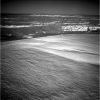
OPP-SOL873-1N205688056EFF735TP1902R0M1.jpgClosing up on Beagle Crater (3) - Sol 873213 visitenessun commento
(1 voti)
|
|

OPP-SOL869-1R205335683EFF73T7P1305L0M1.jpgBeautiful Paving, from very close - Sol 86958 visiteCaption originale:"Left Rear HazCam Non-linearized Full frame EDR acquired on Sol 869 of Opportunity's mission to Meridiani Planum at approximately 14:13:01 MLT".
(1 voti)
|
|

OPP-SOL864-1R204887790EFF73MMP1375R0M1.jpgThe way behind (3) - Sol 86469 visite"Right Rear HazCam Non-linearized Full frame EDR acquired on Sol 864 of Opportunity's mission to Meridiani Planum at approx. 13:06:50 MLT"
(1 voti)
|
|
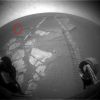
OPP-SOL862-1F204712713EFF73HJP1205R0M1-1.jpgHorizon, with tampering (context image) - Sol 86257 visiteSempre dall'occhio acuto ed attento del Dr Barca, un frame "normale" solo in apparenza. In realtà, nella Cerchiatura Rossa, la traccia evidente di una cancellazione digitale la quale, nel detail mgnf, emerge in tutta la sua sconcertante ovvietà.
Che cosa si intendeva nascondere? Mistero...
p.s.: qualche Lettore ipotizza che le "abrasioni digitali" possano essere, in realtà, semplici vizi dell'immagine determinati, ad esempio, da un errore nella trasmissione dei dati da Marte a Terra (oppure nella perdita di qualche dato - e cioè di qualche pixel - durante la trasmissione).
Noi diciamo che si, certo, può essere, ma i vizi di questo tipo - di regola - visualmente si manifestano in maniera diversa (p.e.: la perdita totale di pixel - trasmissione abortita - si esprime in vere e proprie macchie nere, a bordi levigati e forma regolare, mentre l'arrivo di un numero di pixel inferiore al necessario - trasmissione parziale - si risolve in immagini dalla fattura grossolana in cui le uniche forme percepibili sono quelle collegate ad (e determinate da) aree più illuminate in rapporto ad aree meno illuminate).
(1 voti)
|
|

OPP-SOL862-1R204713013EFF73IEP1311L0M1-2.jpgBright rock (detail mgnf) - Sol 86276 visitenessun commento
(1 voti)
|
|

OPP-SOL862-1F204712713EFF73HJP1205R0M1-2.jpgHorizon, with tampering (detail mgnf) - Sol 86263 visitenessun commento
(1 voti)
|
|

OPP-SOL855-PIA08565-3.jpgBeagle Crater (stretched&labeled version) - Sol 85573 visiteCaption NASA originale:"The bright white dot on the horizon near the upper left corner of the panorama, labeled "Outcrop Promontory" was thought to be a light-toned outcrop on the far wall of Victoria, based on a single azimuth measurement on Sol 804 (April 28, 2006), suggesting that the Rover was seeing over the low rim of Victoria. But comparing the azimuth angle of this feature in the Sol 855 panorama and the angle of the same feature in the Sol 804 Panoramic Image, PIA08447 (a process known as triangulation) revealed that this outcrop must instead be on the near rim of the crater.
The South-Eastern rim of Victoria is labeled in bright green.
The North-Eastern rim is beyond the left edge of this panorama.
The salmon-color lines and arrows highlight two small craters on the dark "annulus", or ring, around Victoria Crater".
(1 voti)
|
|

OPP-SOL855-PIA08565-2.jpgBeagle Crater (stretched version) - Sol 85568 visiteCaption NASA originale:"When scientists using orbital data calculated that they should be able to detect Victoria's rim in Rover images, they scrutinized frames taken in the direction of the crater by the PanCam. To positively characterize the subtle horizon profile of the crater and some of the features leading up to it, researchers created this vertically-stretched image. The stretched image makes mild nearby dunes look like more threatening peaks, but that is only a result of the exaggerated vertical dimension. This vertical stretch technique was first applied to Viking Lander 2 panoramas by Philip Stooke, of the University of Western Ontario, Canada, to help locate the Lander with respect to orbiter images. Vertically stretching the image allows features to be more readily identified by the MER Science Team".
(1 voti)
|
|
| 25332 immagini su 2111 pagina(e) |
 |
|
|
|
|
1924 | |
|
|
|
|





