| Piú votate |

PHOE-SOL016-lg_4865.jpgVastitas Borealis - Sol 16 (credits: NASA/Univ. of Arizona)64 visiteIl "tristissimo" (e, onestamente parlando, pure piuttosto scialbo) commento scritto per questo frame nella (di solito eccellente) Rubrica "NASA - Picture of the Day" il giorno 15 Giugno 2008:"What's a good recipe for preparing Martian soil? Start by filling your robot's scoop a bit less than half way. Next, dump your Martian soil into one of your TEGA ovens, being sure to watch out for clumping. Then, slowly increase the temperature to over 1000° Celsius over several days. Keep checking to see when your soil becomes vaporized. Finally, your Martian soil is not ready for eating, but rather sniffing. The above technique is being used by the Phoenix Lander that arrived on Mars 3 weeks ago. Data from the first batch of baked soil should be available in a few days. Pictured above, a circular array of the Phoenix Lander's solar panels are visible on the left, while a scoop partly filled with Martian soil is visible on the right. The robotic Phoenix Lander will spend much of the next 3 months digging, scooping, baking, sniffing, zapping, dissolving, and magnifying bits of Mars to help neighboring Earthlings learn more about the hydrologic and biologic possibilities of the sometimes mysterious red planet".
Una "perla" NASA che, forse, Vi è sfuggita: nella riga finale "...hydrologic and biologic possibilities of the SOMETIMES mysterious Red Planet...". Cioè il Pianeta Rosso è misterioso solo TALVOLTA (sometimes)?!? E se lo è "TALVOLTA", di regola che cos'è? E QUANDO Marte DIVENTA "misterioso"?
D'accordo, noi saremo anche pignoli, ma alla NASA - visto e considerato che queste righe le scrive un "Professional Astronomer" - o sono diventati completamente sibillini oppure sono proprio insipidi e saccenti (ed è difficile dire quale scenario sarebbe il peggiore...).
Nota: tra le fotografie di Marte con colori "taroccati" in favore della banda del giallo/arancio, questa è davvero una delle più brutte e palesemente falsificate.MareKromium
(1 voti)
|
|
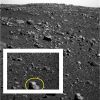
SOL523-2P172799154EFFABGZP2437R1M1523-01.jpgExtremely Unusual Surface Feature (context frame)146 visitenessun commentoMareKromium
(1 voti)
|
|

PSP_008100_1790_RED_abrowse.jpgLayered Rocks in Iani Chaos (MULTISPECTRUM; credits: Lunexit)74 visiteThis image shows rocks on the floor of Iani Chaos, a Region of collapsed and disorganized Terrain.
The Chaotic Terrains on Mars may have been the sources of floodwaters that carved the giant outflow channels. They typically contain irregular hills like the one in the center of this image. In some cases, they also have light-toned rocks exposed on the floors. The point of interest is to determine whether these rocks predate the chaos or formed after the collapse; however, the contacts may be obscured by later material mantling the ground.
The rocks here are light-toned, and have dark low patches which are likely a thin cover of wind-blown sand. At a coarse scale, linear features are also visible in the rock, likely reflecting aeolian (wind) erosion in a preferred direction. A variety of processes could have contributed to forming these rocks, from volcanic eruptions to lake deposition or accumulation of wind-blown sand.
Stepped layers occur in places, suggesting a repetitive process. This argues for an origin as aeolian or lake-bed sediments, since volcanic eruptions may be of variable strength.MareKromium
(1 voti)
|
|

ZZ-ZZ-ZZ-ZZ-ZZ-ZZ-ZZ-ZZ-ZZ-ZZ-ZZ-ZZ-ZZ-ZZ-ZZ-ZZ-ZZ-ZZ-ZZ-ZZ-Remnants1.jpgRemnants (1 - by Carlo Contu)126 visiteLa voglia di cercare delle "Simmetrie" (e, con esse, dei Segni di Civilizzazione) è grande e la Superficie di Marte, effettivamente, è talmente bizzarra che questa voglia, spesso, viene adeguatamente ricompensata.
In questi due extreme-detail mgnf (ottenuti da frames MRO ed entrambi selezionati dall'ottimo Carlo Contu), abbiamo una serie di rilievi superficiali che, a ben osservare, potrebbero "suggerire" l'esistenza di queste "Simmetrie".
Città Fantasma? Rovine? Scavi? Oppure semplici Regioni Caotiche, caratterizzate da continue alternanze e sovrapposizioni di terreni aventi diverse matrici, con dune, pietraie ed outcrops?
Ogni ipotesi, al momento, è buona ed ognuno di noi, in base alla propria Sensibilità, Competenza ed Apertura Mentale, può cercare - motivandola - una risposta adeguata.MareKromium
(1 voti)
|
|
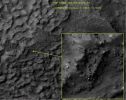
ZZ-ZZ-ZZ-ZZ-ZZ-ZZ-ZZ-ZZ-ZZ-ZZ-ZZ-ZZ-ZZ-ZZ-ZZ-ZZ-ZZ-ZZ-ZZ-ZZ-Remnants2.jpgRemnants (2 - by Carlo Contu)114 visiteLa distanza è grande, ma la sensazione che possa esistere una presenza (seppure ora profondamente degradata) di "geometrie razionali" esiste.
Un grande dettaglio anche questo ma, al pari del precedente, totalmente indefinibile.MareKromium
(1 voti)
|
|
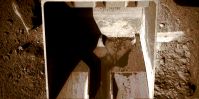
PHOE-SOL013-lg_3360.jpgEmpty "Scoop" and "Signs" of Humidity? - Sol 13 (Superdefinition + MULTISPECTRUM; credits: Dr M. Faccin & Lunexit)64 visitenessun commentoMareKromium
(1 voti)
|
|
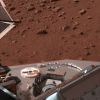
PHOE-SOL012-lg_3352-A.jpgThe Lander and the Surface - Sol 12 (Appproximate Colors; credits: NASA/JPL-Caltech)56 visiteCaption NASA:"This image shows a view from NASA's Phoenix Mars Lander's Stereo Surface Imager's left eye after delivery of soil to the Thermal and Evolved-Gas Analyzer (TEGA), taken on the 12th Martian Day after landing (Sol 12, June 6, 2008).
Soil is visible on both sides of the open doors of TEGA's #4 oven. Sensors inside the device indicate no soil passed through the screen and into the oven". MareKromium
(1 voti)
|
|
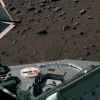
PHOE-SOL012-lg_3352-B.jpgThe Lander and the Surface - Sol 12 (MULTISPECTRUM; credits: Lunexit)94 visitenessun commentoMareKromium
(1 voti)
|
|
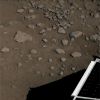
PHOE-SOL007-235168main_SS007EFF896839584_117F8RBM1-2-3.jpgRocks and the Solar Panel - Sol 7 (Superdefinition + MULTISPECTRUM; credits: Dr G. Barca & Lunexit)58 visitenessun commentoMareKromium
(1 voti)
|
|
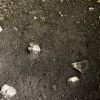
PHOE-SOL006-234593main_SS005ESF896648917_10F20R2M1-2-3.jpgThe soil of Vastitas Borealis - Sol 6 (Natural Colors; credits: Dr Gianluigi Barca)57 visiteUna splendida immagine (sembra insignificante, ma NON lo è...) ed una meravigliosa interpretazione in Colori Naturali del suolo di Vastitas Borealis, realizzata dall'eccezionale Dr Gianluigi Barca.
MareKromium
(1 voti)
|
|
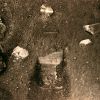
PHOE-SOL007-lg_1601.jpgThat's a "Scoop"! - Sol 7 (MULTISPECTRUM; credits: Lunexit)58 visiteJune 1, 2008 -- TUCSON, Arizona
NASA's Phoenix Mars Lander reached out and touched the Martian Soil for the first time on Saturday, May 31, the first step in a series of actions expected to bring soil and ice to the Lander's experiments.
The lander's Robotic Arm scoop left an impression that resembles a footprint at a place provisionally named Yeti in the King of Hearts target zone, away from the area that eventually will be sampled for evaluation.
The impression in the soil was captured by Phoenix's Stereo Surface Imager. Features and locations around the Phoenix lander are being named for fairy tale and mythological characters.
"This first touch allows us to utilize the Robotic Arm accurately. We are in a good situation for the upcoming sample acquisition and transfer," said David Spencer, Phoenix's surface mission manager from NASA's Jet Propulsion Laboratory in Pasadena, California.
Phoenix's Robotic Arm Camera also took a number of images of the "Snow Queen" site of what is believed to be exposed ice under the lander.
"What we see in the images is in agreement with the notion that it may be ice, and we suspect we will see the same thing in the digging area", said Uwe Keller, Robotic Arm Camera Lead Scientist from the Max Planck Institute for Solar System Research, Katlenburg-Lindau, Germany.MareKromium
(1 voti)
|
|

PHOE-SOL005-PIA10741.jpgIce under Phoenix?!? - Sol 556 visiteCaption NASA:"The Robotic Arm Camera on NASA's Phoenix Mars Lander captured this image underneath the Lander on the fifth Martian Day, or Sol, of the mission. Descent thrusters on the bottom of the Lander are visible at the top of the image.
This view from the north side of the Lander toward the southern leg shows smooth surfaces cleared from overlying soil by the rocket exhaust during landing. One exposed edge of the underlying material was seen in Sol 4 images, but the newer image reveals a greater extent of it.
The abundance of excavated smooth and level surfaces adds evidence to a hypothesis that the underlying material is an ice table covered by a thin blanket of soil. The bright-looking surface material in the center, where the image is partly overexposed, may not be inherently brighter than the foreground material in shadow".MareKromium
(1 voti)
|
|
| 25332 immagini su 2111 pagina(e) |
 |
|
|
|
|
1909 | |
|
|
|
|





